Indians fear fake news but are less concerned about press freedom
The Hindu
Survey data from Pew Research Center shows high concern for fake news in India, with mixed views on media freedom.
In India, while there is widespread anxiety about misinformation and fake news, people largely do not attribute it to government influence. Instead, a relatively large share do not mind greater state censorship, according to the latest survey by the Pew Research Center.
Survey data suggests that while distrust in fake news is high, confidence in systemic solutions such as a free press remains low. In fact, a relatively large share of respondents believes that the media is free from state censorship and supports greater state control over the press.
In other words, the data indicates that many citizens view misinformation as stemming from sources such as social media, WhatsApp, or other non-governmental actors, rather than from state censorship or suppression.
In India, 65% of the respondents said that made-up news and information is a very big problem in the country. This is one of the highest rates among the 35 countries surveyed and places India among the top 10 nations where this concern is most strongly felt.
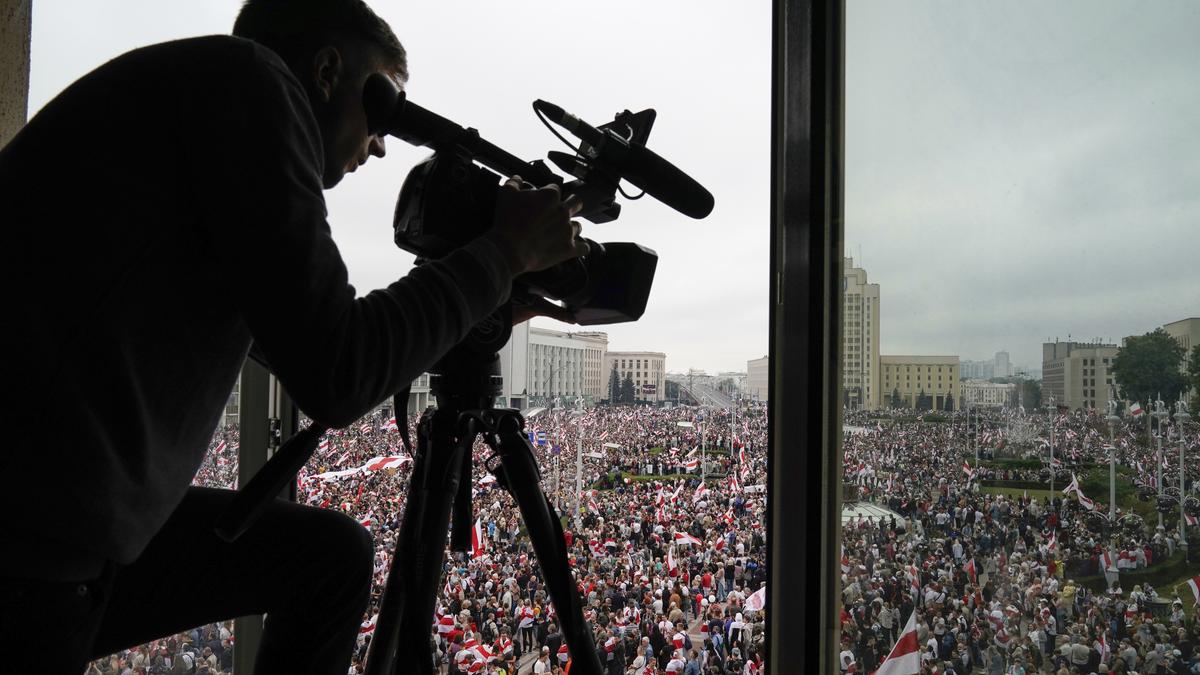
At the same time, only 68% of the respondents said it is very or somewhat important for the media to report news without state or government censorship — the second-lowest rate among the 35 countries surveyed.
In fact, 80% of the respondents believe that the media in India is currently somewhat free or completely free from state intervention. This is one of the highest rates among the countries surveyed and places India among the top 10 once again.
This dichotomy has serious implications for press freedom in India, which has been deteriorating rapidly. In 2024, India ranked 159 out of 180 countries in the World Press Freedom Index published by Reporters Without Borders. While India has consistently ranked below 100 since 2003, the situation has worsened significantly in recent years.


Kerala's political parties continue to marginalize women candidates, highlighting a troubling disconnect between gender demographics and representation.

The High Court of Karnataka on Tuesday ordered the issue of a notice to the State government on a PIL petition, which had complained about disturbances caused to people residing in the localities around the National Public School situated in Rajajinagar 5th block due to use of loudspeakers with high volume in the school and parking of school buses in residential areas.

China is extensively mapping ocean floors to enhance submarine warfare capabilities against the U.S. and allies across key oceans.

AIADMK's 2026 manifesto promises free rations, women's benefits, education reforms, and economic growth initiatives for Tamil Nadu.

The vehicle towing drive will soon resume in the city to ease traffic congestion. The Bengaluru Traffic Police (BTP), in coordination with the Greater Bengaluru Authority (GBA), is set to relaunch the vehicle towing drive across the city shortly to tackle traffic congestion and illegal parking.

Panic buying, not shortage, is leading to long queues at Hyderabad petrol pumps.

District Collector urges collective action against TB during World TB Day rally, highlighting screening efforts and patient support initiatives.

DMK finalises seat-sharing for the 2026 Tamil Nadu Assembly elections, contesting 175 seats with allies DMDK and VCK.

Collector V. Saravanan and Police Commissioner Kamini promote voter awareness through outreach programs and traditional events in Tiruchi.

Mysuru DC stresses precautionary measures to reduce road accidents, urging officials to identify and address high-risk areas.

Growing influence of Artificial Intelligence highlighted

Telangana MP urges quick approval and funding for Musi River and 7,444 km sewerage projects during AMRUT review meeting.

Former Udupi MLA K. Raghupathi Bhat, who had launched an indefinite dharna in front of the Udupi Urban Development Authority (UUDA) office on Monday against the Authority’s alleged illegal refusal to grant single site approval for 1.1 acres of his land at Badanidiyur, ended his dharna on Tuesday.