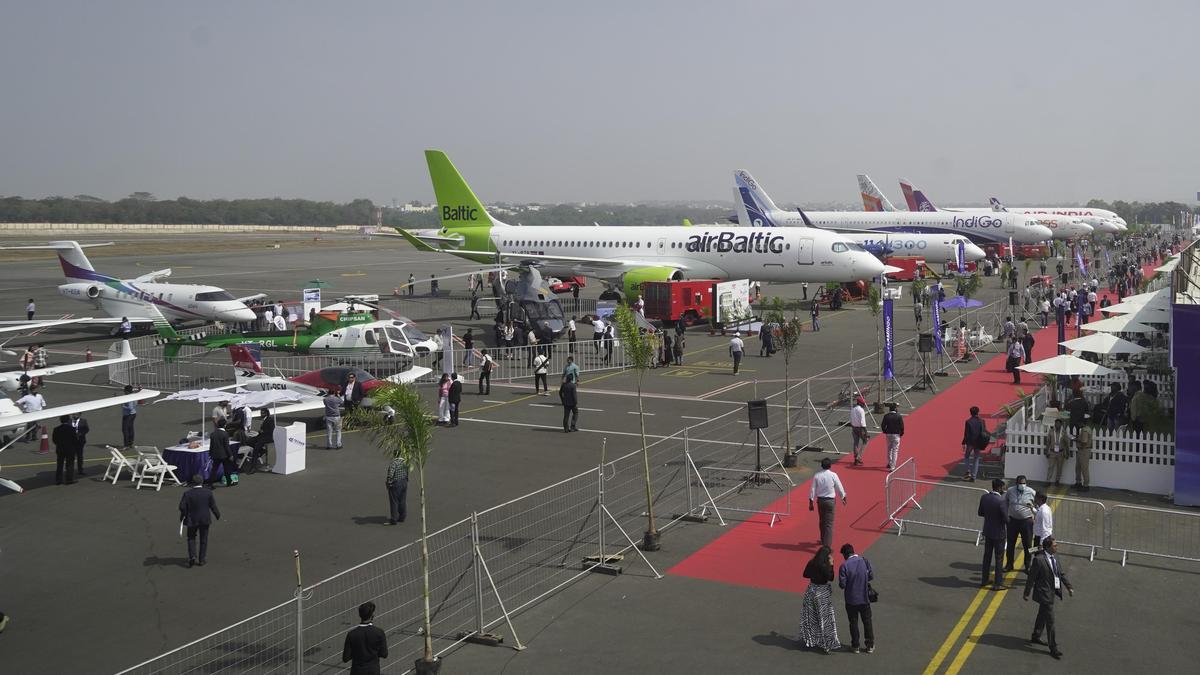
Wings India: Airport operations set for a structural shift, says GMR Airports executive
The Hindu
GMR Airports executive reveals plans to move key processes outside terminals, enhancing passenger experience and reducing stress by 2026.
“Over the next five to six years, many of the travel requirements that get done inside the airport terminal will move outside. From boarding pass issuance to baggage check-in, you may not need to enter the terminal as early as you do now,” said SGK Kishore, Executive Director and Chief Innovation Officer of GMR Airports.
Speaking to The Hindu at Wings India 2026, Mr. Kishore said airport operations are set for a structural shift, with several passenger processes gradually moving beyond the terminal building. “Hyderabad’s Rajiv Gandhi International Airport (RGIA) has already introduced cityside check-in facilities. Over the coming years, seamless screening, baggage tracking and pre-terminal processing could reduce the need for early arrival and lower stress levels,” he said.
His remarks come a year after the Airport Operations Control Centre, or APOC, was introduced at RGIA in December 2024. “What began as an internal digital control layer is now emerging as the backbone for redesigning how airports function, how stakeholders coordinate and how passengers experience air travel,” he said.
Instead of developing separate digital tools for individual applications, GMR created a hierarchical digital platform into which all airport data flows. Multiple data sources, owned by different stakeholders, are consolidated into a central data lake. Artificial intelligence models and analytics layers are built on top of this shared platform and then disseminated as actionable inputs. “The biggest comfort for all stakeholders today is that there is a single source of truth,” Mr. Kishore said.
Earlier, airlines, security agencies and airport operators relied on parallel systems, each working with its own data. Communication was often fragmented and coordination could be delayed. With APOC, all major stakeholders now operate from a common control room in Hyderabad, using real-time shared data to respond to operational events.
APOC continuously generates alerts based on inputs from video analytics, IoT systems and operational databases. These alerts range from congestion and aircraft turnaround delays to safety-related issues such as vehicles overspeeding or unauthorised entry into restricted areas.


The government plans to amend the FCRA, introducing new regulations for NGO asset management and accountability for key functionaries.

The draft policy for “Responsible Digital Use Among Students”, released on Monday by the Department of Health and Family Welfare, has recommended that parents set structured routines with clear screen-time rules and prioritise privacy, safety, and open conversation with children on digital well-being.

Police Observer Sushant Kumar Saxena conducts surprise inspection at Shencottai police station, reviewing warrants and security arrangements ahead of elections.

Andhra Pradesh government to launch key projects in April, focusing on industrial growth and infrastructure development, says Nara Lokesh.

Lok Sabha refers the Corporate Laws (Amendment) Bill to a JPC amid opposition concerns over CSR provisions dilution.

SHG members in Kanniyakumari use snakes and ladders to raise election awareness and boost voter turnout.

Government accelerates consultations for early implementation of the Women’s Reservation Act to ensure women’s representation in 2029 elections.

CM A. Revanth Reddy distributes ₹1 crore insurance cheques to families of deceased Electricity department employees, enhancing financial security for workers.

The Bengaluru Traffic Police (BTP) registered 634 cases of drunk driving during a week-long special enforcement drive conducted across the city between March 16 and March 22.

GHMC intensifies action against property tax defaulters, seizing properties and offering a One Time Settlement scheme for payments.

CCB arrests three drug peddlers in Mangaluru, seizing ₹2.5 lakh worth of MDMA and other valuables.

TVK's 28 candidates in Puducherry include former BJP MLAs, a sitting Independent, and a retired police IG.

BRS submits notice on private member bill to Speaker