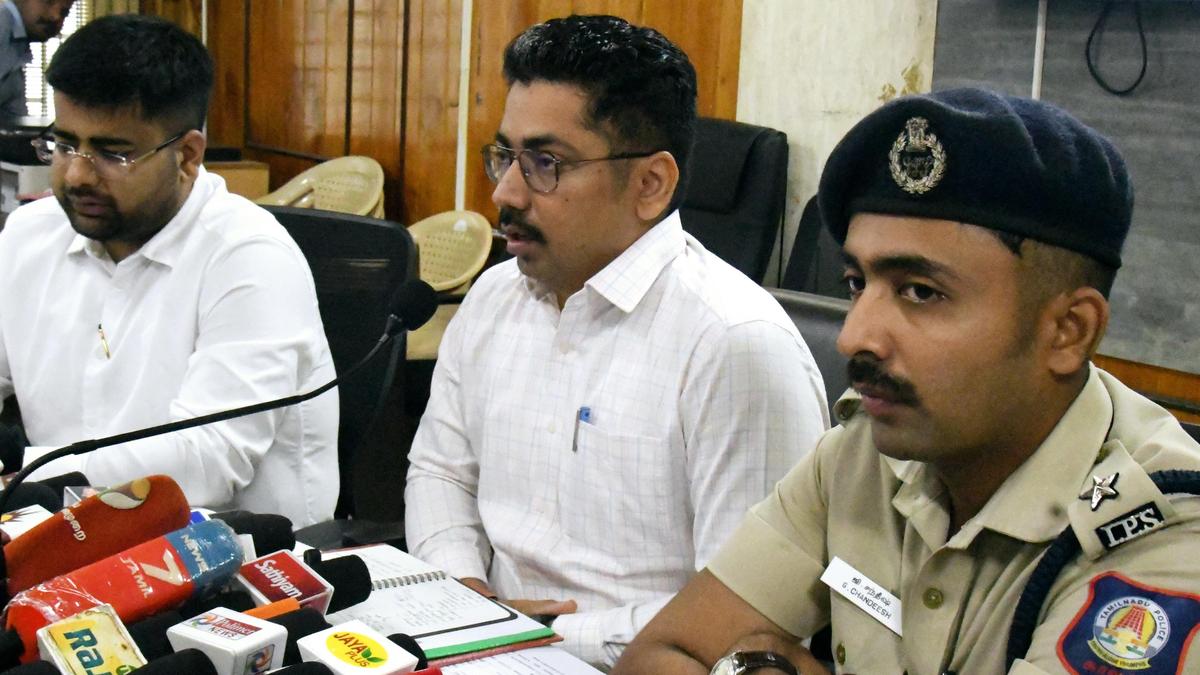
Ramanathapuram has 145 polling stations identified as sensitive, says DEO Simranjeet Singh Kahlon
The Hindu
Ramanathapuram identifies 145 polling stations as sensitive, ensuring security with paramilitary forces ahead of assembly elections, says DEO.
“A total of 145 polling stations in Ramanathapuram district have been identified as sensitive. Paramilitary forces will be deployed for security at these locations,” said Ramanathapuram Collector and District Election Officer Simranjeet Singh Kahlon.
Addressing a press conference here on Monday ahead of the assembly elections, he said, “The Model Code of Conduct has come into force in the district since Sunday (March 15), when the election date was announced.”
“Polling stations and counting centres are ready. There are 1,514 polling stations across the four constituencies in the district. Among these, 145 polling stations have been identified as sensitive, where micro-observers and paramilitary forces will be engaged in monitoring,” he noted.
A total of 7,267 officials are to be deployed for election work, with an additional 20% of officials selected and kept on standby, he added.
Some of the facilitations like setting up two model polling stations in each legislative assembly constituency, voting from home facility for seniors over 85 years of age and persons with disabilities would done by Election Commission of India to engage more voters. For those availing the facility, voting forms would be delivered to their homes by polling officials by April 5, he noted.
“The Election Commission has released 30 new announcements for the upcoming election. Accordingly, for the first time, 100% of the polling stations in the district will be monitored via online cameras. The candidate’s colour photograph will appear on the Electronic Voting Machine (EVM). Voters can access all facilities through the Election Commission’s ‘ECINET’ app,” Mr. Simranjeet Singh Kahlon stated.


The government plans to amend the FCRA, introducing new regulations for NGO asset management and accountability for key functionaries.

The draft policy for “Responsible Digital Use Among Students”, released on Monday by the Department of Health and Family Welfare, has recommended that parents set structured routines with clear screen-time rules and prioritise privacy, safety, and open conversation with children on digital well-being.

Police Observer Sushant Kumar Saxena conducts surprise inspection at Shencottai police station, reviewing warrants and security arrangements ahead of elections.

Andhra Pradesh government to launch key projects in April, focusing on industrial growth and infrastructure development, says Nara Lokesh.

Lok Sabha refers the Corporate Laws (Amendment) Bill to a JPC amid opposition concerns over CSR provisions dilution.

SHG members in Kanniyakumari use snakes and ladders to raise election awareness and boost voter turnout.

Government accelerates consultations for early implementation of the Women’s Reservation Act to ensure women’s representation in 2029 elections.

CM A. Revanth Reddy distributes ₹1 crore insurance cheques to families of deceased Electricity department employees, enhancing financial security for workers.

The Bengaluru Traffic Police (BTP) registered 634 cases of drunk driving during a week-long special enforcement drive conducted across the city between March 16 and March 22.

GHMC intensifies action against property tax defaulters, seizing properties and offering a One Time Settlement scheme for payments.

CCB arrests three drug peddlers in Mangaluru, seizing ₹2.5 lakh worth of MDMA and other valuables.

TVK's 28 candidates in Puducherry include former BJP MLAs, a sitting Independent, and a retired police IG.

BRS submits notice on private member bill to Speaker