Ukraine battlefield museum moves to ‘decolonise’ history
The Hindu
Poltava museum navigates decolonization amid Russian invasion, revising narratives of 18th-century battle and Ukrainian history.
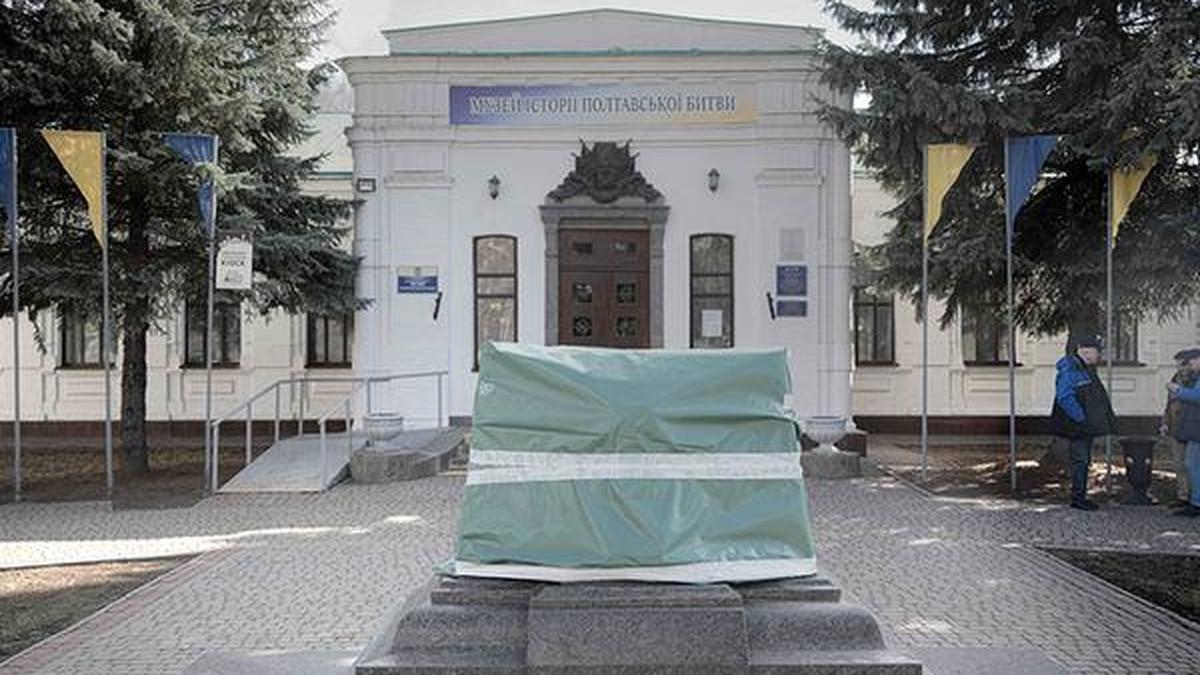
The quiet and echoing rooms of the museum in Poltava, dedicated to an 18th-century battle in central Ukraine, belie a struggle in the war-torn country on how far to go in recasting Russia’s role in history.
The Russian invasion has seen Ukraine step up sweeping “de-colonisation” measures, including the removal of symbols of tsarist and Soviet domination.
Kyiv’s efforts to remove Soviet monuments began in 2014 when Russian forces annexed Crimea. But new laws passed in the second year of Russia’s full-scale invasion seek to go further, forcing the museum to respond to claims it has not revised Kremlin-supported narratives enough.
“Over more than 300 years, a complex myth has been created around the Battle of Poltava,” said Lyudmyla Shendryk, a guide who has worked at the museum for over 40 years.
Poltava was the scene of a decisive 1709 battle when Russian Tsar Peter the Great defeated Sweden’s Charles XII. The Swedish king was allied with Ukrainian Cossack leader Ivan Mazepa, long depicted by Russia as a traitor.
In 2024, Ukrainska Pravda accused the museum of glorifying “Russian arms” and downplaying a 1708 Russian massacre in Baturyn. A Peter the Great statue was taken down in 2024.
Museum guide Lyudmyla Shendryk said, “We must be brave, not remain silent or close our eyes to the complex or disagreeable pages in our history.”


The government plans to amend the FCRA, introducing new regulations for NGO asset management and accountability for key functionaries.

The draft policy for “Responsible Digital Use Among Students”, released on Monday by the Department of Health and Family Welfare, has recommended that parents set structured routines with clear screen-time rules and prioritise privacy, safety, and open conversation with children on digital well-being.

Police Observer Sushant Kumar Saxena conducts surprise inspection at Shencottai police station, reviewing warrants and security arrangements ahead of elections.

Andhra Pradesh government to launch key projects in April, focusing on industrial growth and infrastructure development, says Nara Lokesh.

Lok Sabha refers the Corporate Laws (Amendment) Bill to a JPC amid opposition concerns over CSR provisions dilution.

SHG members in Kanniyakumari use snakes and ladders to raise election awareness and boost voter turnout.

Government accelerates consultations for early implementation of the Women’s Reservation Act to ensure women’s representation in 2029 elections.

CM A. Revanth Reddy distributes ₹1 crore insurance cheques to families of deceased Electricity department employees, enhancing financial security for workers.

The Bengaluru Traffic Police (BTP) registered 634 cases of drunk driving during a week-long special enforcement drive conducted across the city between March 16 and March 22.

GHMC intensifies action against property tax defaulters, seizing properties and offering a One Time Settlement scheme for payments.

CCB arrests three drug peddlers in Mangaluru, seizing ₹2.5 lakh worth of MDMA and other valuables.

TVK's 28 candidates in Puducherry include former BJP MLAs, a sitting Independent, and a retired police IG.

BRS submits notice on private member bill to Speaker