Shell patrol squad: Chennai volunteers guard the turtle coast
The Hindu
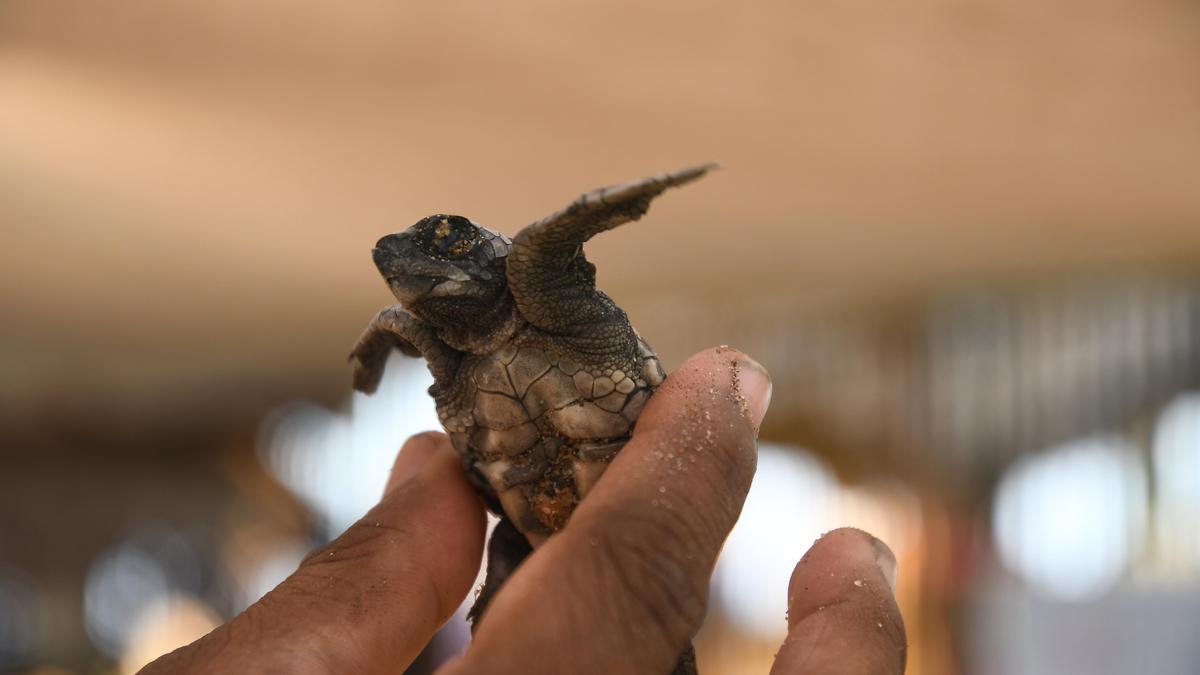
On Chennai’s beaches, volunteers walk for miles in search of fragile nests buried beneath the sand. A night patrol reveals not just the life cycle of the Olive Ridley turtle, but a growing community determined to protect it
It is 1am on a rather warm February night. The stretches of Neelankarai beach merge with Thiruvanmiyur beach. Fishing boats are stationed on the shore waiting for dawn. Bright lights from the city blind our vision. Sand in our shoes, salt in the air. Over 50 curious observers walk at a safe distance from the volunteers, letting them do their job: to find Olive Ridley turtle nests and collect the eggs for safekeeping.
The Olive Ridley sea turtle, a species classified as ‘Vulnerable’ by the International Union for Conservation of Nature, has nested along India’s eastern coastline for centuries. Each year, between December and April, females return to shore, often at night, to breed. Left buried in open sand, the nests are vulnerable to predators such as dogs. Volunteers therefore walk the length of the shore at night to retrieve the eggs and relocate them to protected hatcheries, giving them a safe space to incubate.
Approximately 30 minutes into the walk, the group comes to a halt. Up ahead, the volunteers have stopped. One of them turns, lifts a hand gently, and asks us to stay back.
An Olive Ridley turtle laying eggs on the Rushikulya river mouth beach at Podampeta in Ganjam district on Bay of Bengal Sea’s eastern coast in Odisha. | Photo Credit: BISWARANJAN ROUT
A cluster of volunteers form a loose circle, their torch beams crossing over a single patch of sand. From where we stand, it looks like nothing. No turtle, no visible sign of life. Fifteen minutes in the dark feels longer than it should. Then someone waves us forward.
The circle parts carefully. V Arun from the Students Sea Turtle Conservation Network (SSTCN), a voluntary organisation that works with the Forest Department, is already on his knees, digging into the sand. A nest has been found.


The government plans to amend the FCRA, introducing new regulations for NGO asset management and accountability for key functionaries.

The draft policy for “Responsible Digital Use Among Students”, released on Monday by the Department of Health and Family Welfare, has recommended that parents set structured routines with clear screen-time rules and prioritise privacy, safety, and open conversation with children on digital well-being.

Police Observer Sushant Kumar Saxena conducts surprise inspection at Shencottai police station, reviewing warrants and security arrangements ahead of elections.

Andhra Pradesh government to launch key projects in April, focusing on industrial growth and infrastructure development, says Nara Lokesh.

Lok Sabha refers the Corporate Laws (Amendment) Bill to a JPC amid opposition concerns over CSR provisions dilution.

SHG members in Kanniyakumari use snakes and ladders to raise election awareness and boost voter turnout.

Government accelerates consultations for early implementation of the Women’s Reservation Act to ensure women’s representation in 2029 elections.

CM A. Revanth Reddy distributes ₹1 crore insurance cheques to families of deceased Electricity department employees, enhancing financial security for workers.

The Bengaluru Traffic Police (BTP) registered 634 cases of drunk driving during a week-long special enforcement drive conducted across the city between March 16 and March 22.

GHMC intensifies action against property tax defaulters, seizing properties and offering a One Time Settlement scheme for payments.

CCB arrests three drug peddlers in Mangaluru, seizing ₹2.5 lakh worth of MDMA and other valuables.

TVK's 28 candidates in Puducherry include former BJP MLAs, a sitting Independent, and a retired police IG.

BRS submits notice on private member bill to Speaker