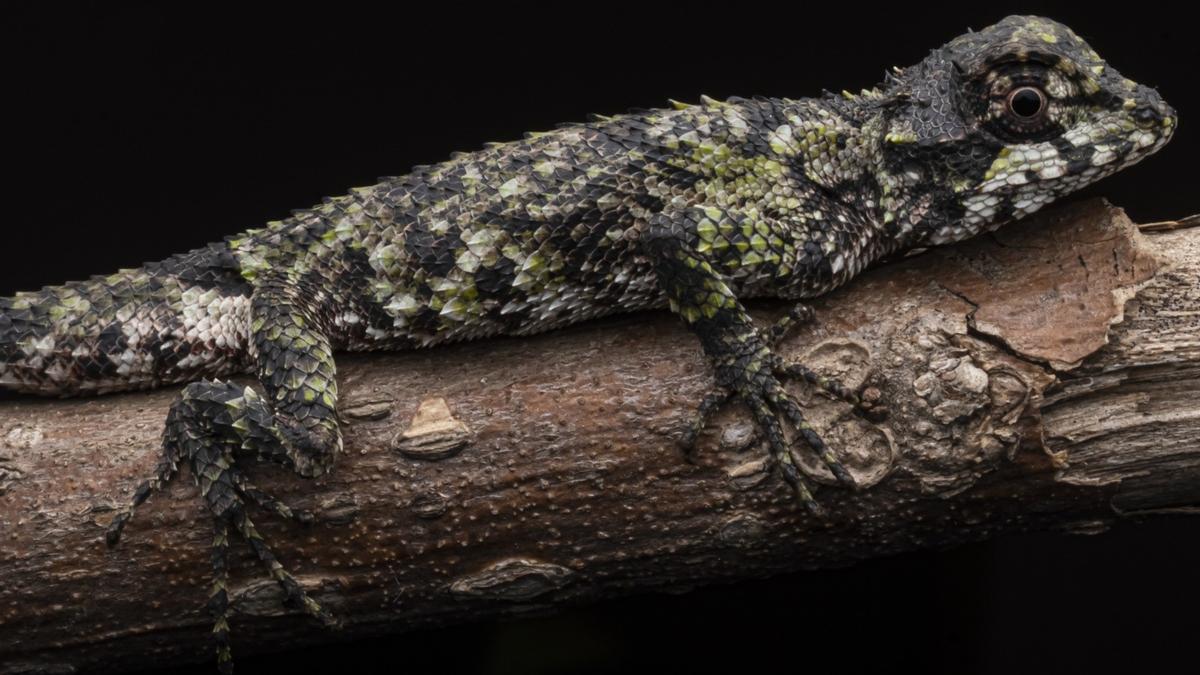
Rare lizard in Meghalaya fuels grassroots conservation efforts
The Hindu
New lizard species discovery in Meghalaya sparks community-led conservation effort in limestone-mining impacted area, involving local villagers.
A lizard species newly recorded in Meghalaya has become the catalyst for a community-driven conservation effort in an area of the State long impacted by limestone mining and a defunct cement plant.
Calotes zolaiking, a species of garden lizard, was first described in 2019 from Mizoram’s Aizawl district by a team of scientists. Its recent sighting in Mawmluh, in the East Khasi Hills district of Meghalaya, has extended the known range of the species by approximately 172 km aerially.
What sets the Meghalaya finding apart is the key role played by two villagers - Goldenstar Thongni and Banyllashisha Wankhar - who were among the eight authors of the study published in the latest issue of Zootaxa, a peer-reviewed journal on animal taxonomy.
Mr. Thongni, a resident of Rohbah in South West Khasi Hills and a nature enthusiast, collaborated on the study, while Ms. Wankhar, who runs a grocery shop in Mawmluh, collected the first of the two specimens that led to the species’ confirmation. “This lizard looked special,” said the 25-year-old, reflecting on her initial observation.
While not new to science, the reptile’s presence in Mawmluh has assumed local significance, triggering a conservation drive across the region, especially in and around Sohra (Cherrapunji).
“We do have our sacred groves where no one is allowed to remove even a twig or a dead leaf, but the greenery has been under stress due to mining and industrial activities,” said Bansan Kupar Lyngdoh, headman of Mawmluh village. “The lizard is our pride by dint of featuring in a global scientific journal. It has enthused us to intensify our conservation efforts in the hope of locals and scientists finding more faunal species,” he told The Hindu.
Herpetologist Jayaditya Purkayastha, based in Guwahati and one of the study’s authors, credited the villagers with providing the critical groundwork. “A juvenile male and an adult gravid female helped us describe this lizard belonging to the genus Calotes, which currently includes 30 recognised species ranging from South to Southeast Asia and Oceania,” he said.


The government plans to amend the FCRA, introducing new regulations for NGO asset management and accountability for key functionaries.

The draft policy for “Responsible Digital Use Among Students”, released on Monday by the Department of Health and Family Welfare, has recommended that parents set structured routines with clear screen-time rules and prioritise privacy, safety, and open conversation with children on digital well-being.

Police Observer Sushant Kumar Saxena conducts surprise inspection at Shencottai police station, reviewing warrants and security arrangements ahead of elections.

Andhra Pradesh government to launch key projects in April, focusing on industrial growth and infrastructure development, says Nara Lokesh.

Lok Sabha refers the Corporate Laws (Amendment) Bill to a JPC amid opposition concerns over CSR provisions dilution.

SHG members in Kanniyakumari use snakes and ladders to raise election awareness and boost voter turnout.

Government accelerates consultations for early implementation of the Women’s Reservation Act to ensure women’s representation in 2029 elections.

CM A. Revanth Reddy distributes ₹1 crore insurance cheques to families of deceased Electricity department employees, enhancing financial security for workers.

The Bengaluru Traffic Police (BTP) registered 634 cases of drunk driving during a week-long special enforcement drive conducted across the city between March 16 and March 22.

GHMC intensifies action against property tax defaulters, seizing properties and offering a One Time Settlement scheme for payments.

CCB arrests three drug peddlers in Mangaluru, seizing ₹2.5 lakh worth of MDMA and other valuables.

TVK's 28 candidates in Puducherry include former BJP MLAs, a sitting Independent, and a retired police IG.

BRS submits notice on private member bill to Speaker