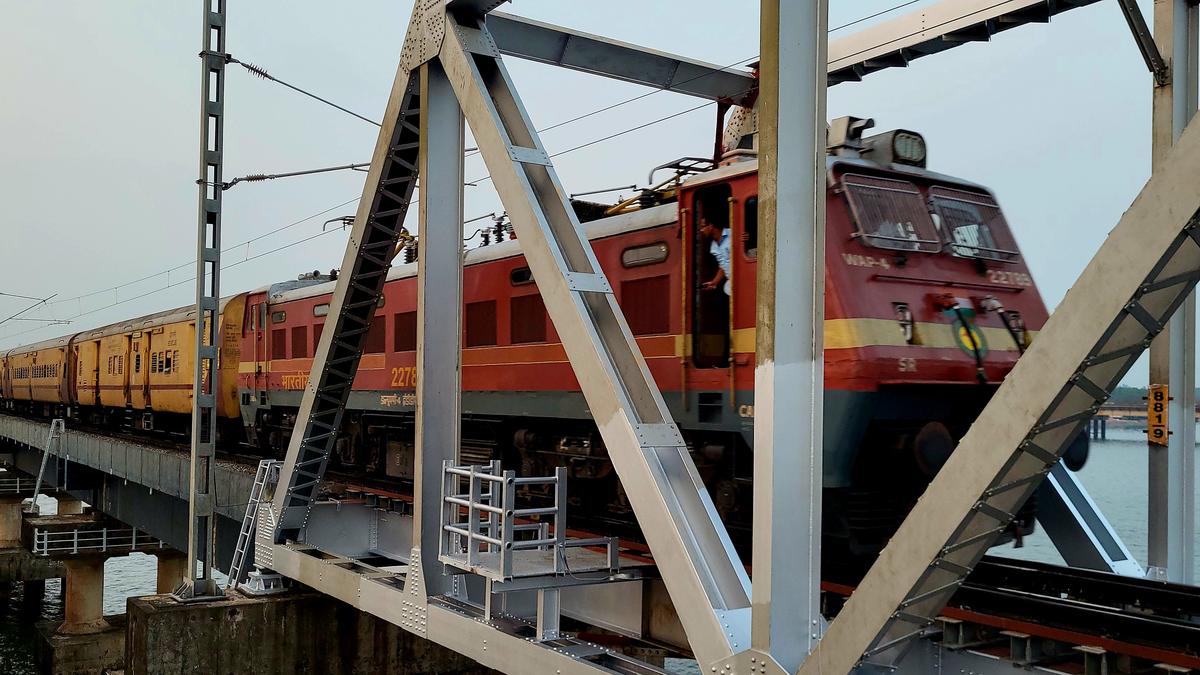
Palakkad division ranks first in key performance indicator rankings of Indian Railways
The Hindu
The division reached its revenue target as early as February by earning ₹1,607.02 crore through improved passenger and freight earnings. It also effectively controlled expenditure through optimised resource allocation and energy conservation. Stringent safety protocols, regular inspections, and proactive track maintenance have led to zero accidents.
Palakkad division has secured the first position in the Key Performance Indicator (KPI) rankings of Indian Railways, moving upwards from 54th in 2023 and 5th in 2024.
The rankings, by the Railway Board, evaluate all the 68 railway divisions across various parameters.
The division reached its revenue target as early as February by earning ₹1607.02 crore through improved passenger and freight earnings. It also effectively controlled expenditure through optimised resource allocation and energy conservation.
The division significantly improved punctuality with emphasis on operational efficiency and achieved 94.01% train punctuality despite operating several special trains and enforcing many line as well as power blocks for infrastructure maintenance.
Freight loading saw 36.55% increase, from 5.9 million tonnes and ₹427.64 crore revenue in 2023-24 to 6.41 million tonnes and ₹583.37 crore revenue in 2024-25. The feat was achieved by efficient terminal management, enhanced wagon availability and customer-centric initiatives.
Efficient use of locomotives, coaches, wagons and infrastructure enhanced operational productivity while data-driven planning improved asset turnaround time. It maximised the potential of e-auction platforms to monetise passenger amenity assets, including catering stalls, parking areas, paid AC waiting halls and advertisements at stations, generating ₹50 crore contract value from 115 assets.
Stringent safety protocols, regular inspections, and proactive track maintenance have led to zero accidents. The division executed major track renewal projects, replacing aged rails and sleepers. It granted 19% more traffic blocks for safety related, engineering, signal & telecommunication and traction works, as compared to last year. Nearly 40 km new tracks were laid replacing old tracks while 64.41 km tracks underwent deep screening.


The government plans to amend the FCRA, introducing new regulations for NGO asset management and accountability for key functionaries.

The draft policy for “Responsible Digital Use Among Students”, released on Monday by the Department of Health and Family Welfare, has recommended that parents set structured routines with clear screen-time rules and prioritise privacy, safety, and open conversation with children on digital well-being.

Police Observer Sushant Kumar Saxena conducts surprise inspection at Shencottai police station, reviewing warrants and security arrangements ahead of elections.

Andhra Pradesh government to launch key projects in April, focusing on industrial growth and infrastructure development, says Nara Lokesh.

Lok Sabha refers the Corporate Laws (Amendment) Bill to a JPC amid opposition concerns over CSR provisions dilution.

SHG members in Kanniyakumari use snakes and ladders to raise election awareness and boost voter turnout.

Government accelerates consultations for early implementation of the Women’s Reservation Act to ensure women’s representation in 2029 elections.

CM A. Revanth Reddy distributes ₹1 crore insurance cheques to families of deceased Electricity department employees, enhancing financial security for workers.

The Bengaluru Traffic Police (BTP) registered 634 cases of drunk driving during a week-long special enforcement drive conducted across the city between March 16 and March 22.

GHMC intensifies action against property tax defaulters, seizing properties and offering a One Time Settlement scheme for payments.

CCB arrests three drug peddlers in Mangaluru, seizing ₹2.5 lakh worth of MDMA and other valuables.

TVK's 28 candidates in Puducherry include former BJP MLAs, a sitting Independent, and a retired police IG.

BRS submits notice on private member bill to Speaker