NITI Aayog panel on critical minerals wants joint efforts, policy support for self-reliance
The Hindu
NITI Aayog's panel emphasizes joint efforts and policy support to enhance India's self-reliance in critical minerals through strategic partnerships.
HYDERABAD
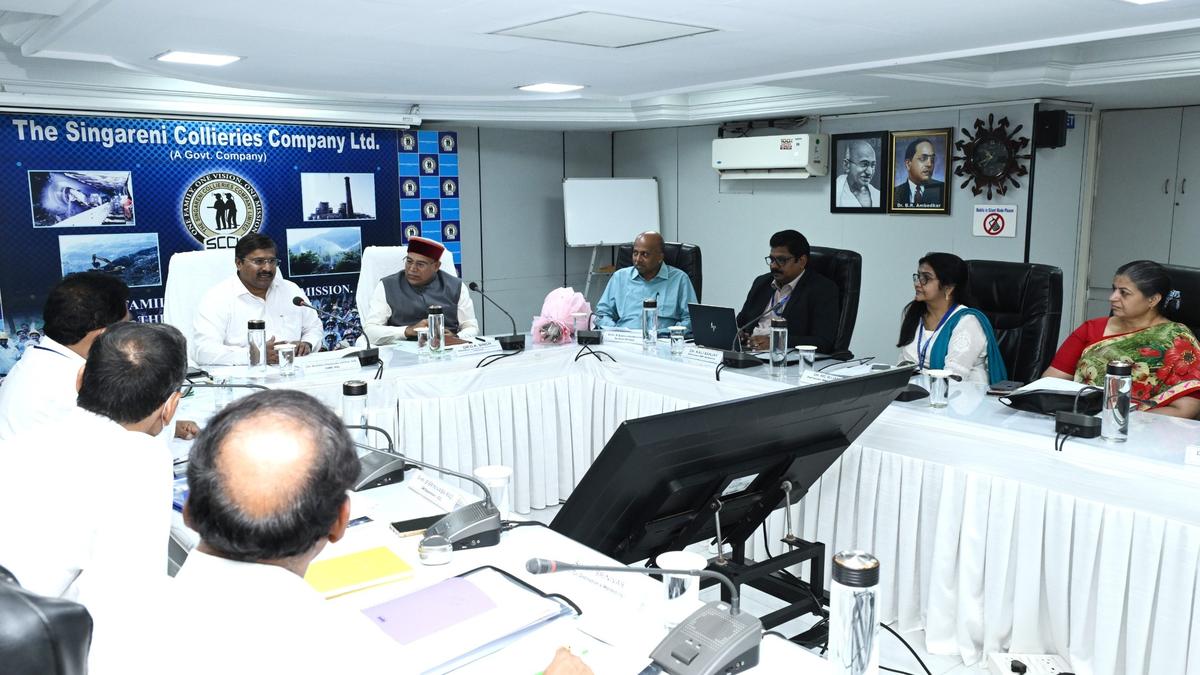
The second meeting of the National Critical and Strategic Minerals Committee constituted by NITI Aayog held at Singareni Bhavan on Thursday (February 26, 2026) has stated that collaborative action, policy support and accelerated exploration are essential to transform India into a self-reliant nation in the critical minerals sector.
Speaking at the meeting chaired by Dr. D.K. Singh, a former scientist of the Bhabha Atomic Research Centre (BARC), Chairman and Managing Director of Singareni Collieries Company Limited (SCCL) Dr. Buddhaprakash Jyoti, a member of the NITI Aayog Committee, said the Committee formed to identify and develop critical mineral resources within the country would play a pivotal role in strengthening the country’s resource security.
He informed that the company was exploring the extraction of Rare Earth Elements (REEs) from the overburden and clays present in coal seams of its opencast mines. Additionally, efforts were being made to recover valuable minerals from fly ash and bottom ash generated at the Singareni Thermal Power Plant.
Other members of the committee stated that critical minerals such as lithium, rare earth elements, cobalt and nickel were indispensable for sectors including renewable energy, electric vehicles, electronics, defence and advanced manufacturing. While India possessed notable reserves of certain critical minerals, limited exploration and mining activities had resulted in continued dependence on imports.
With the demand expected to increase substantially in the coming years, the Committee called for a coordinated national effort involving both public and private sector mining companies. The meeting featured detailed discussions on the current demand-supply scenario, exploration opportunities across various States, policy support mechanisms and the role of government agencies and mining organisations.


The government plans to amend the FCRA, introducing new regulations for NGO asset management and accountability for key functionaries.

The draft policy for “Responsible Digital Use Among Students”, released on Monday by the Department of Health and Family Welfare, has recommended that parents set structured routines with clear screen-time rules and prioritise privacy, safety, and open conversation with children on digital well-being.

Police Observer Sushant Kumar Saxena conducts surprise inspection at Shencottai police station, reviewing warrants and security arrangements ahead of elections.

Andhra Pradesh government to launch key projects in April, focusing on industrial growth and infrastructure development, says Nara Lokesh.

Lok Sabha refers the Corporate Laws (Amendment) Bill to a JPC amid opposition concerns over CSR provisions dilution.

SHG members in Kanniyakumari use snakes and ladders to raise election awareness and boost voter turnout.

Government accelerates consultations for early implementation of the Women’s Reservation Act to ensure women’s representation in 2029 elections.

CM A. Revanth Reddy distributes ₹1 crore insurance cheques to families of deceased Electricity department employees, enhancing financial security for workers.

The Bengaluru Traffic Police (BTP) registered 634 cases of drunk driving during a week-long special enforcement drive conducted across the city between March 16 and March 22.

GHMC intensifies action against property tax defaulters, seizing properties and offering a One Time Settlement scheme for payments.

CCB arrests three drug peddlers in Mangaluru, seizing ₹2.5 lakh worth of MDMA and other valuables.

TVK's 28 candidates in Puducherry include former BJP MLAs, a sitting Independent, and a retired police IG.

BRS submits notice on private member bill to Speaker