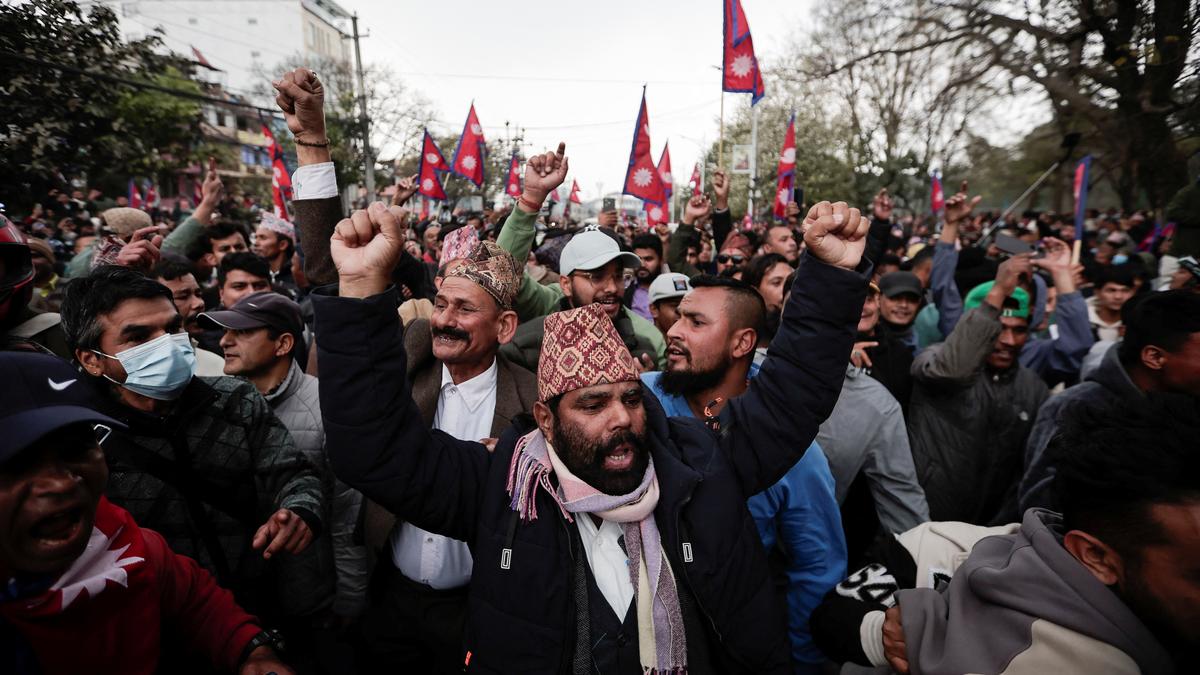
Nepal royalists seek return of king
The Hindu
Pro-monarchy protests surge in Nepal amid economic despair, political instability, and calls for the king's return.
Nearly two decades since Nepal became a secular republic, a surge of pro-monarchy protests have swept the Himalayan nation, fuelled by economic despair and disillusionment with current leaders.
Thousands of demonstrators took to streets last month in a royalist rally that turned violent, with two people killed and more than 100 arrested.
It was one of the latest in a wave of protests demanding the restoration of the monarchy, which has grown in tandem with popular dissatisfaction over political instability, corruption and lacklustre economic development.
Editorial | No to regression: on protests in Nepal, pro-monarchy sentiment
The Hindu-majority nation became a secular republic in 2008 after Parliament abolished the monarchy in a peace deal to end a decade-long civil war in which more than 16,000 people died.
Rajendra Lingden, chairperson of the royalist Rastriya Prajatantra Party (RPP), Nepal's fifth-largest party, said the king is linked with national identity and pride. "We do not seek monarchy as a ruling institution, but rather as a guardian that safeguards national interests and prevents foreign interference," Mr. Lingden told AFP.
In 2017, RPP won a single seat in Parliament. Then in the last election in 2022, their royalist and pro-Hindu agenda gained them 14 seats.


The government plans to amend the FCRA, introducing new regulations for NGO asset management and accountability for key functionaries.

The draft policy for “Responsible Digital Use Among Students”, released on Monday by the Department of Health and Family Welfare, has recommended that parents set structured routines with clear screen-time rules and prioritise privacy, safety, and open conversation with children on digital well-being.

Police Observer Sushant Kumar Saxena conducts surprise inspection at Shencottai police station, reviewing warrants and security arrangements ahead of elections.

Andhra Pradesh government to launch key projects in April, focusing on industrial growth and infrastructure development, says Nara Lokesh.

Lok Sabha refers the Corporate Laws (Amendment) Bill to a JPC amid opposition concerns over CSR provisions dilution.

SHG members in Kanniyakumari use snakes and ladders to raise election awareness and boost voter turnout.

Government accelerates consultations for early implementation of the Women’s Reservation Act to ensure women’s representation in 2029 elections.

CM A. Revanth Reddy distributes ₹1 crore insurance cheques to families of deceased Electricity department employees, enhancing financial security for workers.

The Bengaluru Traffic Police (BTP) registered 634 cases of drunk driving during a week-long special enforcement drive conducted across the city between March 16 and March 22.

GHMC intensifies action against property tax defaulters, seizing properties and offering a One Time Settlement scheme for payments.

CCB arrests three drug peddlers in Mangaluru, seizing ₹2.5 lakh worth of MDMA and other valuables.

TVK's 28 candidates in Puducherry include former BJP MLAs, a sitting Independent, and a retired police IG.

BRS submits notice on private member bill to Speaker