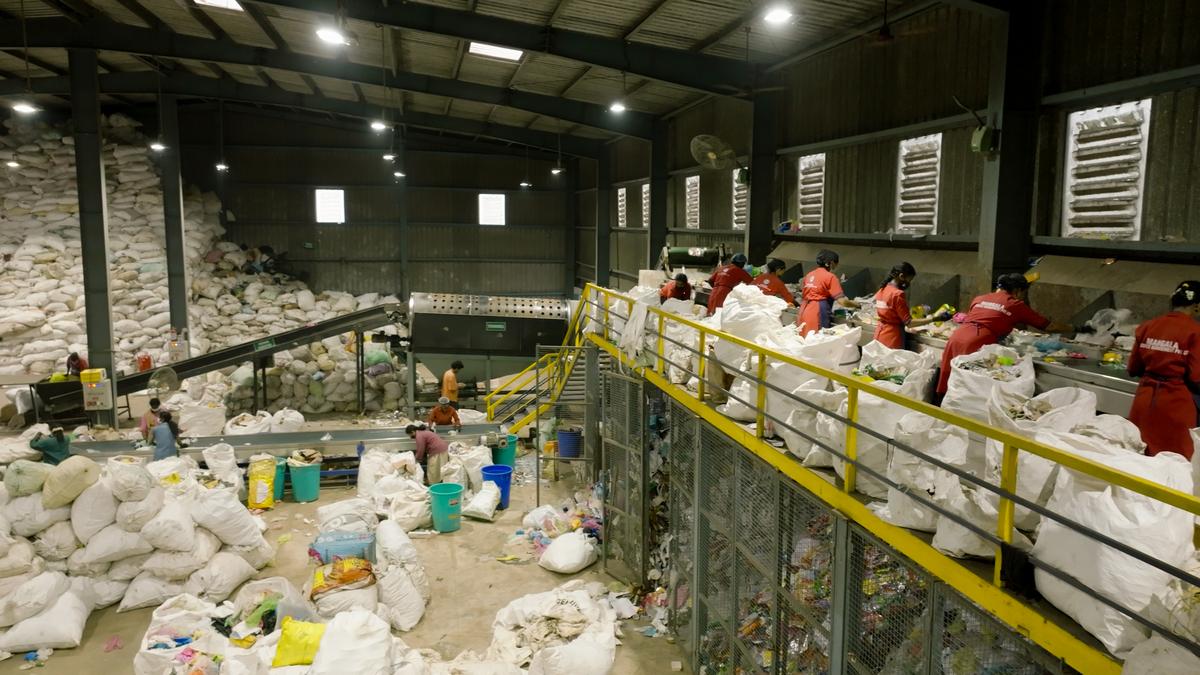
Model zero-cost MRFs in Dakshina Kannada process dry waste generated by 223 gram panchayats
The Hindu
To prevent this, the Zilla Panchayat is working with gram panchayats with a mechanism to send the sanitary pads and diapers to the nearest deep incineration facility where it will be burnt. “We are convincing the panchayats to make use of their funds to cover the cost of transporting and processing of sanitary pads and diapers. We hope to have a system in place in a month’s time,” said Zilla Panchayat Chief Executive Officer K. Anandh.
Having become the lone district in Karnataka to have four material recovery facilities (MRFs) to process dry waste generated by all the 223 gram panchayats in Dakshina Kannada, the coastal district is moving towards having a scientific way of disposing of sanitary pads and diapers.
Dakshina Kannada Zilla Panchayat Chief Executive Officer K. Anandh said sanitary pads and diapers, collected from houses during the house-to-house collection of dry waste, remains unprocessed and they ultimately land up in the landfill sites.
To prevent this, the Zilla Panchayat is working with gram panchayats with a mechanism to send the sanitary pads and diapers to the nearest deep incineration facility where it will be burnt. “We are convincing the panchayats to make use of their funds to cover the cost of transporting and processing of sanitary pads and diapers. We hope to have a system in place in a month’s time,” said Zilla Panchayat Chief Executive Officer K. Anandh.
As part of the Swachh Bharath Mission, the Central government mooted setting up of material recovery facility (MRF) with the capacity of handling 10 tonnes of waste per day (TPD), in a few places in the country, including in Dakshina Kannada.
The first MRF with an installed capacity of 10 TPD was set up at Thenka Yedapadavu in Mangaluru taluk. Following the successful operation of this unit, three more MRFs with each having 7 TPD installed capacity were set up in Narikombu in Bantwal taluk, Ujire in Belthangady taluk, and Kedambady in Puttur taluk. Each of these three MRFs came on 7,150 square foot of area.
Each of the three MRFs having 7 TPD capacity cost ₹1.95 crore with the major portion of about ₹1.5 crore going for civil works and the remaining towards the machinery. Funds were raised from different grants to taluk panchayats and the ZP and from CSR (corporate social responsibility) initiatives, including ₹46.65 lakh from Sri Kshetra Dharmasthala Rural Development Project for the Ujire MRF, and ₹25 lakh from the District Mineral Fund. The MCF provided a truck to the Narikombu MRF.
The Tenka Yedapadavu facility is set up on a 10,000 squarefoot area at a cost of ₹4 crore. This facility processes dry waste from 51 gram panchayats (GPs) of Mangaluru, Moodbidri, Mulki and Bantwal taluks. Started in April 2023, this facility has so far received a total of 15.38 lakh kilograms of dry waste. As much as 6.15 lakh kg of inert materials, namely fabrics, rubber and multi layer plastic materials, were sent for co-processing at cement units namely ACC Geocycle, Dalmia, Ultratech, Vasavadatta and JK. A total of 9.23 lakh kg of dry waste namely glass bottle, paper cups, colour paper, e-waste, PET bottles, food packing material, general plastics and metals, were sent for end destination recycling to different units across the state. A total of 20 women and eight men work in this unit.


The government plans to amend the FCRA, introducing new regulations for NGO asset management and accountability for key functionaries.

The draft policy for “Responsible Digital Use Among Students”, released on Monday by the Department of Health and Family Welfare, has recommended that parents set structured routines with clear screen-time rules and prioritise privacy, safety, and open conversation with children on digital well-being.

Police Observer Sushant Kumar Saxena conducts surprise inspection at Shencottai police station, reviewing warrants and security arrangements ahead of elections.

Andhra Pradesh government to launch key projects in April, focusing on industrial growth and infrastructure development, says Nara Lokesh.

Lok Sabha refers the Corporate Laws (Amendment) Bill to a JPC amid opposition concerns over CSR provisions dilution.

SHG members in Kanniyakumari use snakes and ladders to raise election awareness and boost voter turnout.

Government accelerates consultations for early implementation of the Women’s Reservation Act to ensure women’s representation in 2029 elections.

CM A. Revanth Reddy distributes ₹1 crore insurance cheques to families of deceased Electricity department employees, enhancing financial security for workers.

The Bengaluru Traffic Police (BTP) registered 634 cases of drunk driving during a week-long special enforcement drive conducted across the city between March 16 and March 22.

GHMC intensifies action against property tax defaulters, seizing properties and offering a One Time Settlement scheme for payments.

CCB arrests three drug peddlers in Mangaluru, seizing ₹2.5 lakh worth of MDMA and other valuables.

TVK's 28 candidates in Puducherry include former BJP MLAs, a sitting Independent, and a retired police IG.

BRS submits notice on private member bill to Speaker