MILAN: Building bridges of friendship across the seas
The Hindu
MILAN-2026 fosters international naval cooperation, showcasing INS Vikrant while strengthening friendships among participating nations in Visakhapatnam.
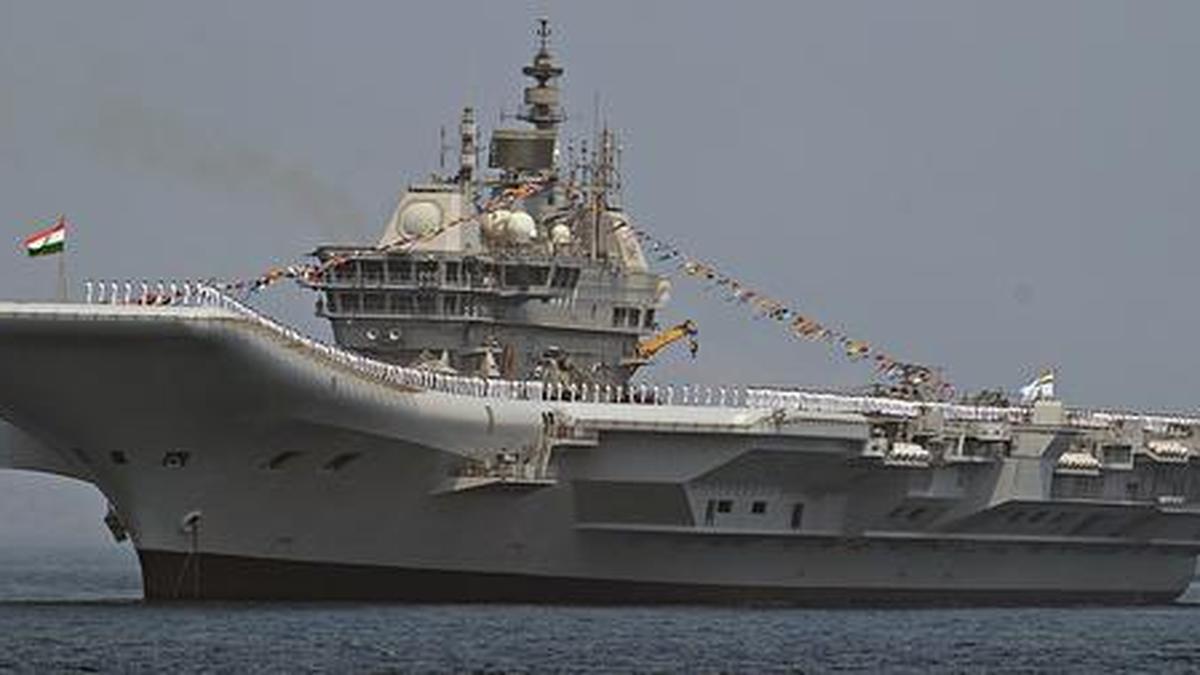
The multilateral Naval Exercise – MILAN-2026 – apart from the International Fleet Review and the Indian Ocean Naval Symposium-2026 have all helped in building bridges of friendship. The participants were seen exchanging pleasantries on board INS Vikrant, before bidding adieu to the counterparts from other navies, on the concluding day— Wednesday evening.
“I am participating in MILAN for the first time. Ours is a small nation and I am grateful to India for giving us an opportunity to participate in a multilateral naval exercise. I had my military training in India,” says a beaming Benjamin Esparon of Seychelles, who was on board INS Vikrant.
“This is our (Seychelles) 50th year of Independence. The Indian Navy is helping Seychelles by training our defence personnel,” he said. On the challenges being faced by Seychelles, he says: “Smuggling of drugs and human trafficking are the major problems.”
“The event (MILAN) has been wonderfully arranged and executed well. We are here for the past 20 days, said Nafiu from Maldives.
“This is the sixth time I am coming to India. Our nation has cultural links with India. I am extremely happy to participate in MILAN. The overall experience was very good,” says Oezir from Indonesia. Many of the participants appreciated Visakhapatnam for its natural beauty and sightseeing places like Kailasagari, which they had visited during their stay in the city.
The majestic INS Vikrant, India’s first indigenously-built aircraft carrier, was the cynosure of all eyes. The first Vikrant served the Indian Navy from 1961 to 1997, and turned the tide in India’s favour during the 1971 Indo-Pak war. Her successor, the present Vikrant, inherits the illustrious legacy.


The government plans to amend the FCRA, introducing new regulations for NGO asset management and accountability for key functionaries.

The draft policy for “Responsible Digital Use Among Students”, released on Monday by the Department of Health and Family Welfare, has recommended that parents set structured routines with clear screen-time rules and prioritise privacy, safety, and open conversation with children on digital well-being.

Police Observer Sushant Kumar Saxena conducts surprise inspection at Shencottai police station, reviewing warrants and security arrangements ahead of elections.

Andhra Pradesh government to launch key projects in April, focusing on industrial growth and infrastructure development, says Nara Lokesh.

Lok Sabha refers the Corporate Laws (Amendment) Bill to a JPC amid opposition concerns over CSR provisions dilution.

SHG members in Kanniyakumari use snakes and ladders to raise election awareness and boost voter turnout.

Government accelerates consultations for early implementation of the Women’s Reservation Act to ensure women’s representation in 2029 elections.

CM A. Revanth Reddy distributes ₹1 crore insurance cheques to families of deceased Electricity department employees, enhancing financial security for workers.

The Bengaluru Traffic Police (BTP) registered 634 cases of drunk driving during a week-long special enforcement drive conducted across the city between March 16 and March 22.

GHMC intensifies action against property tax defaulters, seizing properties and offering a One Time Settlement scheme for payments.

CCB arrests three drug peddlers in Mangaluru, seizing ₹2.5 lakh worth of MDMA and other valuables.

TVK's 28 candidates in Puducherry include former BJP MLAs, a sitting Independent, and a retired police IG.

BRS submits notice on private member bill to Speaker