Malayalam theatre steals the spotlight at ITFoK
The Hindu
Malayalam theatre captivates audiences at ITFoK with powerful productions exploring faith, memory, and social issues in innovative ways.
The Malayalam productions emerged as some of the most compelling voices at the International Theatre Festival of Kerala (ITFoK) being held in Thrissur, leaving the audience deeply moved by their artistic range, thematic depth and performative brilliance. Rooted in local realities yet expansive in vision, these five plays demonstrated how Malayalam theatre continues to reinvent itself while engaging sharply with history, faith, memory, displacement and power.
Madan Moksham, directed by Job Madathil, based on Tamil-Malayalam writer Jayamohan’s work, offered a piercing reflection on faith and power. The play, performed by Marutham Theatre, Alappuzha, interrogates how ritualistic conventions, shaped and controlled by priestly authorities, often become more powerful than the divine itself. Through the story of the folk deity Madan, the play reveals how gods shaped by popular beliefs are gradually imprisoned within rigid customs, stripped of movement and vitality. It powerfully captures the existential crisis faced by Madan and the community associated with him, mirroring the larger social, cultural and spiritual transformations unfolding across Kerala.
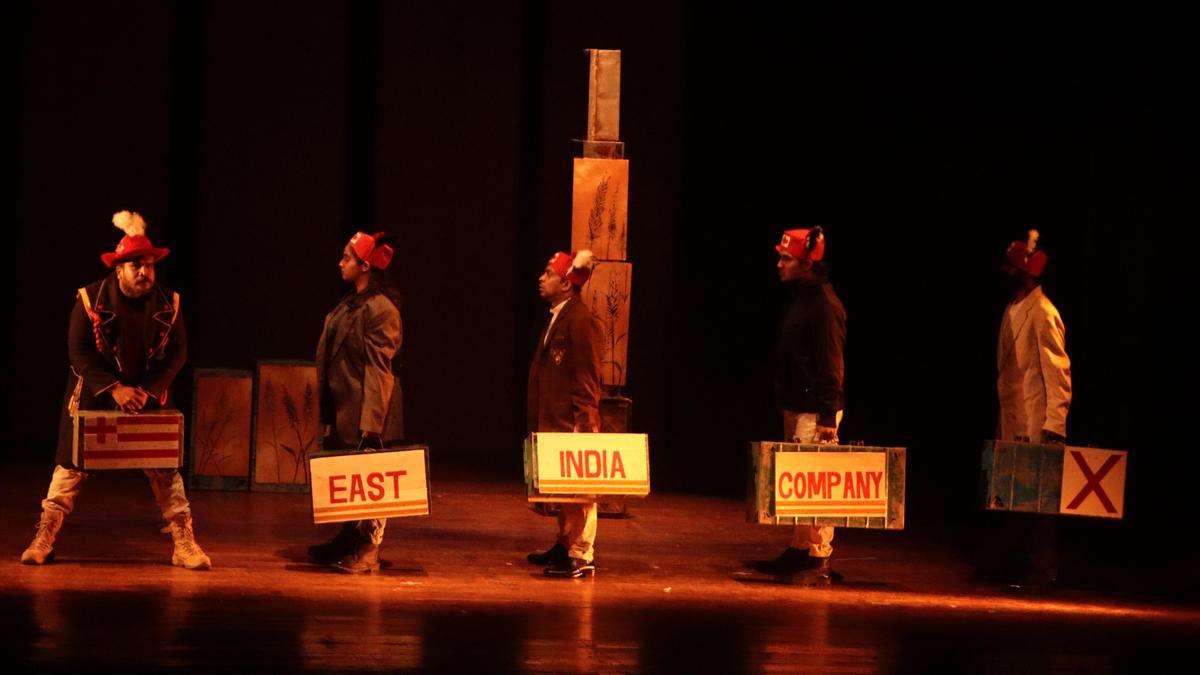
Koohoo – An Anthology on Rails by Little Earth School of Theatre, Palakkad, was another captivating offering that redefined theatrical space and storytelling. Here, the train itself becomes the central character, with performances unfolding across different railway stations. Directed by Arun Lal, the docu-functional performance weaves together stories of war, colonial invasion, the freedom movement, soldiers’ sacrifices, communal hatred and the state’s apathy towards ordinary lives. The innovative use of steel trunk boxes as multipurpose stage properties was particularly striking. Seamlessly shifting roles as musical instruments, railway wagons, Gandhi’s spinning wheel, dustbins and coach interiors, the boxes drew spontaneous applause from the audience, underscoring the play’s inventive visual language and emotional reach.
Nanmayil John Quixote by Athulya Kaayikathakavedhi offered a bold cultural reimagining of Miguel de Cervantes’ iconic dreamer. Directed by Aliyar K., the play relocates Don Quixote to north Travancore, envisioning him as a north Travancore Christian figure armed with outdated notions of chivalry, journeying across time and social realities. Blending traditional props and instruments with the performative elements of Theyyam and Kalari, the production raises a timeless question: who is truly mad — the dreamer who dares to challenge injustice or society that normalises it?
Bye Bye Bypass, staged by Kalimuttam, Ernakulam, turned its focus towards displacement and loss through the intimate story of Athimootil family. Centred on a group of cousins who lose their ancestral home to a bypass construction, the play draws from cine actor and director of the play Roshan Mathew’s personal experiences. It sensitively explores what a home means to children — a space of safety, stability and belonging — and the deep emotional rupture caused by its loss. The narrative, grounded in lived reality, resonated strongly with contemporary anxieties around development and displacement.
Screamer by Scale Media presented a stark, unsettling meditation on power and militarisation. Directed by K.R. Ramesh, the play imagines its central character as a global commander-in-chief, presiding over a universal military authority. The drama unfolds as this figure breaks down in tears during a Republic Day parade, with his emotional collapse forming the core of the narrative.


The government plans to amend the FCRA, introducing new regulations for NGO asset management and accountability for key functionaries.

The draft policy for “Responsible Digital Use Among Students”, released on Monday by the Department of Health and Family Welfare, has recommended that parents set structured routines with clear screen-time rules and prioritise privacy, safety, and open conversation with children on digital well-being.

Police Observer Sushant Kumar Saxena conducts surprise inspection at Shencottai police station, reviewing warrants and security arrangements ahead of elections.

Andhra Pradesh government to launch key projects in April, focusing on industrial growth and infrastructure development, says Nara Lokesh.

Lok Sabha refers the Corporate Laws (Amendment) Bill to a JPC amid opposition concerns over CSR provisions dilution.

SHG members in Kanniyakumari use snakes and ladders to raise election awareness and boost voter turnout.

Government accelerates consultations for early implementation of the Women’s Reservation Act to ensure women’s representation in 2029 elections.

CM A. Revanth Reddy distributes ₹1 crore insurance cheques to families of deceased Electricity department employees, enhancing financial security for workers.

The Bengaluru Traffic Police (BTP) registered 634 cases of drunk driving during a week-long special enforcement drive conducted across the city between March 16 and March 22.

GHMC intensifies action against property tax defaulters, seizing properties and offering a One Time Settlement scheme for payments.

CCB arrests three drug peddlers in Mangaluru, seizing ₹2.5 lakh worth of MDMA and other valuables.

TVK's 28 candidates in Puducherry include former BJP MLAs, a sitting Independent, and a retired police IG.

BRS submits notice on private member bill to Speaker