Kerala veers from impressive social gains to mounting fiscal strain Premium
The Hindu
The biggest challenge faced by successive State governments in Kerala has been keeping expenditure down without undermining its pro-social sector fiscal policies.
Writing about the food habits of Malayalees in the 19th century in Pathonpathaam Noottandile Keralam (Kerala in the 19th Century) — a 1,300-page tome that sparkles with insight and scholarly wit — P. Bhaskaranunni observes that two meals a day were invariably the norm for the general populace. “Rice was very rare. What was available was of low quality. They somehow subsisted on gruel or mash made from chama (little millet), thina (foxtail millet), mula nellu (bamboo rice), koovaraku (finger millet), muthira (horse gram) and payar (beans).”
Elsewhere, he writes about the massive crop damage caused by the torrential rains in 1852 and again in 1853. “Even money could not buy a grain of rice. It was the year that Travancore imported rice for the first time. The imports were from Bengal.” These two images from the past illustrate how Kerala has changed, and yet not changed. To the Gen-Z of 21st-century Kerala, for whom Mexican tacos or Italian pizzas are only a few keypad taps away, the frugal food habits of their 19th-century ancestors would appear incomprehensible or utterly primitive. Yet one cannot discount the fact that 21st-century Kerala remains pitiably dependent on sister States for its staple diet — rice. Domestic rice production continues to fall prey, year after year, to the whims of the monsoon rains.
Presenting modern Kerala’s first budget in 1957, C. Achutha Menon, the Finance Minister in the first Communist government led by the inimitable E.M.S. Namboodiripad, observed that the greatest concern, both for the people and the government, was the “food problem.” But as he noted elsewhere in the same June 7, 1957 speech — and what now sounds eerily prophetic — it was not young Kerala’s only problem: “Density of population, scarcity of arable land and dearth of industries have contributed to unemployment, the most acute problem of Kerala.” It should be remembered that Achutha Menon — a gentle soul who would later become Chief Minister under a Communist Party of India (CPI)-Congress alliance and come to be regarded as the best Kerala has had — was speaking at a time when the population of the fledgling State was a mere 1.50 crore. What may seem astonishing is that if one were to transpose his words into the latest budget of Kerala — a Kerala of 3.4 crore people and a diaspora spread across the planet — they would not be out of place.
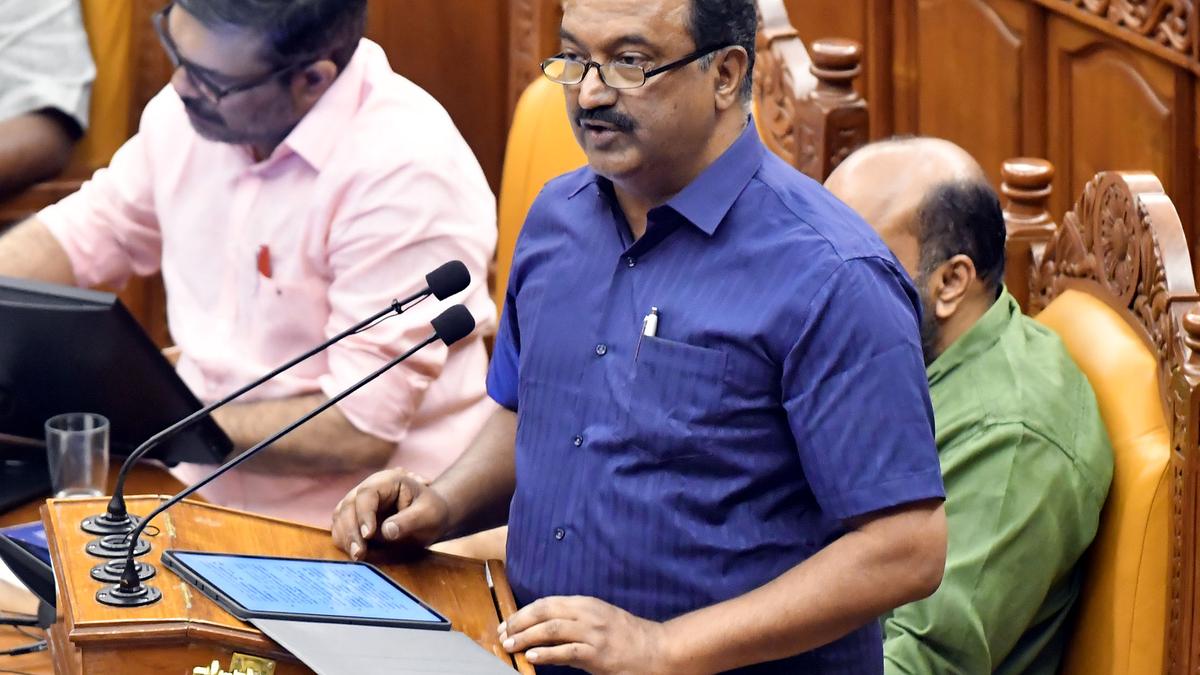
The problems he outlined persist, notwithstanding the firm belief held by K.N. Balagopal, Finance Minister in Kerala’s current Communist Party of India (Marxist)-led Left Democratic Front government, that the State’s budget size will soon touch ₹2 trillion. Since those distant points in time — the vicissitudes and romance of the 19th century and the politically turbulent years of the mid-20th century — Kerala’s economy and the living standards of its people have undeniably transformed beyond recognition. The State’s enviable literacy rate, low infant mortality, and high life expectancy, comparable to those of the developed West, gave rise to what has come to be hailed as the Kerala Model. This human-development paradigm evolved over decades, its contours shaped by Kerala’s distinctive political and socio-economic milieu, perceptive government policies such as land reforms and decentralised local governance, and constructive public action. Even so, despite strong social indicators in health, education, and social welfare, Kerala continues to grapple — albeit in broader and more complex dimensions — with many of the same problems that Achutha Menon identified in his first budget more than six decades ago. The review that follows examines the multiple pathways of Kerala’s economic evolution, its current status, the challenges it faces, and the recommendations of the 16th Finance Commission on the sharing of resources between the Centre and the States.
In the Economic Review 2024, the State Planning Board observed that Kerala ranks among the top 10 Indian States in terms of per capita income and Gross State Domestic Product (GSDP). According to the document, the Kerala economy recorded “robust” growth in 2023-24. The real GSDP stood at ₹6,35,13,653 lakh (Quick Estimates), registering a growth of 6.5%, compared to 4.2% in 2022-23. “The real Gross State Value Added (at 2011-12 prices) increased to 7.2% in 2023-24 from 5.3% in 2022-23. GSDP at current prices is ₹11,46,10,867 lakh in 2023-24, reflecting a growth of 11.9%, compared to 10.7% in 2022-23. The per capita GSDP of Kerala increased by 5.5% to ₹1,76,072 in 2023-24, against the national average of ₹1,24,600,” it noted, adding that the average income per person in Kerala is higher than the national average.
Kerala’s identity as a consumer State remains intact. The photo shows children shopping for classroom essentials at a store in Palakkad. | Photo Credit: K. K. Mustafah


The government plans to amend the FCRA, introducing new regulations for NGO asset management and accountability for key functionaries.

The draft policy for “Responsible Digital Use Among Students”, released on Monday by the Department of Health and Family Welfare, has recommended that parents set structured routines with clear screen-time rules and prioritise privacy, safety, and open conversation with children on digital well-being.

Police Observer Sushant Kumar Saxena conducts surprise inspection at Shencottai police station, reviewing warrants and security arrangements ahead of elections.

Andhra Pradesh government to launch key projects in April, focusing on industrial growth and infrastructure development, says Nara Lokesh.

Lok Sabha refers the Corporate Laws (Amendment) Bill to a JPC amid opposition concerns over CSR provisions dilution.

SHG members in Kanniyakumari use snakes and ladders to raise election awareness and boost voter turnout.

Government accelerates consultations for early implementation of the Women’s Reservation Act to ensure women’s representation in 2029 elections.

CM A. Revanth Reddy distributes ₹1 crore insurance cheques to families of deceased Electricity department employees, enhancing financial security for workers.

The Bengaluru Traffic Police (BTP) registered 634 cases of drunk driving during a week-long special enforcement drive conducted across the city between March 16 and March 22.

GHMC intensifies action against property tax defaulters, seizing properties and offering a One Time Settlement scheme for payments.

CCB arrests three drug peddlers in Mangaluru, seizing ₹2.5 lakh worth of MDMA and other valuables.

TVK's 28 candidates in Puducherry include former BJP MLAs, a sitting Independent, and a retired police IG.

BRS submits notice on private member bill to Speaker