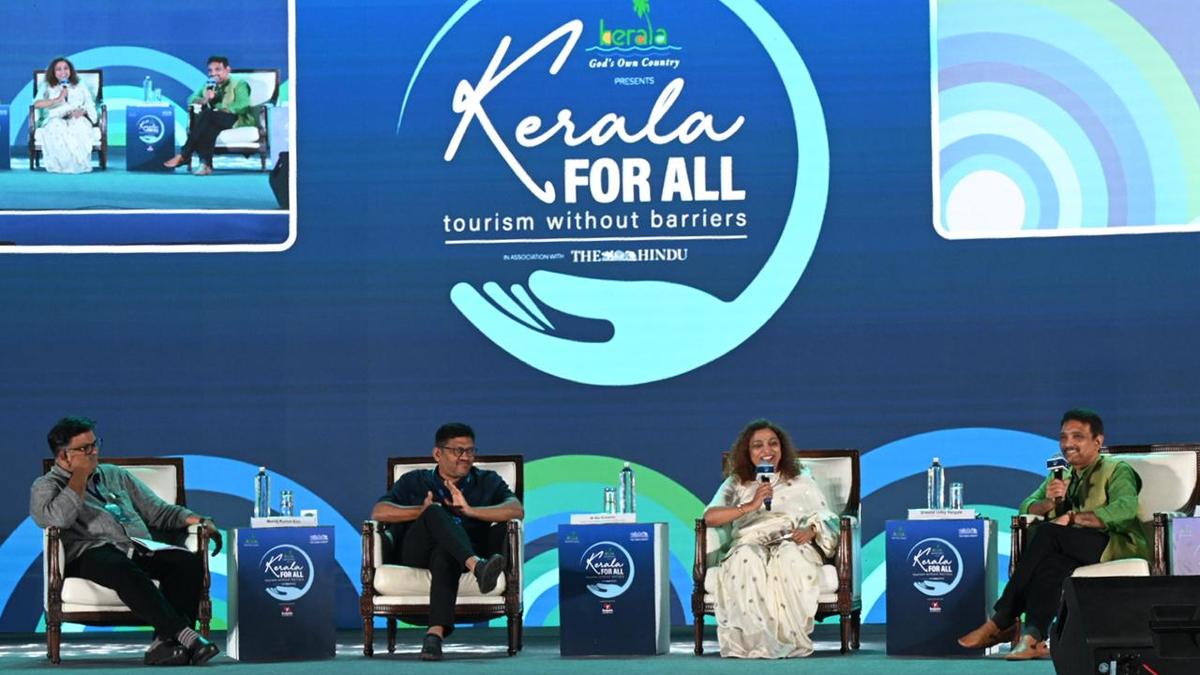
Kerala for All conclave: Design public spaces to ensure access for all, says Manoj Kumar Kini
The Hindu
Experts at Kerala for All conclave emphasize the need for inclusive urban design tailored to local contexts for better accessibility.
Highlighting the need to integrate urban design into urban planning, a panel of experts has called for greater synergy among stakeholders to make inclusivity and accessibility standard in public projects.
Speaking on Designing Accessible Spaces: Infrastructure, Transport and Public Areas at the Kerala for All conclave, organised by Kerala Tourism and The Hindu, Manoj Kumar Kini, urban design consultant, said public design auditing should be institutionalised. He also cited the We Park in Kollam as a prime example of a public space designed to ensure accessibility for all.
“In a democracy, translating policy into implementation is often difficult and cumbersome. Two key factors that can smooth this process are social awareness and collaboration among various stakeholders, including the general public,” he pointed out.
Biju Kuriakose, co-founder of architectureRED, emphasised the need to sensitise people to the concept of shared living. “Our policymakers are not approaching inclusivity holistically. We cannot merely emulate urban design models from developed countries; we need to evolve a model suited to our own context,” he said.
Referring to the We Park model, he stressed the importance of implementing smaller, practical ideas of inclusivity on the ground while keeping long-term goals in view. “It is almost as if we have forgotten social infrastructure while building large cities,” he added.
Sheetal Uday Harpale, architect and empanelled Universal Accessibility Auditor, highlighted that inclusivity should be addressed at micro, meso and macro levels, encompassing both people with disabilities and the geriatric population. “There is a significant gap between urban designers and urban policy, and this needs to be bridged,” she said.


The government plans to amend the FCRA, introducing new regulations for NGO asset management and accountability for key functionaries.

The draft policy for “Responsible Digital Use Among Students”, released on Monday by the Department of Health and Family Welfare, has recommended that parents set structured routines with clear screen-time rules and prioritise privacy, safety, and open conversation with children on digital well-being.

Police Observer Sushant Kumar Saxena conducts surprise inspection at Shencottai police station, reviewing warrants and security arrangements ahead of elections.

Andhra Pradesh government to launch key projects in April, focusing on industrial growth and infrastructure development, says Nara Lokesh.

Lok Sabha refers the Corporate Laws (Amendment) Bill to a JPC amid opposition concerns over CSR provisions dilution.

SHG members in Kanniyakumari use snakes and ladders to raise election awareness and boost voter turnout.

Government accelerates consultations for early implementation of the Women’s Reservation Act to ensure women’s representation in 2029 elections.

CM A. Revanth Reddy distributes ₹1 crore insurance cheques to families of deceased Electricity department employees, enhancing financial security for workers.

The Bengaluru Traffic Police (BTP) registered 634 cases of drunk driving during a week-long special enforcement drive conducted across the city between March 16 and March 22.

GHMC intensifies action against property tax defaulters, seizing properties and offering a One Time Settlement scheme for payments.

CCB arrests three drug peddlers in Mangaluru, seizing ₹2.5 lakh worth of MDMA and other valuables.

TVK's 28 candidates in Puducherry include former BJP MLAs, a sitting Independent, and a retired police IG.

BRS submits notice on private member bill to Speaker