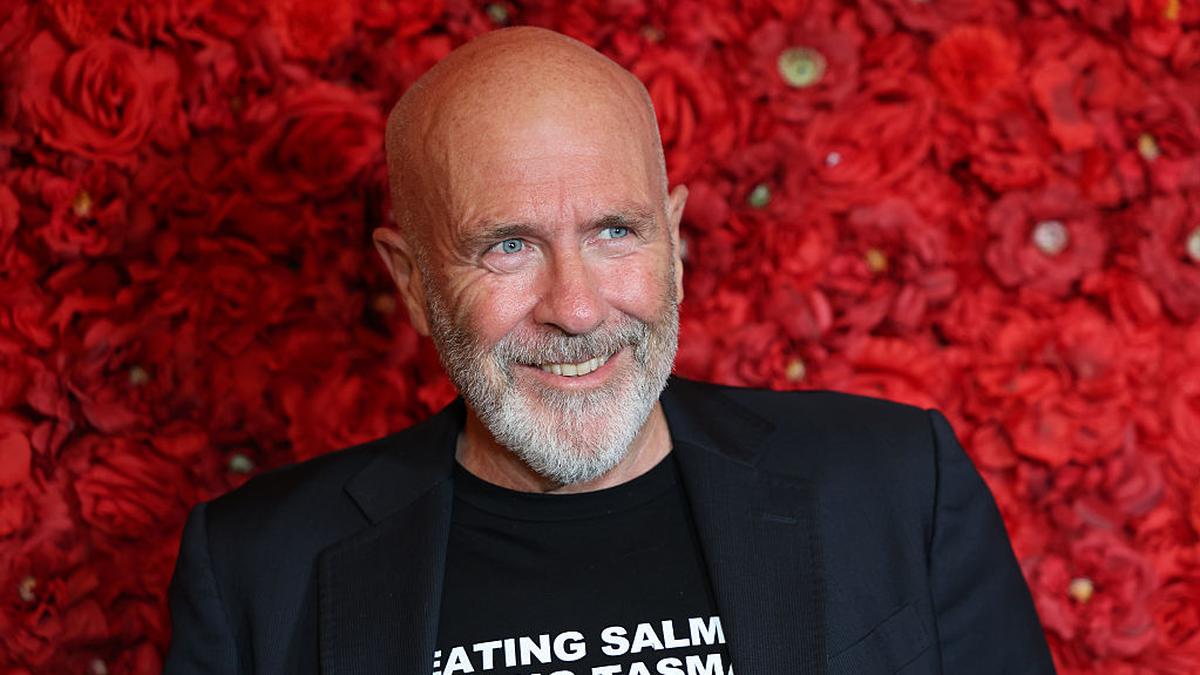
Interview | Richard Flanagan: The writer’s only job is to be not boring
The Hindu
In an interview, Richard Flanagan discusses his writing journey, embracing life’s questions, and the essence of literature.
Before Tasmanian author Richard Flanagan sat down to write his 2023 book Question 7, he was on a clock.
He had been handed down a diagnosis of early onset dementia and was given 12 months to settle his affairs before things got worse. The shocking news made him want to write a book about “what it is to live and what it is to love”.
The book, part memoir, part history, part travelogue, won the Baillie Gifford Prize for Non-Fiction in 2024. Soon after he finished writing it, his doctor clarified that there was no onset of dementia — in fact, it had been a radiologist’s mistaken reading of an MRI.
But he used the 11 months prior to the clarification “to write about kindness, gratitude and other values of humanity,” through the life stories of his father, mother and himself. He looked into periods of light and darkness (his father’s internment at a Japanese camp; how he himself wished to be a writer, “absurdly”, when he was four, his mother’s extraordinary courage, and he recalls an instance when he nearly drowned). The book is dedicated to the person who saved his life.
In 2014, Flanagan won the Man Booker Prize for his novel, The Narrow Road to the Deep North, where the protagonist is a Japanese prisoner of war at a camp on the Burma Death Railway. Last year, the book was adapted into a web series starring Jacob Elordi, Odessa Young and Ciarán Hinds.
On the sidelines of the recent Jaipur Literature Festival, Flanagan said that he was moved when a reader walked up to him and said his mother’s story reminded her of her own mother. In a short conversation, Flanagan says his books come out of the Tasmanian experience, “a world of community and connections”, and that he is putting “two new books into shape”. Edited excerpts:


The government plans to amend the FCRA, introducing new regulations for NGO asset management and accountability for key functionaries.

The draft policy for “Responsible Digital Use Among Students”, released on Monday by the Department of Health and Family Welfare, has recommended that parents set structured routines with clear screen-time rules and prioritise privacy, safety, and open conversation with children on digital well-being.

Police Observer Sushant Kumar Saxena conducts surprise inspection at Shencottai police station, reviewing warrants and security arrangements ahead of elections.

Andhra Pradesh government to launch key projects in April, focusing on industrial growth and infrastructure development, says Nara Lokesh.

Lok Sabha refers the Corporate Laws (Amendment) Bill to a JPC amid opposition concerns over CSR provisions dilution.

SHG members in Kanniyakumari use snakes and ladders to raise election awareness and boost voter turnout.

Government accelerates consultations for early implementation of the Women’s Reservation Act to ensure women’s representation in 2029 elections.

CM A. Revanth Reddy distributes ₹1 crore insurance cheques to families of deceased Electricity department employees, enhancing financial security for workers.

The Bengaluru Traffic Police (BTP) registered 634 cases of drunk driving during a week-long special enforcement drive conducted across the city between March 16 and March 22.

GHMC intensifies action against property tax defaulters, seizing properties and offering a One Time Settlement scheme for payments.

CCB arrests three drug peddlers in Mangaluru, seizing ₹2.5 lakh worth of MDMA and other valuables.

TVK's 28 candidates in Puducherry include former BJP MLAs, a sitting Independent, and a retired police IG.

BRS submits notice on private member bill to Speaker