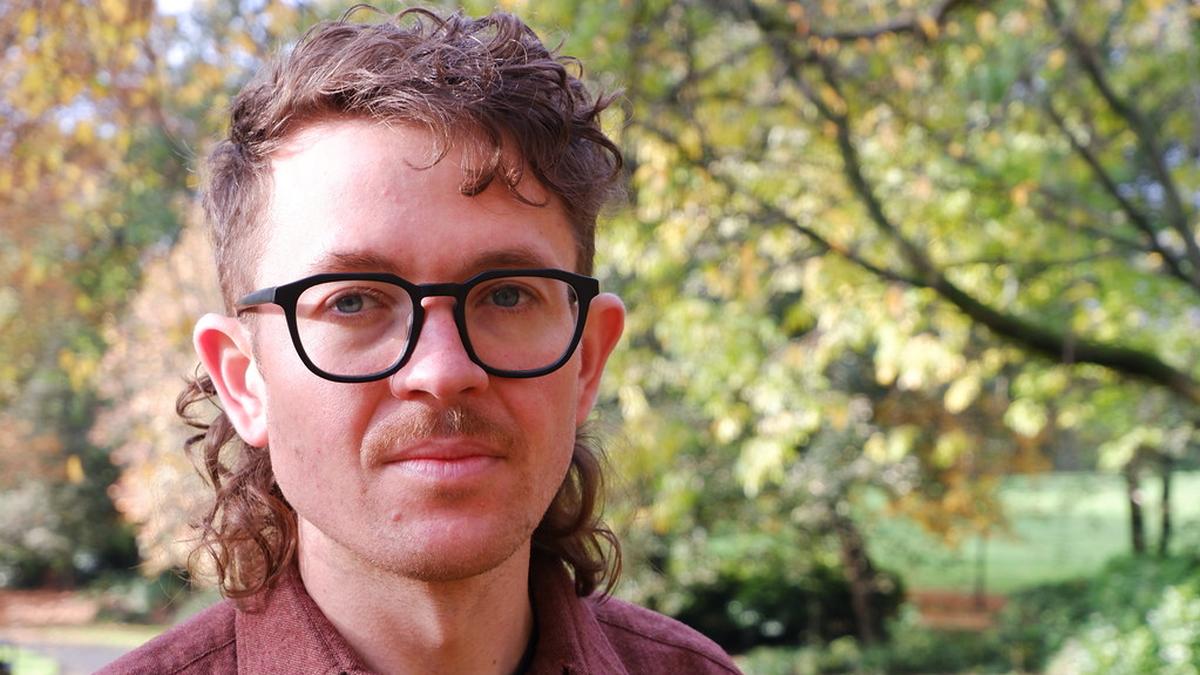
Homeland security is a global mission, says author Rhys Machold
The Hindu
Rhys Machold explores homeland security post-9/11, focusing on India's response to terrorism in his new book.
The concept of “homeland security” came to the fore after the 9/11 attacks in New York. Rhys Machold, a senior lecturer with the School of Social and Political Sciences at the University of Glasgow, has been studying a government’s response to terrorism for a decade, including India’s after the terror attacks of 26/11 in Mumbai in 2008. He travelled across countries and met arms manufacturers, dealers, police trainers, politicians for his new book, After 26/11: India, Palestine/Israel, and the Fabrication of Homeland Security (published by Navayana). Edited excerpts from an interview.
Answer: As I detail at length in the book, in 26/11’s aftermath, the term ‘homeland security’ and institutions and practices associated with it, not least of all the U.S. Department of Homeland Security, went from the peripheries of public and strategic debates in India to centre-stage. In the weeks and months that followed 26/11, a new kind of common sense emerged, namely that India lacked homeland security and needed to urgently replicate the alleged successes of other states in developing a modern and robust homeland security approach, with the U.S. and Israel being cited as some of the most notable examples.
In the years thereafter this apparent new consensus did produce some tangible developments, including new institutions and reforms to internal security and policing in many parts of India, often styled in a language of police and security modernisation.
Overall, I would say that in the aftermath of terror attacks in India, the public tend to make demands for greater domestic security preparedness, and since 26/11 these are often styled in a language of homeland security. Yet, some attacks provoke such demands in quite uneven or inconsistent ways. For instance, the 2011 bombings at Dadar West, Zaveri Bazaar, and the Opera House in Mumbai killed 26 people and wounded another 130, but produced limited public outcry and political responses in terms of improving domestic security infrastructure.
The recent attacks on Pahalgam have provoked broad public outcry over various security lapses or failures of the Indian state and unleashed a media-driven jingoistic fervour, which has in turn been used to rationalise the Indian state’s subsequent mass arrests of individuals in Jammu and Kashmir as well as housing demolitions there and most recently military attacks against Pakistan.
A: The general trend is that although such events are most commonly blamed by state officials and media outlets on Muslims and Islamist groups and sometimes on Pakistan-based authorities or the Pakistani state itself, the tendency in state responses to terror attacks across India is to treat them as relatively exceptional breakdowns of social order rather than routine events. Long-term and systematic planning, both at the State-level in places like Maharashtra but also at the Union-level, has been more difficult to sustain after the occasional political backlash in the wake of terror attacks wanes.
For instance, while 26/11 gave rise to discussions about the need for basic reforms of general policing across India, this imperative never really materialised. At the same time, it is important to stress that the jingoistic fervour that events like 26/11 and the Pahalgam attack produces, particularly against Muslims in India and in Kashmir as well as in relation to Pakistan, have been steadily building since 2014 and I see no sign of this abating anytime soon.


The government plans to amend the FCRA, introducing new regulations for NGO asset management and accountability for key functionaries.

The draft policy for “Responsible Digital Use Among Students”, released on Monday by the Department of Health and Family Welfare, has recommended that parents set structured routines with clear screen-time rules and prioritise privacy, safety, and open conversation with children on digital well-being.

Police Observer Sushant Kumar Saxena conducts surprise inspection at Shencottai police station, reviewing warrants and security arrangements ahead of elections.

Andhra Pradesh government to launch key projects in April, focusing on industrial growth and infrastructure development, says Nara Lokesh.

Lok Sabha refers the Corporate Laws (Amendment) Bill to a JPC amid opposition concerns over CSR provisions dilution.

SHG members in Kanniyakumari use snakes and ladders to raise election awareness and boost voter turnout.

Government accelerates consultations for early implementation of the Women’s Reservation Act to ensure women’s representation in 2029 elections.

CM A. Revanth Reddy distributes ₹1 crore insurance cheques to families of deceased Electricity department employees, enhancing financial security for workers.

The Bengaluru Traffic Police (BTP) registered 634 cases of drunk driving during a week-long special enforcement drive conducted across the city between March 16 and March 22.

GHMC intensifies action against property tax defaulters, seizing properties and offering a One Time Settlement scheme for payments.

CCB arrests three drug peddlers in Mangaluru, seizing ₹2.5 lakh worth of MDMA and other valuables.

TVK's 28 candidates in Puducherry include former BJP MLAs, a sitting Independent, and a retired police IG.

BRS submits notice on private member bill to Speaker