Government aims to make 3-nanometre chips by 2032; achieve self-reliance in 75% tech categories in 4 years
The Hindu
India aims to manufacture 3-nanometre chips by 2032, achieving 75% tech self-reliance in key categories within four years.
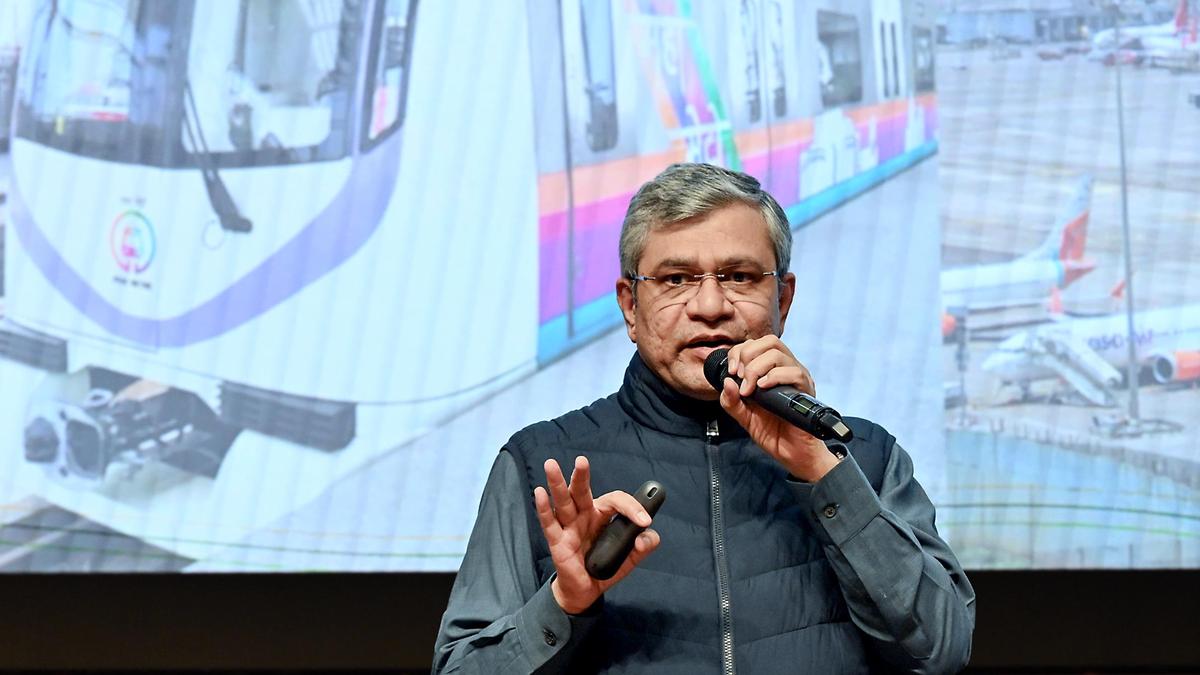
The government is aiming to make high-tech small chips of 3-nanometre node — used in products like modern smartphones and computers — by 2032, Union minister Ashwini Vaishnaw said on Tuesday (January 27, 2026).
The Minister said the government will focus on six categories of chips — compute, radio frequency (RF), networking, power, sensor, and memory — under the second phase of Design-Linked Incentive Scheme that will allow companies in the country to have major control on developing 70-75% technology products.
"The level of 2032 is to reach 3-nanometer chips manufacturing and design. Design, of course, we are doing even today. But manufacturing we should reach 3 nanometer," the Minister said, after meeting with 24 chip design firms that have been selected under the Design-Linked Incentive Scheme.
Mr. Vaishnaw said the government wants to focus on six major systems "so that we develop our complete semiconductor design ecosystem in a very comprehensive way".
"Compute, RF, networking, power, sensor, and memory — we will encourage academia and industry to come up with new ideas, new thoughts, new solutions in these six major categories. As we go into 2029, we will have a major capability of manufacturing and designing the chips, which are required practically in 70-75% of all applications in our country," the Minister said.
He said every sector will require a combination or a permutation of these six types of chips.


The government plans to amend the FCRA, introducing new regulations for NGO asset management and accountability for key functionaries.

The draft policy for “Responsible Digital Use Among Students”, released on Monday by the Department of Health and Family Welfare, has recommended that parents set structured routines with clear screen-time rules and prioritise privacy, safety, and open conversation with children on digital well-being.

Police Observer Sushant Kumar Saxena conducts surprise inspection at Shencottai police station, reviewing warrants and security arrangements ahead of elections.

Andhra Pradesh government to launch key projects in April, focusing on industrial growth and infrastructure development, says Nara Lokesh.

Lok Sabha refers the Corporate Laws (Amendment) Bill to a JPC amid opposition concerns over CSR provisions dilution.

SHG members in Kanniyakumari use snakes and ladders to raise election awareness and boost voter turnout.

Government accelerates consultations for early implementation of the Women’s Reservation Act to ensure women’s representation in 2029 elections.

CM A. Revanth Reddy distributes ₹1 crore insurance cheques to families of deceased Electricity department employees, enhancing financial security for workers.

The Bengaluru Traffic Police (BTP) registered 634 cases of drunk driving during a week-long special enforcement drive conducted across the city between March 16 and March 22.

GHMC intensifies action against property tax defaulters, seizing properties and offering a One Time Settlement scheme for payments.

CCB arrests three drug peddlers in Mangaluru, seizing ₹2.5 lakh worth of MDMA and other valuables.

TVK's 28 candidates in Puducherry include former BJP MLAs, a sitting Independent, and a retired police IG.

BRS submits notice on private member bill to Speaker