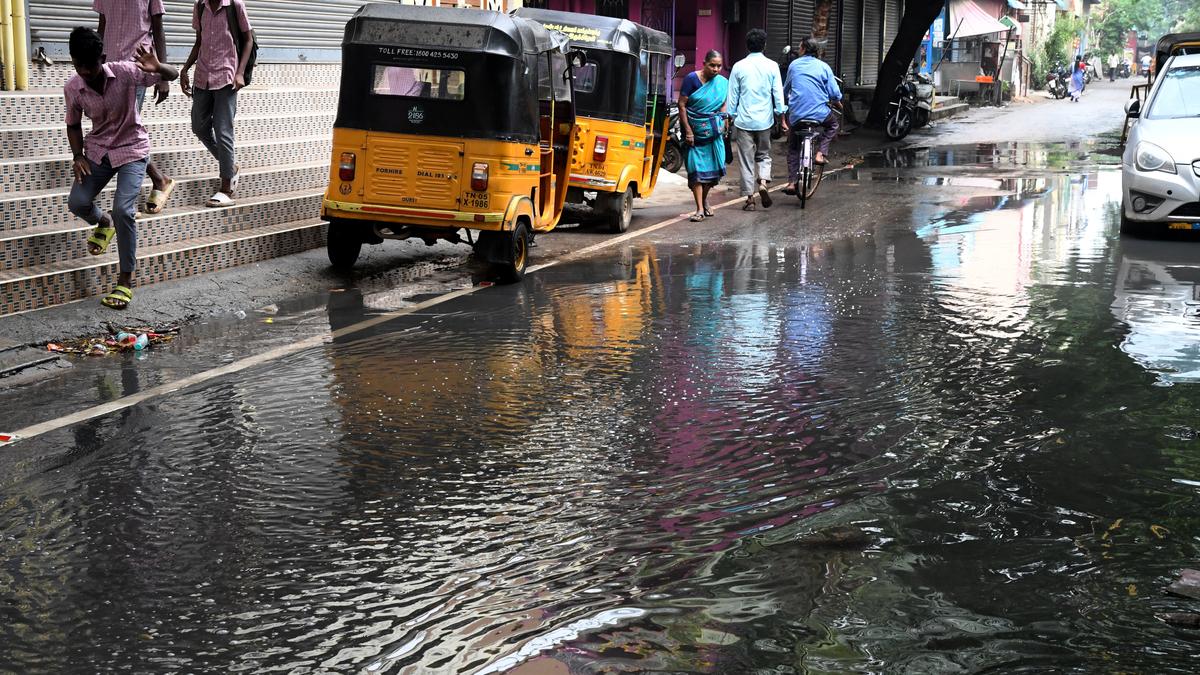
BIS releases guidelines for storm water management, plans to hold meeting with government officials
The Hindu
The civic authorities can refer to the guidelines for evaluating design criteria, relevant policies, implementation and performance of storm water systems and improve the existing infrastructure
In a bid to ensure effective control of floodwater runoff and protect water quality, the Bureau of Indian Standards has brought out guidelines for storm-water management in urban areas. BIS, Chennai, will hold discussion with Greater Chennai Corporation and other government department officials on December 29 on the relevance of the standards.
Officials of the BIS, Chennai branch office, said the document, “Service Activities Relating to Drinking Water Supply, Wastewater and Storm Water Systems — Guidelines for Storm Water Management in Urban Areas” could be used as a handbook by government authorities and various stakeholders on creating a network.
The authorities concerned could refer to the guidelines for evaluating design criteria, relevant policies, implementation and performance of storm water systems. These could be used to improve the existing network as well, the officials said.
The document provides solutions for urban flood management through collaborative efforts. For instance, it has suggested creation of storm water infiltration and storage facilities under street drains at specific points to reduce flooding on roads.
Abandoned farm ponds, school playgrounds and parking spaces could be used to store floodwater. One of the solutions provided for the demand control approach include subsidies for installing facilities to store floodwater, the officials added.
G. Bhavani, head, BIS, Chennai branch office, said: “We have formulated guidelines to help authorities to reduce the severity of flooding and develop a sustainable and climate resilient network. The voluntary standard has detailed various aspects from planning, design, functioning and assessment of network’s performance.”
The guidelines have details about how to conduct hydraulic investigation before designing the project. It contains tables, illustrations and examples on various factors, she said.


The government plans to amend the FCRA, introducing new regulations for NGO asset management and accountability for key functionaries.

The draft policy for “Responsible Digital Use Among Students”, released on Monday by the Department of Health and Family Welfare, has recommended that parents set structured routines with clear screen-time rules and prioritise privacy, safety, and open conversation with children on digital well-being.

Police Observer Sushant Kumar Saxena conducts surprise inspection at Shencottai police station, reviewing warrants and security arrangements ahead of elections.

Andhra Pradesh government to launch key projects in April, focusing on industrial growth and infrastructure development, says Nara Lokesh.

Lok Sabha refers the Corporate Laws (Amendment) Bill to a JPC amid opposition concerns over CSR provisions dilution.

SHG members in Kanniyakumari use snakes and ladders to raise election awareness and boost voter turnout.

Government accelerates consultations for early implementation of the Women’s Reservation Act to ensure women’s representation in 2029 elections.

CM A. Revanth Reddy distributes ₹1 crore insurance cheques to families of deceased Electricity department employees, enhancing financial security for workers.

The Bengaluru Traffic Police (BTP) registered 634 cases of drunk driving during a week-long special enforcement drive conducted across the city between March 16 and March 22.

GHMC intensifies action against property tax defaulters, seizing properties and offering a One Time Settlement scheme for payments.

CCB arrests three drug peddlers in Mangaluru, seizing ₹2.5 lakh worth of MDMA and other valuables.

TVK's 28 candidates in Puducherry include former BJP MLAs, a sitting Independent, and a retired police IG.

BRS submits notice on private member bill to Speaker