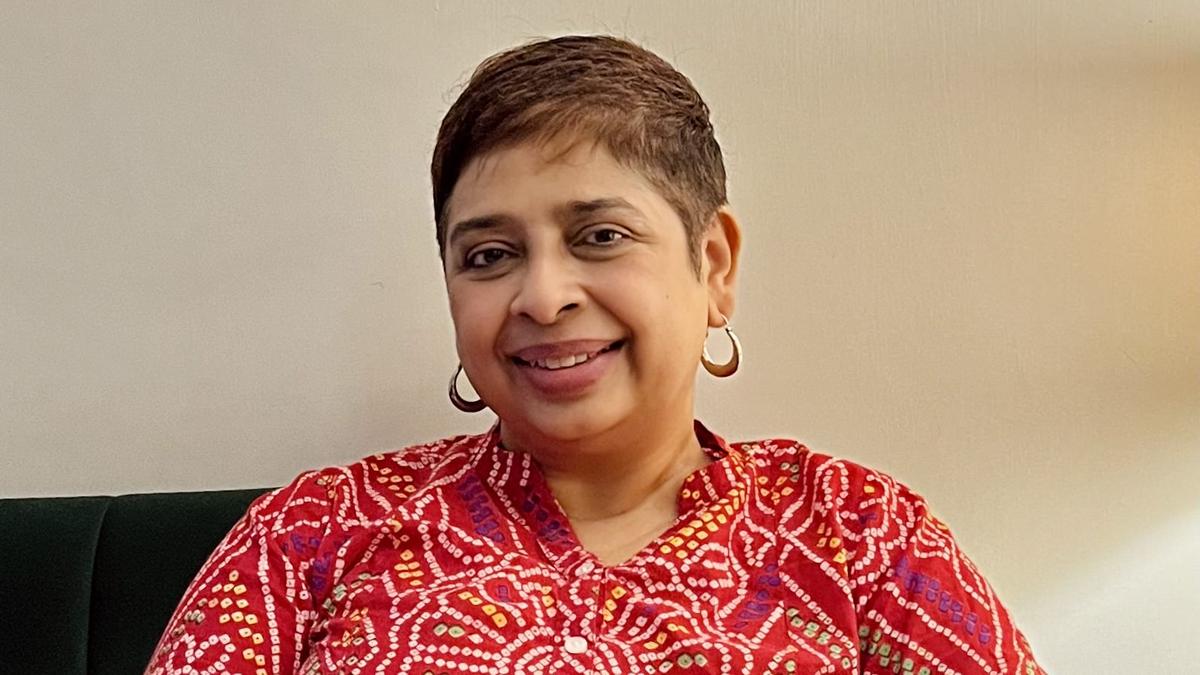
Bhanupriya Rao and the inner lives of women
The Hindu
Bhanupriya Rao, the founder of Behen Box has a perennial source of inspiration
These days Bhanupriya Rao, 48, is obsessed with how women utilise their time. Thanks to the sporadic Time Use Survey released by the National Sample Survey Office (NSSO), we know that women devote three times the amount of time that men do to unpaid domestic work. But that’s not enough for the founder of Behen Box, an independent news organisation founded after the 2019 general election that spotlights how policies and laws affect women and gender diverse people. She wants to know how much time women spend on leisure.
“An ASHA worker’s time use looks completely different to my time use. A contractual worker spends her time differently from a farmer, a rural woman from an urban woman, a woman who has a full-time job and also takes care of a disabled child vs. one who takes care of a non-disabled child,” she says. “So how do we document these differences — and then make it into a data set?”
When one of her reporters chanced upon a woman, positioned on the edge of her kitchen counter, watching a Marathi TV series as she prepared a meal, it prompted Rao and her team to ask, “How is she negotiating leisure?”
Whether it’s exploring beauty parlours in Jharkhand or weighing the freedom of gig work against its inherently exploitative structure, the stories on Behen Box offer great insight into the inner lives of women. What happens when women have cancer? How do Adivasi survivors of sexual violence access justice? Why are fertility practices killing women?
It is questions like these, with which we don’t usually engage, that led Rao to a deep examination of ASHA workers, the volunteer army of female health workers who were on the frontline during the COVID-19 pandemic. Behen Box collected qualitative data from 52 health workers across 16 states in 2020. Their research found heroes who were abused, invisibilised, and desperately underpaid. Many had huge debts. “It’s still the only data available about ASHA workers,” she says. Rao’s past association with the Right To Food and Right to Information movements has been key to her understanding that information is crucial to live as equal citizens.
Behen Box looks at women as agents of change, and closely tracks the battles they navigate. “There’s a lot more awareness of women not wanting to live with the status quo, and that gives us hope,” says Rao, adding that all the Adivasi protests, for example, are led by women. “That is why we document all the resistance movements, they tell us what women want.”
Women provide perennial inspiration for Rao, the daughter of a geologist and a teacher. Thanks to her father’s job, she grew up in mining towns in states such as Bihar, Orissa and Chattisgarh. “Women’s lives are not singular,” she says. “We live so many different lives.” She catches glimpses of her life in that of her subjects and, in turn, draws from them. “Writing and learning about the lives of these women made me more sure of myself. In my own eyes I started to exist. They helped show me who I really am,” she says.


The government plans to amend the FCRA, introducing new regulations for NGO asset management and accountability for key functionaries.

The draft policy for “Responsible Digital Use Among Students”, released on Monday by the Department of Health and Family Welfare, has recommended that parents set structured routines with clear screen-time rules and prioritise privacy, safety, and open conversation with children on digital well-being.

Police Observer Sushant Kumar Saxena conducts surprise inspection at Shencottai police station, reviewing warrants and security arrangements ahead of elections.

Andhra Pradesh government to launch key projects in April, focusing on industrial growth and infrastructure development, says Nara Lokesh.

Lok Sabha refers the Corporate Laws (Amendment) Bill to a JPC amid opposition concerns over CSR provisions dilution.

SHG members in Kanniyakumari use snakes and ladders to raise election awareness and boost voter turnout.

Government accelerates consultations for early implementation of the Women’s Reservation Act to ensure women’s representation in 2029 elections.

CM A. Revanth Reddy distributes ₹1 crore insurance cheques to families of deceased Electricity department employees, enhancing financial security for workers.

The Bengaluru Traffic Police (BTP) registered 634 cases of drunk driving during a week-long special enforcement drive conducted across the city between March 16 and March 22.

GHMC intensifies action against property tax defaulters, seizing properties and offering a One Time Settlement scheme for payments.

CCB arrests three drug peddlers in Mangaluru, seizing ₹2.5 lakh worth of MDMA and other valuables.

TVK's 28 candidates in Puducherry include former BJP MLAs, a sitting Independent, and a retired police IG.

BRS submits notice on private member bill to Speaker