Bankim Chandra Chattopadhyay’s descendant joins BJP ahead of Bengal poll
The Hindu
Sumitra Chattopadhyay, a descendant of Bankim Chandra Chattopadhyay, joins BJP to address ancestral home neglect and employment issues.
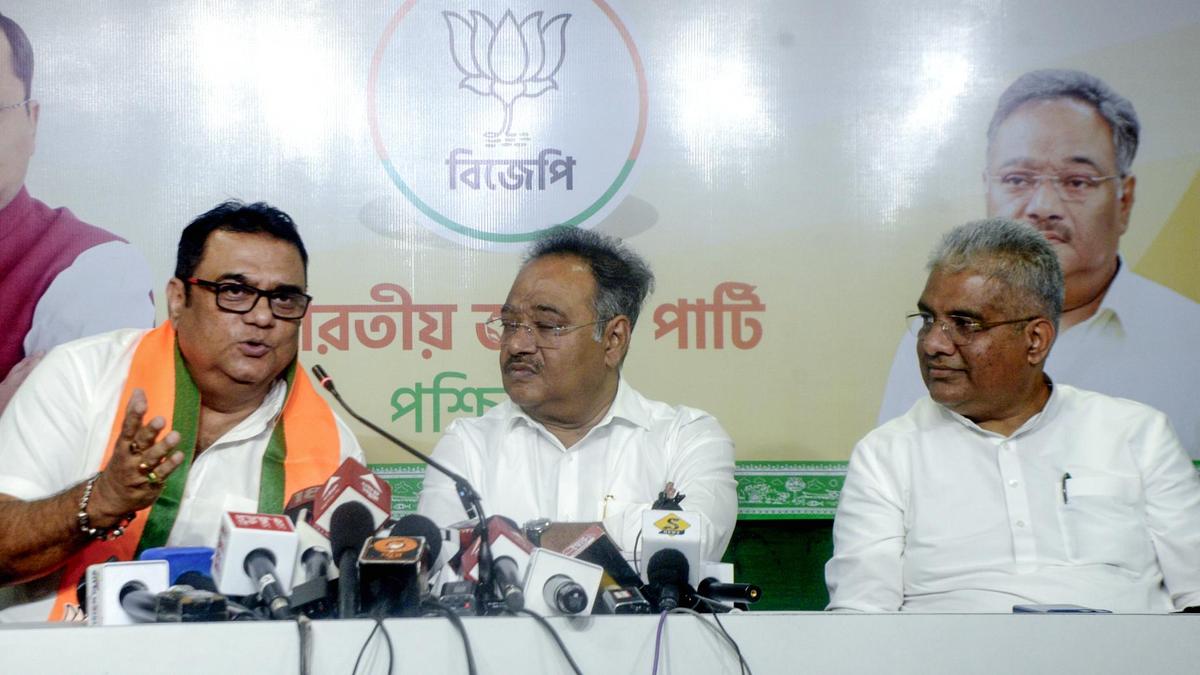
Sumitra Chattopadhyay, a fifth-generation descendant of littérateur Bankim Chandra Chattopadhyay, on Thursday (February 26, 2026) joined the Bharatiya Janata Party (BJP). The development comes ahead of Assembly elections in West Bengal when the BJP is highlighting the contribution of Chattopadhyay and the song Vande Mataram written by him.
Mr. Chattopadhyay, a former official with the State Labour Department, was formally welcomed into the party by BJP State president Samik Bhattacharya and Union Minister for Environment, Forest and Climate Change Bhupender Yadav.
After being handed over the party flag, Mr. Chattopadhyay raised serious concerns regarding the State government policy on employment generation. The new entrant in the BJP criticised the West Bengal government’s Yuva Sathi scheme, which promises an unemployment allowance of ₹1,500 per month. He pointed out that the Trinamool Congress had discontinued a similar project, the Yuvashree scheme.
“Data of lakhs of youth associated with the employment exchange were deleted through an administrative order and replaced with the formation of an ‘employment bank’, where approximately 4 million youth were registered. Subsequently, the Yuvashree scheme was introduced, which was later discontinued,” Mr. Chattopadhyay said.
In September 2025, Sumitra Chattopadhyay and another descendant of Bankim Chandra Chattopadhyay, Sajal Chattopadhyay, had joined Mr. Bhattacharya in raising the neglect of the ancestral house of the writer.
Welcoming Sumitra Chattopadhyay into the party, Union Minister Bhupender Yadav said that Vande Mataram, composed by Bankim Chandra Chattopadhyay, strengthened the spirit of nationalism and patriotism across the country.


The government plans to amend the FCRA, introducing new regulations for NGO asset management and accountability for key functionaries.

The draft policy for “Responsible Digital Use Among Students”, released on Monday by the Department of Health and Family Welfare, has recommended that parents set structured routines with clear screen-time rules and prioritise privacy, safety, and open conversation with children on digital well-being.

Police Observer Sushant Kumar Saxena conducts surprise inspection at Shencottai police station, reviewing warrants and security arrangements ahead of elections.

Andhra Pradesh government to launch key projects in April, focusing on industrial growth and infrastructure development, says Nara Lokesh.

Lok Sabha refers the Corporate Laws (Amendment) Bill to a JPC amid opposition concerns over CSR provisions dilution.

SHG members in Kanniyakumari use snakes and ladders to raise election awareness and boost voter turnout.

Government accelerates consultations for early implementation of the Women’s Reservation Act to ensure women’s representation in 2029 elections.

CM A. Revanth Reddy distributes ₹1 crore insurance cheques to families of deceased Electricity department employees, enhancing financial security for workers.

The Bengaluru Traffic Police (BTP) registered 634 cases of drunk driving during a week-long special enforcement drive conducted across the city between March 16 and March 22.

GHMC intensifies action against property tax defaulters, seizing properties and offering a One Time Settlement scheme for payments.

CCB arrests three drug peddlers in Mangaluru, seizing ₹2.5 lakh worth of MDMA and other valuables.

TVK's 28 candidates in Puducherry include former BJP MLAs, a sitting Independent, and a retired police IG.

BRS submits notice on private member bill to Speaker