Azim Premji University student council flags ‘asymmetry in outcomes’ following recent campus events, opposes FIR against SPARK members
The Hindu
Azim Premji University student council criticizes FIR against SPARK members, highlighting unequal treatment after recent campus incidents.
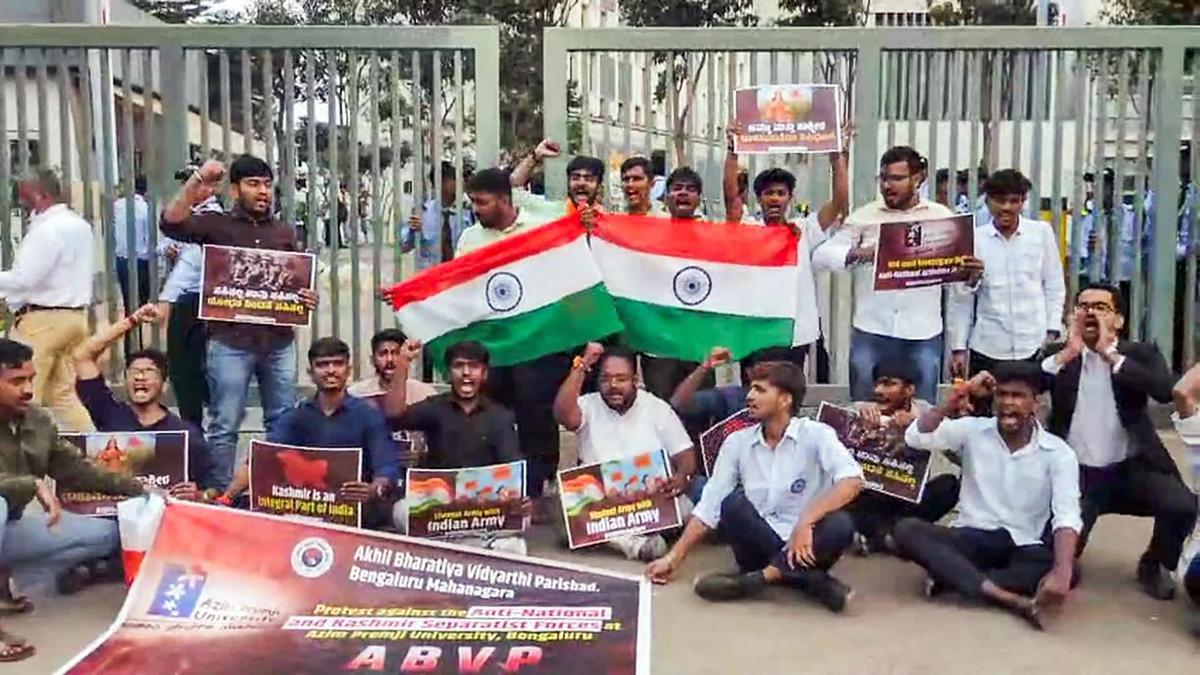
Hours after ABVP activists allegedly trespassed into Azim Premji University (APU), assaulted guards, vandalised property and created a ruckus to protest against a discussion being held on the campus, the Registrar of the varsity filed a complaint with the police against Spark Reading Circle, a social media page, and sought action.
According to a complaint lodged at the police station at 11.30 p.m. on February 24, the chain of events began around 4.30 p.m. when certain members of the media shared a social media post that was being circulated online.
The post, uploaded on an Instagram handle titled ‘Spark Reading Circle, APU’, referred to the alleged Kunan-Poshpora mass rape incident of 1991 in Kashmir, and invited people to attend a discussion on ‘violence by the Indian State in Kashmir’ at 6 p.m. at a venue inside the university campus.
University authorities stated that the venue is an internal campus space used for cultural activities. They clarified that no permission had been sought or granted for any such event. As per university protocol, prior written approval is mandatory for organising programmes on campus.
Around 6 p.m., nearly 20 members of an organisation allegedly gathered at the main gate of the university. They raised slogans and forcibly entered the campus. The complainant said that the group assaulted security personnel and a student, damaged college boards, and shouted slogans against Spark Reading Circle and student’s organisation AISA.
The group reportedly proceeded nearly 400 metres inside the campus from the main gate and scribbled messages targeting the organisations before police arrived and detained them.


The government plans to amend the FCRA, introducing new regulations for NGO asset management and accountability for key functionaries.

The draft policy for “Responsible Digital Use Among Students”, released on Monday by the Department of Health and Family Welfare, has recommended that parents set structured routines with clear screen-time rules and prioritise privacy, safety, and open conversation with children on digital well-being.

Police Observer Sushant Kumar Saxena conducts surprise inspection at Shencottai police station, reviewing warrants and security arrangements ahead of elections.

Andhra Pradesh government to launch key projects in April, focusing on industrial growth and infrastructure development, says Nara Lokesh.

Lok Sabha refers the Corporate Laws (Amendment) Bill to a JPC amid opposition concerns over CSR provisions dilution.

SHG members in Kanniyakumari use snakes and ladders to raise election awareness and boost voter turnout.

Government accelerates consultations for early implementation of the Women’s Reservation Act to ensure women’s representation in 2029 elections.

CM A. Revanth Reddy distributes ₹1 crore insurance cheques to families of deceased Electricity department employees, enhancing financial security for workers.

The Bengaluru Traffic Police (BTP) registered 634 cases of drunk driving during a week-long special enforcement drive conducted across the city between March 16 and March 22.

GHMC intensifies action against property tax defaulters, seizing properties and offering a One Time Settlement scheme for payments.

CCB arrests three drug peddlers in Mangaluru, seizing ₹2.5 lakh worth of MDMA and other valuables.

TVK's 28 candidates in Puducherry include former BJP MLAs, a sitting Independent, and a retired police IG.

BRS submits notice on private member bill to Speaker