‘Agamya Gamyaalu’: Tracing the global lives of India’s forgotten indentured labourers
The Hindu
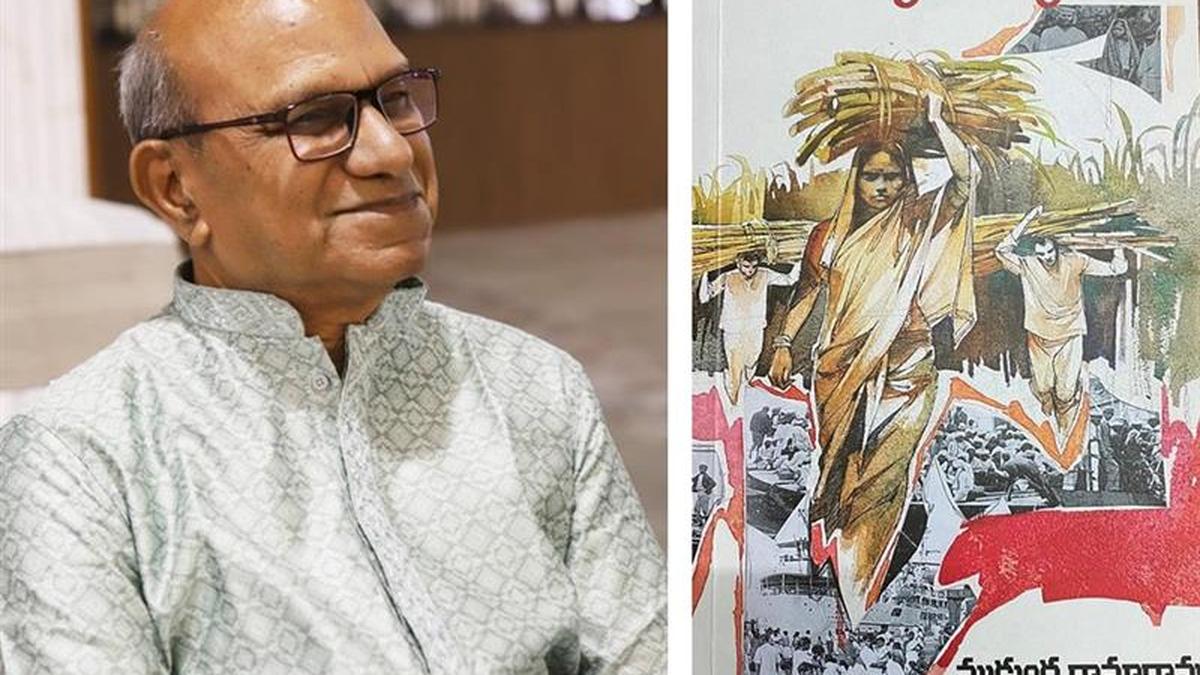
Discover the compelling history of India's forgotten indentured labourers in Mukunda Ramarao's insightful Telugu book, Agamya Gamyaalu.
“You are happy now. Why do you want to know all this?”
Mukunda Ramarao faced this question whenever he tried, late in life, to ask about his family’s past. At 82, the Hyderabad-based academic and technologist has finally answered that question for himself — and for thousands of others whose histories were erased by distance, paperwork and silence.
His Telugu book Agamya Gamyaalu (Impassable Destinations of Elusive Horizons — the title translated by the author) is not a conventional family memoir. It is a painstaking chronicle of the Indian indentured labour system that transported nearly 1.5 million men and women from the subcontinent to plantations and worksites across South Africa, the Caribbean, Fiji, Mauritius and parts of Africa between the 19th and early 20th centuries. Mukunda’s own grandparents were among them.
“My father was born in South Africa,” he says, his voice steady but reflective. “But I did not know this story for most of my life.”
His grandparents left their neighbouring villages in Andhra Pradesh separately, without knowing each other, bound by five-year labour contracts under the British colonial system. They met only after landing in South Africa, where they got married, and returned to India (departed on February 2, 1914, aboard the ship Umkuzi) shortly after their son — Mukunda’s father — was born. Unlike many indentured labourers who stayed on, they chose to return, unwilling to endure another term.
Yet this extraordinary journey was never spoken of at home. Mukunda grew up in Kharagpur, West Bengal, where his family found work in the railways. “They never told me,” he says. “Even when I asked, they would say, ‘You are happy now. Be happy’.”


The government plans to amend the FCRA, introducing new regulations for NGO asset management and accountability for key functionaries.

The draft policy for “Responsible Digital Use Among Students”, released on Monday by the Department of Health and Family Welfare, has recommended that parents set structured routines with clear screen-time rules and prioritise privacy, safety, and open conversation with children on digital well-being.

Police Observer Sushant Kumar Saxena conducts surprise inspection at Shencottai police station, reviewing warrants and security arrangements ahead of elections.

Andhra Pradesh government to launch key projects in April, focusing on industrial growth and infrastructure development, says Nara Lokesh.

Lok Sabha refers the Corporate Laws (Amendment) Bill to a JPC amid opposition concerns over CSR provisions dilution.

SHG members in Kanniyakumari use snakes and ladders to raise election awareness and boost voter turnout.

Government accelerates consultations for early implementation of the Women’s Reservation Act to ensure women’s representation in 2029 elections.

CM A. Revanth Reddy distributes ₹1 crore insurance cheques to families of deceased Electricity department employees, enhancing financial security for workers.

The Bengaluru Traffic Police (BTP) registered 634 cases of drunk driving during a week-long special enforcement drive conducted across the city between March 16 and March 22.

GHMC intensifies action against property tax defaulters, seizing properties and offering a One Time Settlement scheme for payments.

CCB arrests three drug peddlers in Mangaluru, seizing ₹2.5 lakh worth of MDMA and other valuables.

TVK's 28 candidates in Puducherry include former BJP MLAs, a sitting Independent, and a retired police IG.

BRS submits notice on private member bill to Speaker