2008 Ashok Nagar triple murder: revisiting an unfinished case of brutal killings and a flawed probe Premium
The Hindu
Revisiting the unsolved 2008 Ashok Nagar triple murder in Chennai, highlighting theft, brutality, and investigative failures.
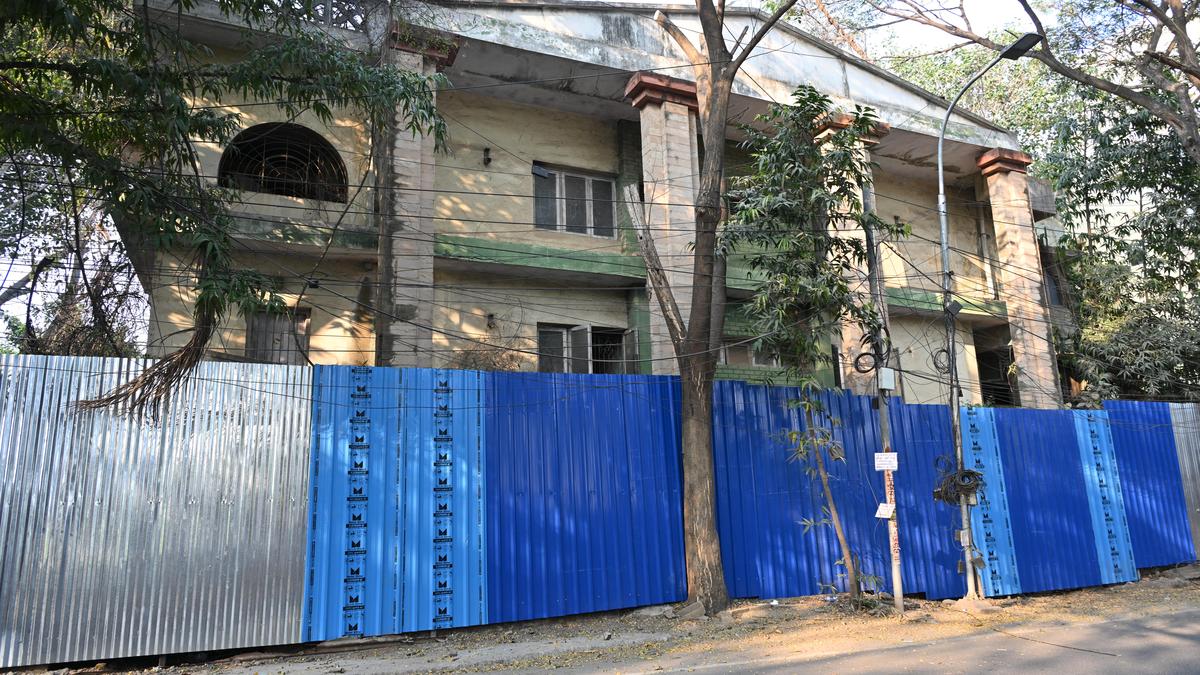
It was early morning on November 20, 2008, when Unnikrishnan, a resident of Ashok Nagar, approached the two-storey house on Kannadasan Street to check whether his friend, who lived there, would join him for a morning walk.
The door of a car parked outside the premises was open, with the key still in the knob. He called out to his friend, but there was no response from inside. He climbed to the first floor and found the main door ajar. Inside, his friend was lying in a pool of blood. His friend’s wife had also been murdered. To add to the shock, their domestic worker, a 17-year-old girl, had been smothered to death.
The victims were S. Saravanan (74), former Chairman and Managing Director of Tamil Nadu Minerals Limited (TAMIN); his wife, S. Kasthuri (73), a retired Under Secretary in the Home Department; and the domestic worker, K. Inbarasi (17). They were found with multiple stab injuries on the second floor of their house on Dr. Natesan Salai.
Though the women were still wearing their jewellery, two almirahs had been ransacked. Saravanan’s body was found in the kitchen, while Kasthuri and Inbarasi were in a bedroom. The police said the scene suggested Saravanan had run into the kitchen to escape the attackers. He had probably tried to resist, as several defensive wounds were found on his hands.
As news of the triple murder spread, residents gathered outside the house. The crime sent shockwaves through the Ashok Nagar locality that Thursday.
The then Commissioner of Police, K. Radhakrishnan — who had taken charge just two days earlier — visited the house and formed 10 special teams to crack the case. The teams worked under the direct supervision of the then Additional Commissioner of Police (Law and Order), A.K. Viswanathan.


The government plans to amend the FCRA, introducing new regulations for NGO asset management and accountability for key functionaries.

The draft policy for “Responsible Digital Use Among Students”, released on Monday by the Department of Health and Family Welfare, has recommended that parents set structured routines with clear screen-time rules and prioritise privacy, safety, and open conversation with children on digital well-being.

Police Observer Sushant Kumar Saxena conducts surprise inspection at Shencottai police station, reviewing warrants and security arrangements ahead of elections.

Andhra Pradesh government to launch key projects in April, focusing on industrial growth and infrastructure development, says Nara Lokesh.

Lok Sabha refers the Corporate Laws (Amendment) Bill to a JPC amid opposition concerns over CSR provisions dilution.

SHG members in Kanniyakumari use snakes and ladders to raise election awareness and boost voter turnout.

Government accelerates consultations for early implementation of the Women’s Reservation Act to ensure women’s representation in 2029 elections.

CM A. Revanth Reddy distributes ₹1 crore insurance cheques to families of deceased Electricity department employees, enhancing financial security for workers.

The Bengaluru Traffic Police (BTP) registered 634 cases of drunk driving during a week-long special enforcement drive conducted across the city between March 16 and March 22.

GHMC intensifies action against property tax defaulters, seizing properties and offering a One Time Settlement scheme for payments.

CCB arrests three drug peddlers in Mangaluru, seizing ₹2.5 lakh worth of MDMA and other valuables.

TVK's 28 candidates in Puducherry include former BJP MLAs, a sitting Independent, and a retired police IG.

BRS submits notice on private member bill to Speaker