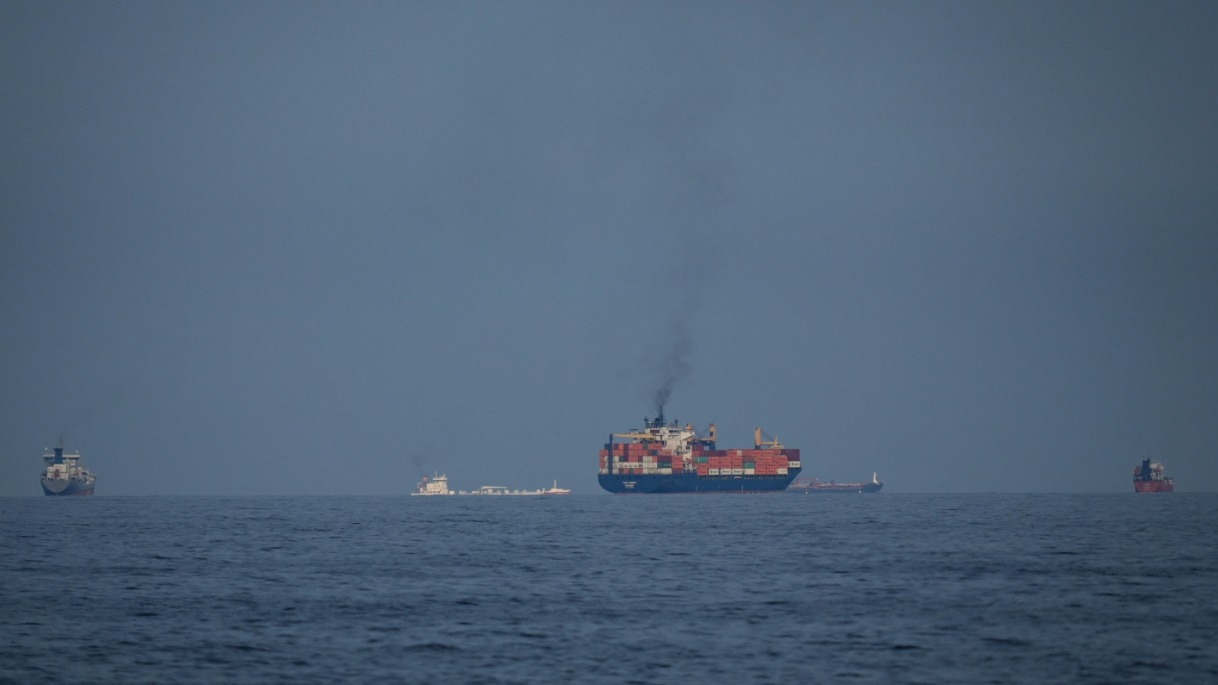
The million-year accident: Biography of Strait of Hormuz, chokepoint that rules world
India Today
Born of colliding continents and vanished seas, the Strait of Hormuz is the million‑year accident that turned buried oceans into oil, and a thirty‑mile gap in the rocks into the world's most dangerous chokepoint.
The Strait of Hormuz has become synonymous with global fragility, Iranian strength and Donald Trump’s pain point.
To force the US into withdrawal, Iran has closed the Strait, a 30-mile-wide needle's eye through which approximately one-fifth of the world’s liquid energy must pass.
To understand why this narrow strip of water rules the modern world, one must look past the headlines and into deep time. Because the Strait’s role as a bottleneck was written in the Earth's crust million of years ago, long before the first human was born.
Six hundred million years ago, give or take an epoch, there was no Persian Gulf. There was no Arabia, no Iran, no Strait of Hormuz threading between them.
What would become the Arabian Peninsula was once locked within the great southern supercontinent of Gondwana. To its north lay a shallow tropical sea called the Tethys Ocean, separating it from the distant shores of Eurasia.
In the warm, shallow Tethys Ocean, microscopic marine organisms lived their brief lives and sank to the seafloor. Under heat, under pressure, over time measured not in years but in geological epochs, that organic matter cooked. It cracked. It became oil.


Amid a dire energy crisis triggered by the choking of the Strait of Hormuz, Islamabad has cancelled the celebrations and the parade scheduled for Pakistan Day. The March 23 observance will now be marked with "simplicity and dignity", said Pakistani PM Shahbaz Sharif's office, as fuel shortages and soaring costs hit the people hard.

A video featuring an Indian couple meeting briefly at a metro station in the UK has drawn attention to the realities faced by couples working opposite shifts abroad.


With Dhurandhar: The Revenge set for a March 18 release, the internet is abuzz with jokes and memes, especially about the film's nearly four-hour runtime.


A couple's decision to stage their pre-wedding photo shoot in a pond has gone viral, with the shoot's unusual setting sparking amusement online.

The President of Finland joined other global voices to suggest that India should mediate in the Iran-US-Israel war. Here's why India, a major economy with warm ties with Washington, Jerusalem, and Iran, and a heritage of non-alignment and strategic autonomy, might be the best bet to broker peace.

A Shillong school choir's lively rendition of Legends by The Score has gone viral, with students blending instruments and vocals in a classroom performance that won hearts online.

To support his argument, he also referred to the death of the former Supreme Leader, Ayatollah Ali Khamenei, in a US-Israeli strike on February 28. "Even the (Supreme) Leader was martyred, yet the system continued its work," he said.

Dr Pratibha Nikhar Juneja shares a heartfelt account of treating her former medical college teacher, describing the moment as both special and deeply meaningful.

The instruction from the university came as China seeks to boost birth rates, which dropped to a record low in 2025.

The Department of Homeland Security (DHS) is using posters with images of India's Taj Mahal to promise free tickets and a cash payout of $2,600 to undocumented immigrants who voluntarily deport themselves from the US. Ironically, a monument for love has been turned into one of hate for immigrants.

A viral video of a little girl insisting on getting a "Virat Kohli waala" jersey has caught Puma's attention, with the brand asking the internet to help find her and gift an official jersey.