Why India is best-placed to broker peace in US-Israel-Iran war
India Today
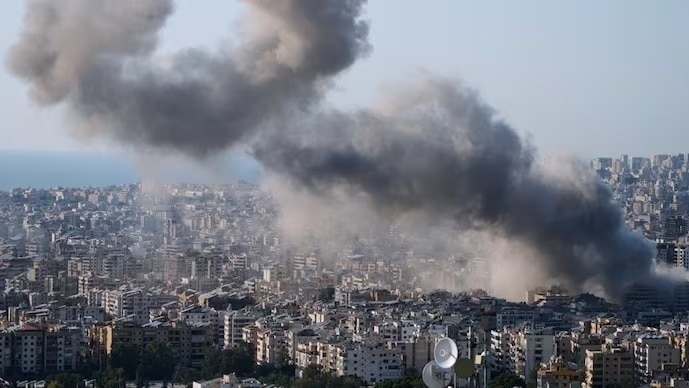
The President of Finland joined other global voices to suggest that India should mediate in the Iran-US-Israel war. Here's why India, a major economy with warm ties with Washington, Jerusalem, and Iran, and a heritage of non-alignment and strategic autonomy, might be the best bet to broker peace.
The US and Israel's war against Iran has entered its third week, and an end is still nowhere in sight. However, even as hostilities drag on, India is increasingly being described as one of the best-placed countries to mediate in the conflict. At least two voices in geopolitical and diplomatic circles have suggested that India, and Prime Minister Narendra Modi, are well-suited to broker peace. Now a third voice has joined the chorus.
The President of Finland, Alexander Stubb, in an interview with Bloomberg, called for India to help broker a US-Iran ceasefire, stating, "We need a ceasefire. I'm wondering if India can actually get involved. We saw Foreign Minister S Jaishankar call for a ceasefire to calm things down."
As of filing this story, there has been no diplomatic signal from India indicating any move to mediate in the US-Israel-Iran war, even as differences persist within BRICS over the conflict in the Middle East.
The only country that has openly offered to do so is China. However, Beijing is widely seen as less neutral due to its extensive purchases of Iranian oil and its support for Tehran's missile and drone arsenal through the supply of dual-use components and missile fuel.
Nevertheless, several factors place India in a uniquely favourable position to potentially mediate in the Iran war. These include its rising economic power, warm relations with Washington, Jerusalem and Tehran, its lack of expansionist ambitions or military adventurism, and, most importantly, its legacy as a founding member of the Non-Aligned Movement (NAM), which continues to guide its vision of strategic autonomy.
Before we dive into the reasons that put India in a favourable position to mediate in the US-Israel-Iran war, let's have a look at who are the voices that have called for the same recently.


The reference goes back to Stubb's recent India visit, where he revealed that his son had introduced him to Dhurandhar, a political espionage thriller directed by Aditya Dhar. The video came just days ahead of Dhurandhar 2's upcoming theatrical release on March 19.

With the Israel-US-Iran war in its 18th day, the natural question is who's winning it. It is a difficult question to answer in an asymmetric war. However, we look at the targets of both sides and try to give a perspective of who is ahead in this war.


The US president's remarks came hours after Joe Kent publicly announced he was stepping down because he opposed the Trump administration's military campaign in Iran, saying it was done due to pressure from Israel.

A viral Instagram video depicting a group of men taking a McDonald's cup for a 'fun' reel has triggered widespread criticism on social media platforms, raising concerns about civic responsibility and online behaviour.

We don't need the help of anyone: Trump slams Nato nations after most distance themselves from Iran war


Punch, the once-lonely macaque from Ichikawa City Zoo in Japan, is now seen playing and cuddling with a new companion, captivating online audiences with his transformation.

After Pakistan signed the Strategic Mutual Defence Agreement with Saudi Arabia, it was obligated to help Riyadh amid Iranian drone and missile strikes in the Middle East. When Saudi Arabia needed military help and assurances, Pakistan carried out intensive bombing in Afghanistan to signal that it was already caught up in a war.

Farmers in UP's Sambhal district adopt bear costumes to deter monkeys, highlighting both innovation and absence of official support.

The US shared a video of strikes on Iran, with US Central Command saying its forces continue to "hunt and destroy" threats, as the conflict with Iran enters its third week. The escalation comes alongside Israeli claims of targeting top Iranian figures and Tehran's call for global condemnation of the US-Israeli attacks.

A Brazilian woman and her friends' wedding dance to a Bollywood song has gone viral, with her calling it "the one Indian song every Brazilian knows," sparking curiosity about its popularity in Brazil.

The UAE has faced the most intense barrage of Iranian attacks among the Gulf countries since the US-Israel war on Tehran began. Civilian and business infrastructure in Dubai and other hubs have been targeted. But why has the UAE been targeted more than its Gulf neighbours? Here's what's driving Iran's aggression against it.