Is India's Republic Day Parade Proof of Strategic Military Independence?
India Today
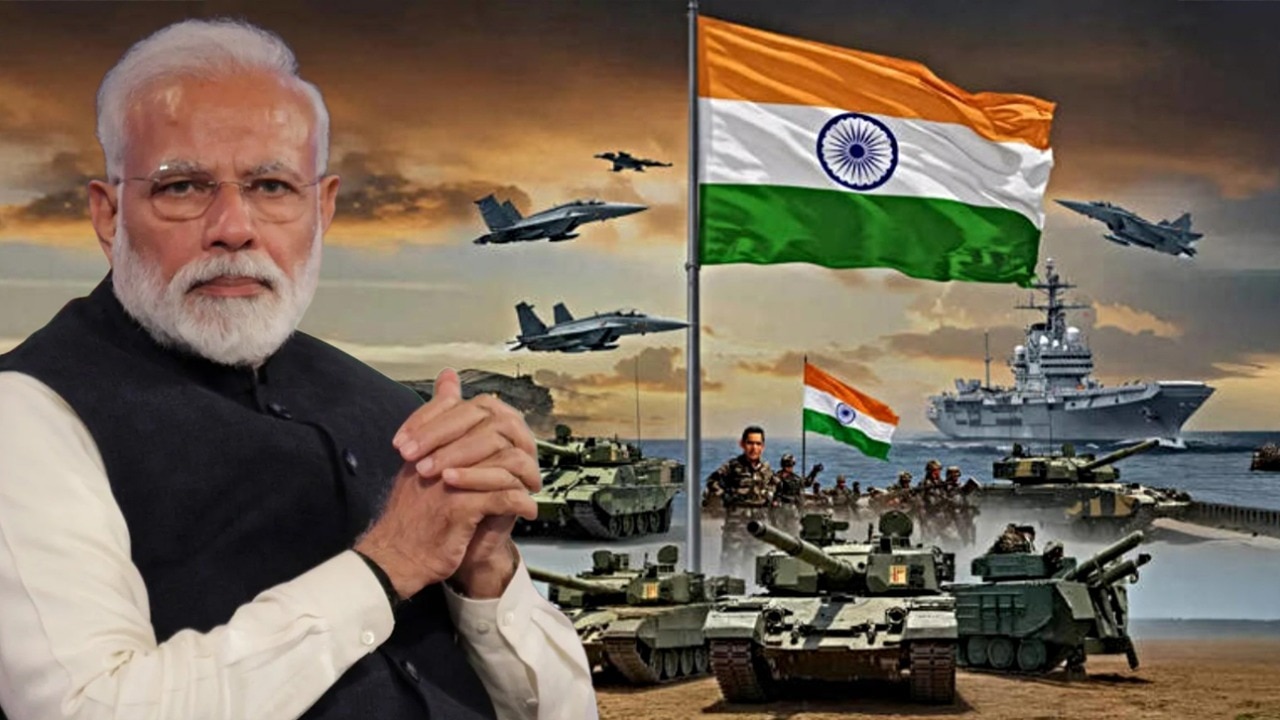
Republic Day 2026 was more than a parade, it was India's declaration of defence independence. From Tejas jets to BrahMos missiles, indigenous innovation signals a nation ready to redefine military strength, strategic autonomy, and global defence influence.
This Republic Day, India’s military did more than perform ceremonial drills, it made a statement of strategic intent. From the streaking Tejas fighter jets overhead to the precise roll of Arjun tanks and the unmistakable presence of BrahMos missiles, the parade on Kartavya Path showcased a nation no longer reliant on foreign defence imports.
For decades, India’s armed forces depended on external suppliers, primarily Russia, for fighters, tanks, submarines, and artillery. This dependency carried significant strategic costs: delays in upgrades, reliance on geopolitical stability, and vulnerability to sanctions. Today, India is demonstrating a decisive shift: indigenous development, production, and deployment of critical military systems.
The parade highlighted platforms such as the Tejas light combat aircraft, the Akash air defence system, Pinaka rocket launchers, ATAGS artillery, and the BrahMos supersonic cruise missile. These are not mere displays of hardware; they represent operational capability, design ownership, and industrial depth. Tejas, for instance, embodies India’s aerospace sovereignty, with integrated avionics, radar fusion, and composite airframes, all developed domestically.
BrahMos, jointly developed with Russia and now mass-produced in Lucknow, transforms India’s strategic posture, providing sustained deterrence and operational freedom. Meanwhile, land and air systems like Arjun, Akash, Pinaka, and ATAGS enhance readiness against Pakistan’s asymmetric doctrine and China’s industrial-scale military. Indigenous capability allows India to calibrate responses without being constrained by foreign supply chains, a critical advantage in modern warfare.
This Republic Day parade was not just tradition; it was doctrine made visible. Unlike China’s massed formations designed for intimidation or the United States’ spectacle-driven parades, India’s display reflected restraint, strategic messaging, and industrial maturity. It signalled a defence ecosystem capable of innovation, selective partnerships, and long-term operational resilience.


Amid a dire energy crisis triggered by the choking of the Strait of Hormuz, Islamabad has cancelled the celebrations and the parade scheduled for Pakistan Day. The March 23 observance will now be marked with "simplicity and dignity", said Pakistani PM Shahbaz Sharif's office, as fuel shortages and soaring costs hit the people hard.

A video featuring an Indian couple meeting briefly at a metro station in the UK has drawn attention to the realities faced by couples working opposite shifts abroad.


With Dhurandhar: The Revenge set for a March 18 release, the internet is abuzz with jokes and memes, especially about the film's nearly four-hour runtime.


A couple's decision to stage their pre-wedding photo shoot in a pond has gone viral, with the shoot's unusual setting sparking amusement online.

The President of Finland joined other global voices to suggest that India should mediate in the Iran-US-Israel war. Here's why India, a major economy with warm ties with Washington, Jerusalem, and Iran, and a heritage of non-alignment and strategic autonomy, might be the best bet to broker peace.

A Shillong school choir's lively rendition of Legends by The Score has gone viral, with students blending instruments and vocals in a classroom performance that won hearts online.

To support his argument, he also referred to the death of the former Supreme Leader, Ayatollah Ali Khamenei, in a US-Israeli strike on February 28. "Even the (Supreme) Leader was martyred, yet the system continued its work," he said.

Dr Pratibha Nikhar Juneja shares a heartfelt account of treating her former medical college teacher, describing the moment as both special and deeply meaningful.

The instruction from the university came as China seeks to boost birth rates, which dropped to a record low in 2025.

The Department of Homeland Security (DHS) is using posters with images of India's Taj Mahal to promise free tickets and a cash payout of $2,600 to undocumented immigrants who voluntarily deport themselves from the US. Ironically, a monument for love has been turned into one of hate for immigrants.

A viral video of a little girl insisting on getting a "Virat Kohli waala" jersey has caught Puma's attention, with the brand asking the internet to help find her and gift an official jersey.