Delhi CM Rekha Gupta backs women’s role in decision making at DU event
The Hindu
Delhi CM Rekha Gupta advocates for women's governance roles at a DU event, supporting the Nari Shakti Vandan Act.
Rekha Gupta on Friday (April 10, 2026) called for a greater role for women in decision making while taking part in a signature campaign supporting the Nari Shakti Vandan Act at University of Delhi.
Addressing the gathering, the Chief Minister underlined the urgent need to increase women’s participation in governance and policymaking and said that meaningful change can only happen when women occupy decision making positions, enabling them to address issues that directly affect society, families and their own lives. “Delhi government initiatives such as ‘Lakhpati Bitiya’ and ‘Anmol’ are outcomes of a sensitive and inclusive approach aimed at strengthening women’s empowerment and social security,” Ms. Gupta, who is the only woman Chief Minister among Bharatiya Janata Party ruled States in the country, said.
The Union Cabinet of India on Wednesday (April 8, 2026) approved a draft amendment Bill to operationalise the Women’s Reservation Act by the 2029 Lok Sabha elections. Under the proposal, the strength of the Lok Sabha is set to rise from 543 to 816 seats, following a fresh delimitation exercise. Of the expanded House, 273 seats, around one third, will be reserved for women. Ms. Gupta said that the Bill furthers the cause from “Beti Bachao” (protect women) to “Beti Badhao” (empower women).
She asked young people to actively support the initiative and help turn it into a mass movement, adding that true democratic strength lies in equal participation in decision making. Expressing confidence in the law’s impact, Ms. Gupta said it would redefine political representation in the country and help build a stronger, more balanced and progressive democracy.
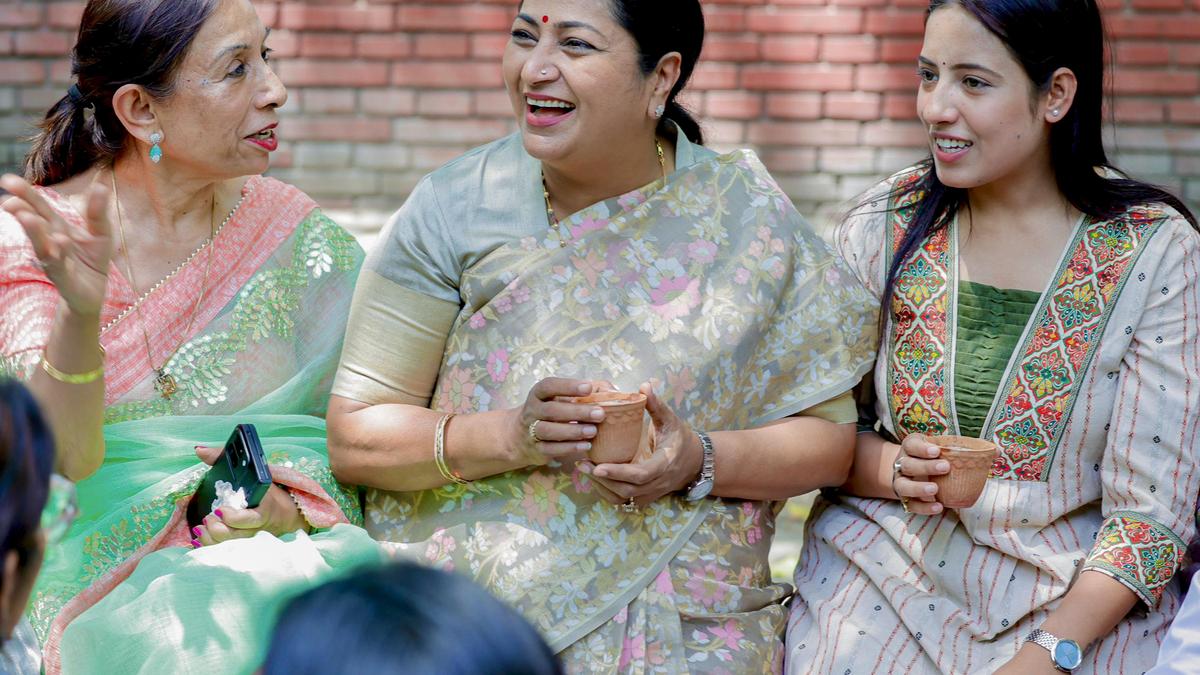
After participating in the signature campaign, Ms. Gupta interacted with students and women faculty members at a tea stall on campus. The interaction, she said, reflected the importance of open and direct communication between public representatives and citizens, noting that the simpler and more accessible this dialogue is, the more effective and people centric policymaking becomes. “I believe that when women come forward, become MLAs, ministers, and chief ministers, only then will it be possible to bring about change in the system,” Ms. Gupta said.


Telangana HC grants Pawan Khera a one-week arrest protection order amid allegations regarding Assam CM's wife and passport issues.

Khalin Joshi wins the Andhra Open, highlighting Andhra Pradesh's potential as a future golfing tourism hub.

Bengaluru police arrest Hemanth Kumar for sharing a misleading 'zombie drug' video; clarify no drug use involved.

Explore Thiruvaiyaru's electoral dynamics, agricultural challenges, and the impact of recent cold storage initiatives on local farmers.

Explore the pivotal yet overlooked role of voice-over artistes in shaping modern election campaigns beyond the candidates' spotlight.

Nanoscientist Anumukonda Varada Rajulu honoured in Nellore for his global contributions to eco-friendly nanocomposites and research excellence.

Madras High Court dismisses Ramadoss' plea to freeze the 'mango' symbol in Tamil Nadu elections, confirming previous court decisions.

Fr. Biju John Vellakkada re-elected as CMI provincial for St. Thomas Province in Kozhikode, with new appointments announced.

Prime Minister Modi will inaugurate the Sriguru Bhyravykya Mandira in Adichunchanagiri on April 15, honoring Balagangadharanatha Swami.

Night food court vendors in Visakhapatnam protest their financial crisis after removal, seeking urgent support from authorities.

Kanimozhi charges Palaniswami of threatening her with jail for criticising him

The Barke Police have registered a case against the Mogaveera Mahasabha, Boloor and a truck owner for allegedly dumping debris and encroaching into Phalguni (Gurupura) River in Sultan Bathery on Friday.

Prakash Kammaradi calls for a special session to oppose EU free trade agreements, citing concerns for Karnataka farmers' interests.