Climate change drives Amazon rainforest's record drought, study finds
The Hindu
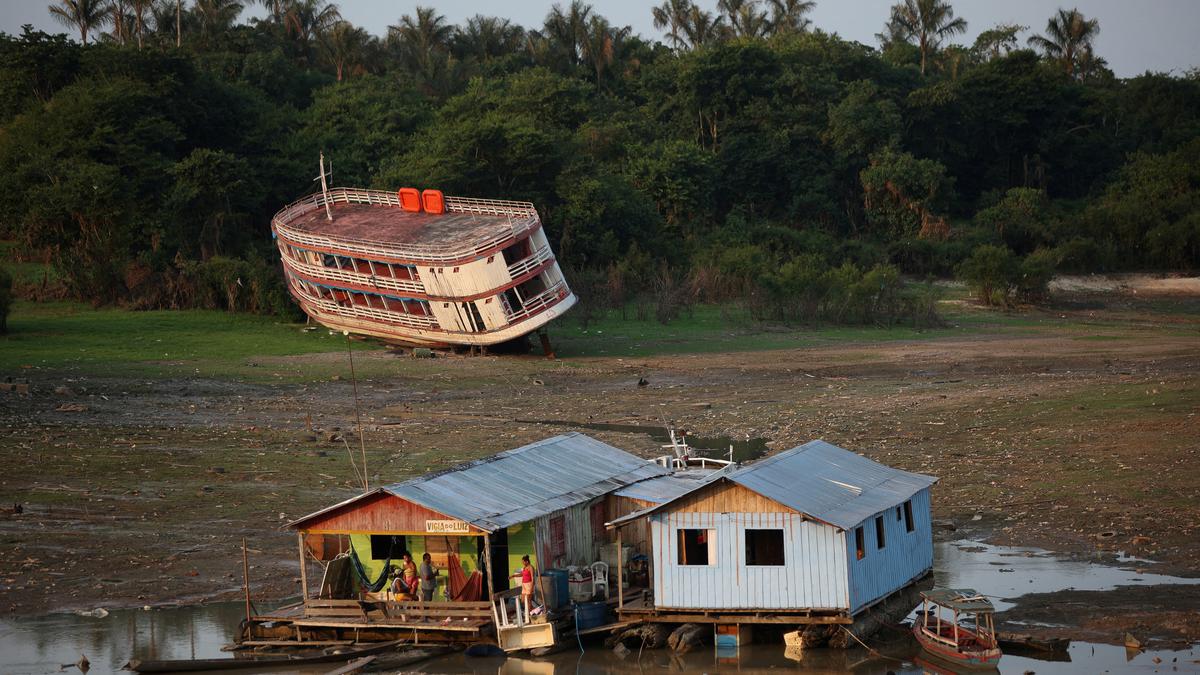
Climate change is the main culprit for a record drought in the Amazon rainforest that has drained rivers, killed endangered dolphins and upended life for millions of people in the region, according to a study
Climate change is the main culprit for a record drought in the Amazon rainforest that has drained rivers, killed endangered dolphins and upended life for millions of people in the region, according to a study released on Wednesday.
Global warming made the drought 30 times more likely, drove extreme high temperatures and contributed to lower rainfall, according to the analysis by World Weather Attribution, an international group of scientists. The study focused on June to November last year.
The drought that hit all nine Amazon rainforest countries - including Brazil, Colombia, Venezuela and Peru - is expected to worsen in 2024 after the rainy season begins to recede in May, scientists told Reuters last year.
The protection of the Amazon, the world's largest rainforest, is considered vital to curbing climate change because of the vast amounts of greenhouse gas that its trees absorb. The drought reduced river levels in parts of the region to their lowest points on record.
"We should be really worried with the health of the Amazon forest," said Regina Rodrigues, a study co-author and researcher at the Federal University of Santa Catarina in Brazil.
Researchers have said the drought could worsen forest fires, which when coupled with climate change and deforestation could push the Amazon more quickly toward a point of no return after which the biome dries out and ceases to be lush rainforest.
The periodic warming in the Eastern Pacific Ocean know as El Nino also contributed to the decline in rainfall, although not to higher temperatures, the study found.


Explore North East India with South Star Rail's three unique 14-day train tour packages from Mangaluru, starting April 25.

A woman and her son sustained burn injuries in a gas cylinder fire in Bagalkot, Karnataka, and were hospitalised.

Directed by Nicholas Kharkongor, the show also stars Angira Dhar, and Ranveer Brar in pivotal roles

T.N. CM Stalin blames Centre's delimitation focus for diverting attention from the cooking gas shortage crisis.

UDF plans to challenge Kerala BJP chief Rajeev Chandrasekhar over alleged asset concealment and criticizes CPI(M) for corruption.

Telangana's Civil Supplies Commissioner assures no fuel shortage, with 20,000 kilolitres of petrol available

Delhi Assembly faces second bomb threat in two days amid Budget session; security measures intensified, but no suspicious items found.

Protect your eyes this summer with simple habits like wearing sunglasses, staying hydrated, and maintaining proper hygiene.

Hyderabad Collector assures no fuel shortage, urges public to ignore rumors and avoid panic buying.

Learn how elderly and disabled voters can easily cast their ballots from home in the 2026 Assembly Elections.

Parliament Budget Session LIVE: Track updates on the Parliament Budget Session as the Transgender Bill moves to the Rajya Sabha. Follow The Hindu for the latest updates on the Budget Session on March 25, 2026.

Congress leaders in Kerala accuse LDF and NDA of a secret deal to undermine their influence in the upcoming Assembly elections.

Agnikul Cosmos successfully test-fires a revolutionary 3D printed booster engine, enhancing launch efficiency and scalability in space transportation.