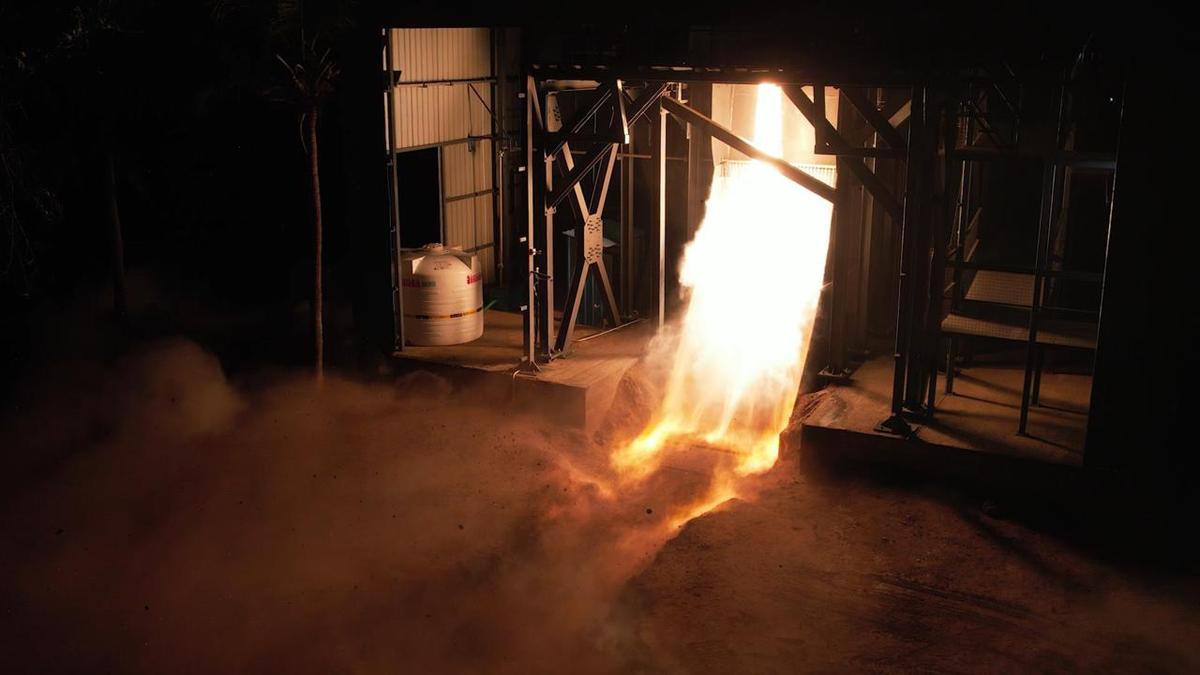
Agnikul test-fires first-of-its-kind 3D-printed booster engine
The Hindu
Agnikul Cosmos successfully test-fires a revolutionary 3D printed booster engine, enhancing launch efficiency and scalability in space transportation.
Chennai-headquartered Agnikul Cosmos, an end-to-end space transportation company, has successfully completed a critical booster engine test of its engine – Agnite.
Unlike traditional engines that take several months to manufacture, Agnikul’s engines can be fully 3D-printed in just seven days. This reduces production complexity and turnaround time.
The tested engine is a full metre long – the largest Inconel rocket engine ever built as a single piece and the first of its scale to be tested with electric motor-driven pumps. Validated at Agnikul’s in-house test facility in Chennai, the system reflects a focus on scalable, high-performance engineering designed to support faster launch readiness and consistent execution.
Through this innovation, the space tech startup now operates a fully integrated launch ecosystem, in-house mission control, dedicated ground stations, and flight-proven propulsion systems.
“We chose single-piece Inconel construction and electric pump architecture specifically to solve our customers’ schedule problem and enhance automation of engine making. Traditional engines take months to build because you’re machining, welding, and assembling dozens of parts. Ours prints in a few days, which means we can respond to launch demand faster than the industry standard,” said Srinath Ravichandran, co-founder and CEO of Agnikul Cosmos.
“Electric pumps are simpler than gas generators, fewer parts to refurbish between flights, which is critical for our reusability roadmap. These aren’t just technical choices but are the reasons why we can commit to low turnaround and actually deliver on it,” he added.


Malavika Sarukkai’s latest production Beeja explores humanity, Nature and healing through the language of dance.

Hindustani expert N Rajam and Mandolin Rajesh are among the National Awardees of the Sree Ramaseva Mandali’s Chamarajpet Ramanavami this year

Explore exclusive interviews with Tamil Nadu political leaders ahead of the 2026 Assembly election to aid informed voter decisions.

Explore North East India with South Star Rail's three unique 14-day train tour packages from Mangaluru, starting April 25.

A woman and her son sustained burn injuries in a gas cylinder fire in Bagalkot, Karnataka, and were hospitalised.

Directed by Nicholas Kharkongor, the show also stars Angira Dhar, and Ranveer Brar in pivotal roles

T.N. CM Stalin blames Centre's delimitation focus for diverting attention from the cooking gas shortage crisis.

UDF plans to challenge Kerala BJP chief Rajeev Chandrasekhar over alleged asset concealment and criticizes CPI(M) for corruption.

Telangana's Civil Supplies Commissioner assures no fuel shortage, with 20,000 kilolitres of petrol available

Delhi Assembly faces second bomb threat in two days amid Budget session; security measures intensified, but no suspicious items found.

Protect your eyes this summer with simple habits like wearing sunglasses, staying hydrated, and maintaining proper hygiene.

Hyderabad Collector assures no fuel shortage, urges public to ignore rumors and avoid panic buying.

Learn how elderly and disabled voters can easily cast their ballots from home in the 2026 Assembly Elections.