Malavika Sarukkai’s new work ‘Beeja’ shows how Bharatanatyam makes room for contemporary themes
The Hindu
Malavika Sarukkai’s latest production Beeja explores humanity, Nature and healing through the language of dance.
Being on stage under the spotlight and enjoying the adoration of the audience is an experience artistes cherish. But what goes behind creating these moments of glory often remains unseen — it’s in the privacy of the rehearsal space, behind the quiet walls that a performance takes shape over many hours of practice.
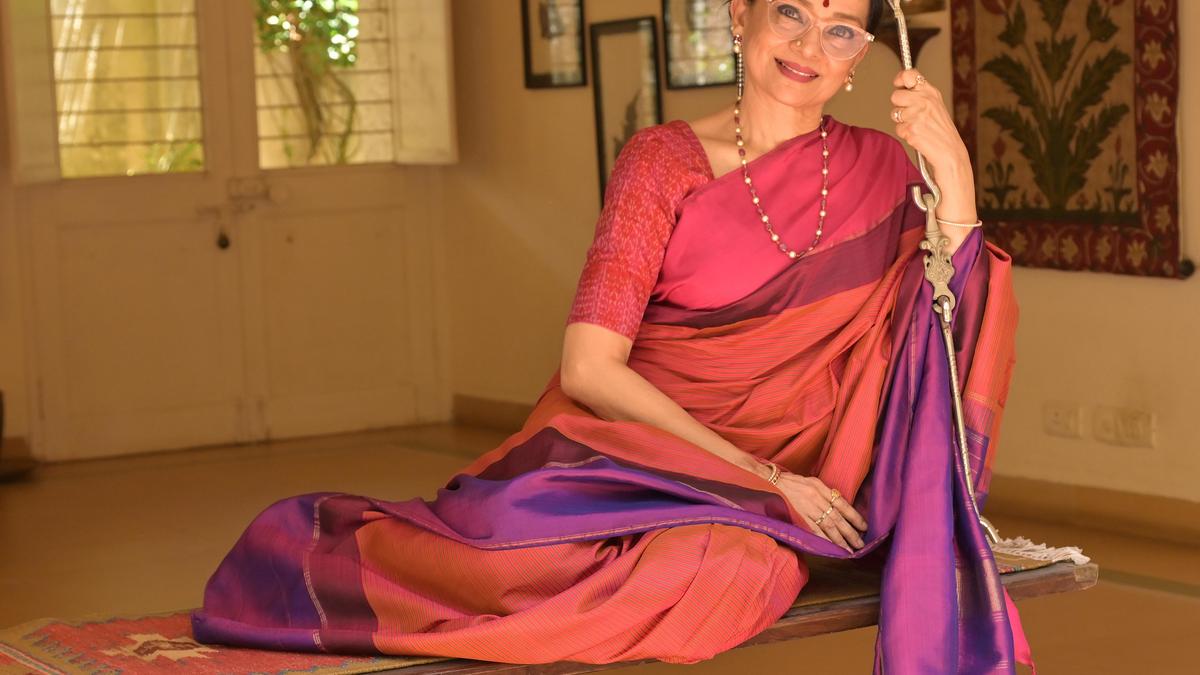
“I have spent most part of my life here,” says Malavika Sarukkai, sitting on the wooden swing in the aesthetic and airy rehearsal area of her house in Valmiki Nagar, Chennai. A part of it opens to the sky, and you can spot an old bougainvillea tree standing like a silent spectator. A huge mirror on the wall reflects her movements and expressions, while beautiful idols of Nataraja and Dakshinamurthy lend a divine touch. Located in the centre of the house, the space bridges the world of visitors with the private quarters of the dancer, as if drawing a subtle link between the outer and the inner realms.
“When I practise with the orchestra, this space resonates with sound and energy. Yet, there are times when I love to sit here alone, particularly when I am working on a production. It allows me to rethink and rework ideas and choreography,” says the celebrated dancer, as she prepares to stage her new work ‘Beeja — Earth Seed’ in Chennai.
Tracing the seed of joy that has turned into despair because of the destruction humans have unleashed on fellow beings and Nature, the production emerges as a poignant commentary on the contemporary world, now caught in disastrous conflict. “With every performance of the work (previously staged in Mumbai, Delhi, Ahmedabad, Bengaluru and Washington DC), the unrest unfolding around us comes into sharper focus reshaping the emotional undertones of my art, which is a lived response to the world I inhabit. At such times, art must move beyond beauty, becoming a powerful tool to heal minds, grapple with loss and inspire people to replace hatred with love and empathy,” says Malavika, explaining the genesis of ‘Beeja’.
Malavika Sarukkai connect audiences with larger issues through her dance. | Photo Credit: B. Velankanni Raj
Looking at the world through an artistic lens is not new for Malavika, who began using the grammar of her dance form to connect audiences with larger issues. “Of course, to begin with, you must master the vocabulary and repertoire. Once I felt ready to chart my own course, I used the technique of the margam to create works that resonated with me, and eventually with people as well. When you truly believe in what you want to create, it does gain a distinct flavour. I wanted my dance to be restrained, immersed in stylisation and infused with a certain spark. If you ask me what it feels like to dance, I would say, it is liberating.”


A Sikh organisation has lodged a complaint against the makers of the film alleging that the movie’s promotional material has hurt the religious sentiments of the Sikh community

Speculation over Congress' Chief Ministerial candidate in Kerala persists despite party leaders' attempts to quell the discussions ahead of elections.

A fake dentist operating illegal clinic in Hyderabad's Old Neredmet has been arrested for endangering public health.

Explore the concept of Force Majeure and its implications amid ongoing geopolitical conflicts affecting global gas exports.

Malavika Sarukkai’s latest production Beeja explores humanity, Nature and healing through the language of dance.

Hindustani expert N Rajam and Mandolin Rajesh are among the National Awardees of the Sree Ramaseva Mandali’s Chamarajpet Ramanavami this year

Explore exclusive interviews with Tamil Nadu political leaders ahead of the 2026 Assembly election to aid informed voter decisions.

Explore North East India with South Star Rail's three unique 14-day train tour packages from Mangaluru, starting April 25.

A woman and her son sustained burn injuries in a gas cylinder fire in Bagalkot, Karnataka, and were hospitalised.

Directed by Nicholas Kharkongor, the show also stars Angira Dhar, and Ranveer Brar in pivotal roles

T.N. CM Stalin blames Centre's delimitation focus for diverting attention from the cooking gas shortage crisis.

UDF plans to challenge Kerala BJP chief Rajeev Chandrasekhar over alleged asset concealment and criticizes CPI(M) for corruption.

Telangana's Civil Supplies Commissioner assures no fuel shortage, with 20,000 kilolitres of petrol available