A tectonic shift in Nepal’s politics
The Hindu
The RSP’s stunning victory in the wake of the Gen Z protests revealed a yearning for change across Nepal and even beyond
The 2026 general election finally awarded Nepalis what they have long desired: a single-party majority government and an end to the ghouls of fragile ruling coalitions – a root cause of constant horse trading and political instability. It also buried deep the three large parties that have taken turns in government. No thanks to the politics of the past.
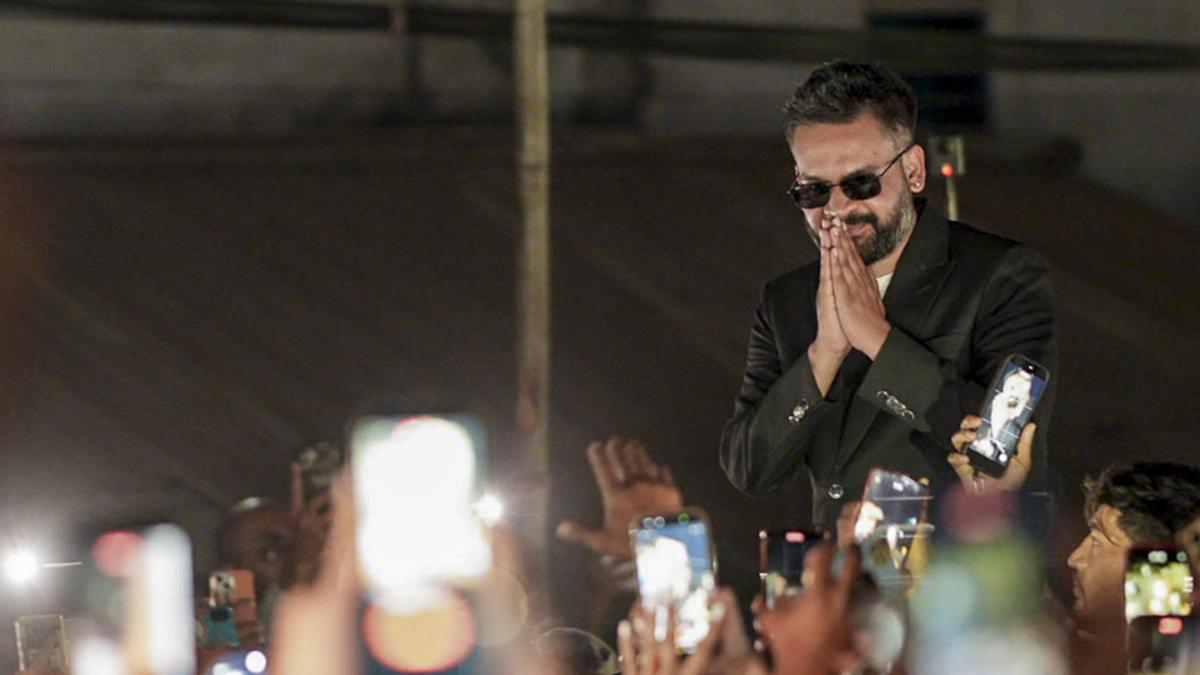
This election has been stunningly different. Young and new faces have dominated the political landscape, not least Rastriya Swatantra Party’s (RSP) prime ministerial candidate Balen Shah, 35, himself. RSP itself is a party formed only in 2022, when it secured 20 seats in the House of Representatives.
RSP’s climb to the top this election has been nothing short of spectacular. The September 8 and 9 Gen Z movement against rampant political corruption and nepotism in Nepal, which also paved the way for the March 5 election by toppling the incumbent government headed by Prime Minister KP Oli, represents a unique phenomenon. It is potentially the first grassroots movement to have evolved entirely online before manifesting in nationwide physical demonstrations to bring down a regime.
This article is a part of The Hindu’s e-book: Nepal’s new political moment
Nepal’s groundswell was distinctive in that it was led by only an estimated 30,000 to 50,000 participants across the nation. The heaviest footfall was in the capital city of Kathmandu, where young citizens marched towards the Parliament building. To the Gen Zers, this was the venue for petty political machinations that exerted minimal influence on the lives and livelihoods of individuals beyond the precincts of the hall. The September 8 protests were manifestations of profound disenchantment, indifference, or even hostility towards the charade of traditional parties, who were engaged in a game of musical chairs in the form of multi-party coalitions that had been in office for a good part since 1990.
On September 8, the parliament, alongside Singha Durbar – the seat of the government – and the Supreme Court, was set ablaze by protestors, leaving the most dominant forces of Nepal’s politics – the Nepali Congress, the Communist Party of Nepal-Unified Marxist Leninist (CPN-UML), and the Communist Party of Nepal (Maoist Centre) – wondering about their long-term future. The movement, however, was not ideologically uniform. Segments of Gen Z also advocated for the reinstatement of the monarchy, framing it as part of a broader dissatisfaction with political instability and as one among several alternatives to reset the system. These voices gained traction after September 2025, when debates intensified over who governs Nepal and whether Nepal’s Constitution 2015 – in its current form – should be suspended to allow the entire governance architecture to reset. Although the RSP had emerged as the alternative to the old guard of Nepali politics, only a few had foreseen that it would be just two seats shy of two thirds in the 275-member House of Representatives.


Hyderabad's average travel speed increased from 20.1 kmph in 2024 to 23.4 kmph in 2025, analyzed through advanced data systems.

Kerala's Election Commission proposes postal ballot expansion and new enrolment dates for enhanced voter participation in 2025 elections.

Bengaluru university faculty suspended for Islamophobic remarks; police file NCR amid calls for accountability and stricter action.

DMK fields Speaker Appavu again from Radhapuram; gifts ‘unlucky’ Ambasamudram to Congress

A woman was arrested for attempting to smuggle three SIM cards into Bengaluru Central Prison, concealed in her body.

O. Panneerselvam and supporters secure DMK tickets for upcoming Tamil Nadu elections, announced by Chief Minister M.K. Stalin.

Sreedharan Pillai discusses the implications of Governors entering politics, BJP's prospects, and party dynamics ahead of Kerala's 2026 elections.

Moving Tech Innovations acquires Dutch firm Automicle to expand its community-led mobility model into European markets.

MP High Court judges inspect the Bhojshala Temple-Kamal Maula Mosque site ahead of the April 2 hearing amid tight security.

DMK announces candidates for 164 constituencies in the upcoming Tamil Nadu Assembly elections, including key figures M.K. Stalin and Udhayanidhi Stalin.

AMMK fields former GH Dean for Periyakulam Assembly seat in Theni

M.S. Dhoni will miss the first two weeks of IPL 2026 due to a calf strain, CSK confirms.

Shorts News:PM Modi inaugurates Noida airport; inside revealed