Ukrainian rebels evacuate civilians to Russia amid crisis
India Today
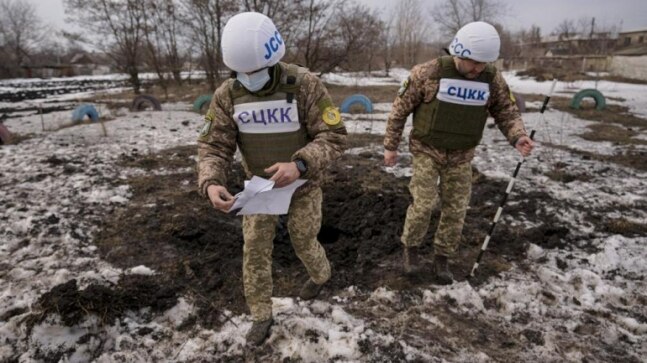
Rising tensions in eastern Ukraine fueled Western fears of a Russian invasion and a new war on Europe's outskirts on Friday, with a humanitarian convoy shelled and pro-Russia rebels evacuating civilians.
Spiking tensions in eastern Ukraine on Friday aggravated Western fears of a Russian invasion and a new war in Europe, with a humanitarian convoy hit by shelling and pro-Russian rebels evacuating civilians from the conflict zone. A car bombing hit the eastern city of Donetsk, but no casualties were reported.
The Kremlin declared massive nuclear drills to flex its military muscle, and President Vladimir Putin pledged to protect Russia’s national interests against what it sees as encroaching Western threats. US and European leaders, meanwhile, grasped for ways to keep the peace and Europe’s post-Cold War security order.
While Putin held out the possibility of diplomacy, a cascade of developments this week have further exacerbated East-West tensions and fueled war worries. This week’s actions have fed those concerns: US and European officials, focused on an estimated 150,000 Russian troops posted around Ukraine’s borders, warn the long-simmering separatist conflict in eastern Ukraine could provide the spark for a broader attack.
READ | Explained: Why Russia is building up military presence along Ukraine border
Vice President Kamala Harris said the US still hopes Russia will de-escalate but is ready to hit it with tough sanctions in case of an attack. US leaders this week issued their most dire warnings yet that Moscow could order an invasion of Ukraine any day.
“We remain, of course, open to and desirous of diplomacy ... but we are also committed, if Russia takes aggressive action, to ensure there will be severe consequences,” Harris said at the annual Munich Security Conference.
While Russia snubbed this year’s conference, lines of communication remain open: The US and Russian defense chiefs spoke Friday, and US Defense Secretary Lloyd Austin called for de-escalation, the return of Russian forces surrounding Ukraine to their home bases, and a diplomatic resolution, according to the Pentagon. Secretary of State Antony Blinken and Russian Foreign Minister Sergey Lavrov agreed to meet next week.


A wedding in Uttar Pradesh was called off after a dispute over the groom's family beating up the bride's pet dog led to a violent clash between families.

After a dismal performance in the recent Bangladesh election, Nahid Islam, NCP convenor and anti-Sheikh Hasina protest leader, has resorted to allegations as if to justify the party's poor show. Nahid claimed that the election results had been manipulated, and the victorious BNP colluded with India and Hasina's Awami League.

In a post on X, Kunal Kapoor, known for his films such as Rang De Basanti and Aaja Nachle, said, "The man who cleans our cars asked me for a loan. And our house help of many years told us she might leave next year."

Tarique Rahman's 1st India move: Restores visa services in Delhi

Meet Pujarini Pradhan - a small-town woman from rural Bengal whose quiet, English-spoken glimpses of everyday village life have turned simplicity into a following of over half a million on Instagram.

The now-viral video showed both the Thar and tempo halted side by side on a tight mountain stretch, with the drivers apparently arguing over who should move first.

Women are treated in the new penal code as being on the same level as "slaves", with provisions allowing either "slave masters" or husbands to administer discretionary punishment, including beatings, to their wives or subordinates. This aspect of the code has drawn particular alarm from rights groups.

'I fought for Pakistan, and today the Pakistani Army does not acknowledge me,' one of the alleged soldiers in Baloch rebel custody can be heard saying in the video.

Trump to direct agencies to release files on UFOs, alien, extraterrestrial life after 'tremendous interest'

Former US President Barack Obama said in a recent interview that aliens are real. Donald Trump claimed he took it out from classified information.

At Trump's Board of Peace summit in Washington, Pakistan PM Shehbaz Sharif praised him as a man of peace and saviour of South Asia, reviving disputed ceasefire claims involving India.

Thames Valley Police are searching properties in Berkshire and Norfolk linked to the former prince after his arrest -- including Royal Lodge in Berkshire, where he lived for more than two decades, and Sandringham in Norfolk, where he now lives on the King's estate.

The collision occurred shortly before noon at US 36 and County Road 525 East in Hendricks County, between Avon and Danville. According to the report, a Freightliner tractor-trailer travelling eastbound failed to stop at a red signal and struck a northbound Chevrolet pickup.