India joins Pax Silica: The Silicon Alliance aking on China's tech stranglehold
India Today
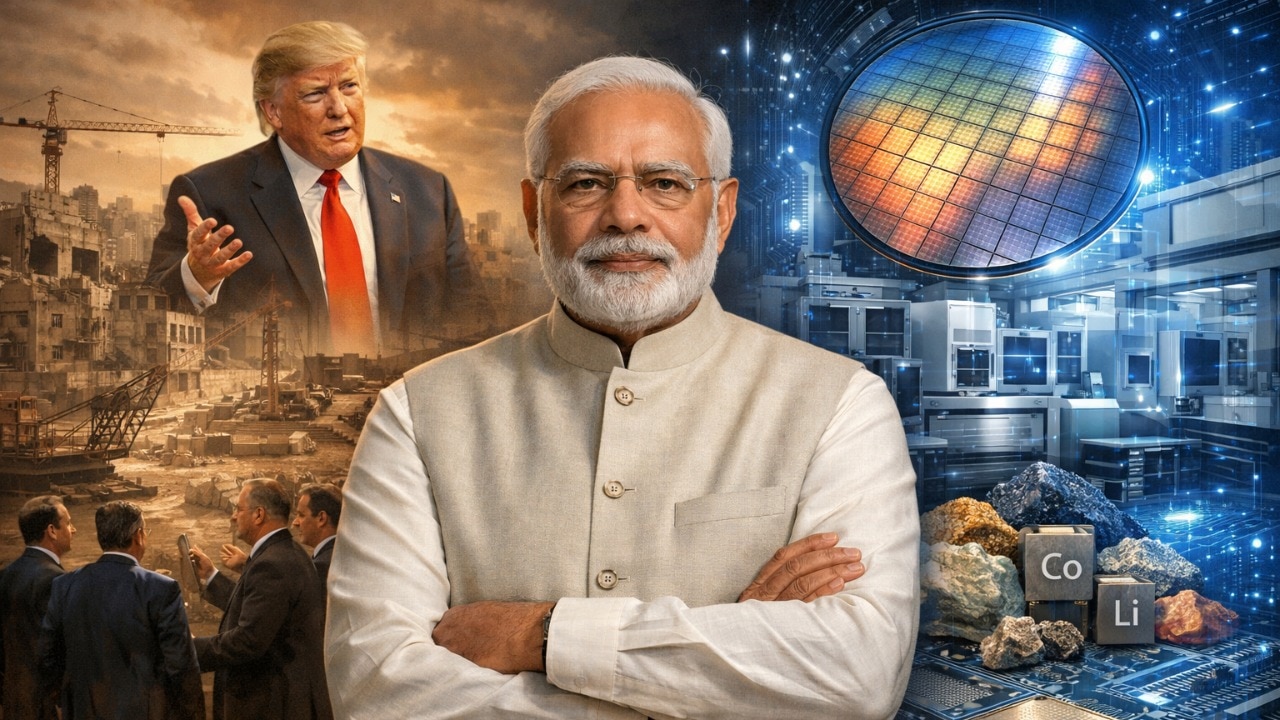
India has become the twelfth nation to sign Pax Silica, a US-led coalition designed to secure the global silicon supply chain from mine to microchip. The world's technology order may never look the same again.
New Delhi has made its most consequential technology commitment in decades. On 20 February 2026, India formally joined Pax Silica at the India AI Impact Summit, signing onto a US-led coalition that aims to secure the entire silicon stack from critical mineral extraction to artificial intelligence deployment. Ministers Ashwini Vaishnaw and US envoy Sergio Gor formalised the agreement, capping years of semiconductor ambition and signalling a decisive shift in how India positions itself within global technology geopolitics.
Pax Silica takes its name from the Latin word for peace and silica, the core mineral refined into silicon. The symbolism is deliberate. Control over silicon, in the view of its architects, equals stability in the AI era. The alliance was launched in December 2025 under US Under Secretary Jacob Helberg as a direct response to COVID-era supply chain failures, China's export curbs on gallium and rare earths, and the growing recognition that technological dependency had become a national security vulnerability.
The founding membership reads like a who's who of technology capability. The United States, Australia, Japan, South Korea, the United Kingdom, Singapore, Greece, Israel, the Netherlands, Qatar and the UAE were among the early signatories. Australia brings critical minerals. The Netherlands controls the EUV lithography tools made by ASML, without which advanced chips cannot be manufactured. South Korea and Japan anchor fabrication. India, as the twelfth signatory, brings scale, talent and a population of 1.4 billion generating the data that feeds artificial intelligence.
The alliance rests on four interlocking pillars. The first addresses mining and refining. China currently refines roughly 90 percent of the world's rare earths, gallium and germanium, materials that feed everything from semiconductors to electric vehicles to defence systems. Pax Silica encourages joint ventures in extraction and processing outside China, with India pursuing mineral acquisitions through KABIL and NCMM in Argentina and Chile. The target is to achieve 50 percent non-China sourcing by 2030.
The second pillar covers semiconductor fabrication. Advanced lithography tools from the Netherlands, ultra-pure chemicals from Japan and co-funded fabrication plants across allied nations form the backbone of this effort. Export controls are harmonised so that sensitive technology does not reach adversaries. For India, this pillar opens access to ASML equipment and Korean fabrication processes, supporting projects at Tata's Gujarat facility and Micron's packaging plant in Sanand under the 10 billion dollar India Semiconductor Mission.


Tarique Rahman's 1st India move: Restores visa services in Delhi

Meet Pujarini Pradhan - a small-town woman from rural Bengal whose quiet, English-spoken glimpses of everyday village life have turned simplicity into a following of over half a million on Instagram.

The now-viral video showed both the Thar and tempo halted side by side on a tight mountain stretch, with the drivers apparently arguing over who should move first.

Women are treated in the new penal code as being on the same level as "slaves", with provisions allowing either "slave masters" or husbands to administer discretionary punishment, including beatings, to their wives or subordinates. This aspect of the code has drawn particular alarm from rights groups.

'I fought for Pakistan, and today the Pakistani Army does not acknowledge me,' one of the alleged soldiers in Baloch rebel custody can be heard saying in the video.

Trump to direct agencies to release files on UFOs, alien, extraterrestrial life after 'tremendous interest'

Former US President Barack Obama said in a recent interview that aliens are real. Donald Trump claimed he took it out from classified information.

At Trump's Board of Peace summit in Washington, Pakistan PM Shehbaz Sharif praised him as a man of peace and saviour of South Asia, reviving disputed ceasefire claims involving India.

Thames Valley Police are searching properties in Berkshire and Norfolk linked to the former prince after his arrest -- including Royal Lodge in Berkshire, where he lived for more than two decades, and Sandringham in Norfolk, where he now lives on the King's estate.

The collision occurred shortly before noon at US 36 and County Road 525 East in Hendricks County, between Avon and Danville. According to the report, a Freightliner tractor-trailer travelling eastbound failed to stop at a red signal and struck a northbound Chevrolet pickup.


A 94-year-old man's approach to health, shared online by his granddaughter, has challenged ideas about fitness and wellbeing, highlighting discipline and tradition over modern wellness trends.

Andrew Windsor Mountbatten, who was stripped of his prince title over his links with convicted paedophile Jeffrey Epstein, was arrested in the UK on Thursday. Andrew is the grand-nephew of Lord Mountbatten, the last British viceroy in India. Lord Mountbatten was accused of being involved in a child sex ring, involving an orphanage in Belfast. Here's what we know about the Kincora Boys' Home scandal.