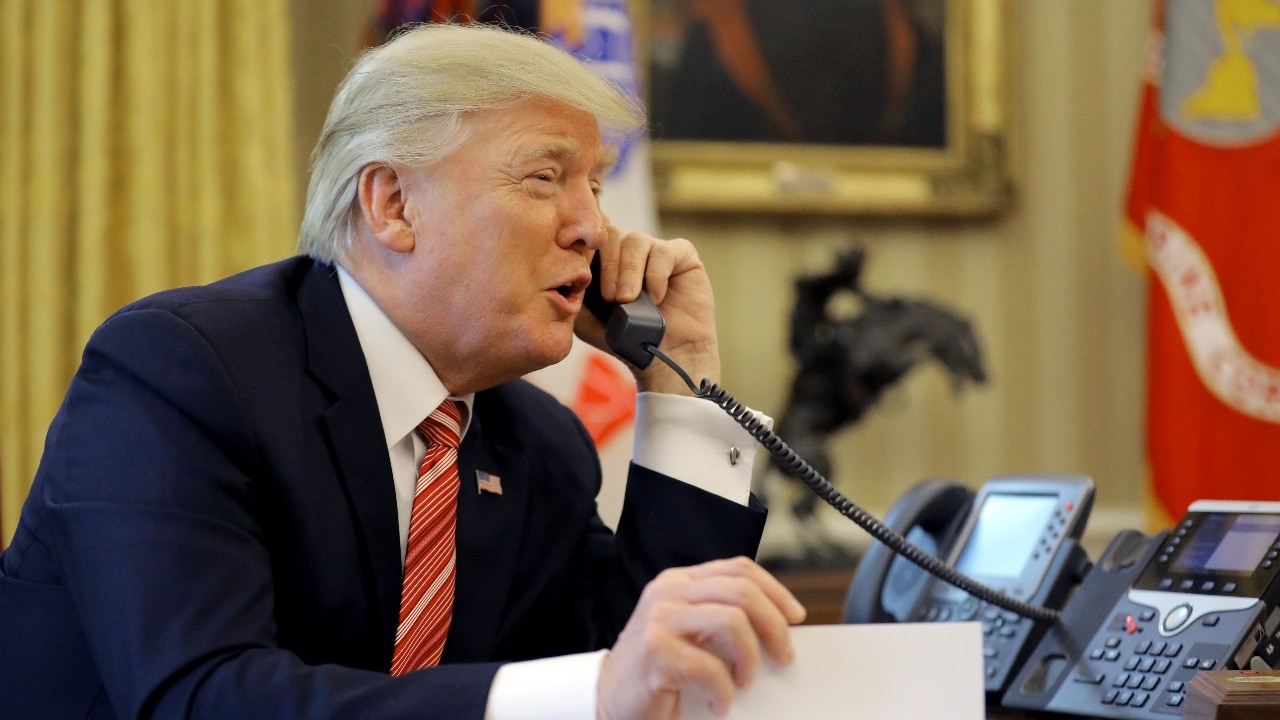
Trump's 'keypad doctrine': How his phone shapes and entertains the world
India Today
From war threats to ceasefire pauses, US President Donald Trump's phone-led diplomacy has kept the world guessing, markets volatile and allies uneasy, raising questions over whether global security is being shaped by strategy or a stream of impulsive late-night posts.
A late-night post replaced a war cabinet. A deadline handed Iran the clock. And somewhere between Mar-a-Lago and midnight, the world is still waiting for someone, anyone, to take away US President Donald Trump's phone.
There is a specific kind of dread that accompanies a late-night notification from the US President. It is born of the realisation that the most powerful man in the world wields a smartphone with the same reckless curiosity as a proverbial primate holding a razor.
He knows the tool is sharp; he knows it draws blood; but he lacks the discipline and knowledge to use it for anything other than chaos.
No aide can stop him. No chief of staff has managed to. The phone is always there, a warm toy in his hand, and the world is always one thumb-movement away from a new crisis.
On March 21, Trump was in Florida. The Middle East was on fire, global markets were sitting on a powder keg. And the notification arrived. A threat to Tehran: Open the Strait of Hormuz in 48 hours or the US will obliterate Iran's power plants.
Not a press briefing. Not a diplomatic cable. A post that in any sane, logical, rational administration would have required a war cabinet. But Trump's fingers moved on glass and the world was suspended in horror and anticipation.


Hours after an airstrike destroyed the Qasmiyeh bridge over the Litani river in south Lebanon, India Today reporter Ashraf Wani reached the site to find an eerie, complete silence – no people, no rescue teams, only wreckage.


An Air Canada Express CRJ-900 collided with a fire truck at LaGuardia Airport while taxiing in bad weather, killing both pilots and injuring two officers; 72 passengers were onboard.

A traffic constable's quick thinking and CPR training save a CISF jawan's life on Patna's busy streets. A video of the heroic act has gone viral.


President Trump halted strikes on Iran for five days even as Pakistan, Turkey and Egypt tried to talk to both sides about a peace deal. Tehran has insisted that Washington DC needs to be a direct participant in the talks, given it began the war.

In the clip, recorded by the child's father from the driver's seat, the woman in the passenger seat is seen using a coconut shell as a makeshift toilet for the child before discarding it outside.

Iran's strikes on data centres mark a shift to targeting digital infrastructure to disrupt US and Israeli operations, degrade AI-driven targeting, and impose economic and reputational costs on Gulf states; in response, the US and Israel have struck data infrastructure in Tehran.

Newark airport control tower evacuated over burning smell hours after plane collision, flight ops halted again


Had good conversations with Iran, strikes on power plant on hold for now, says Donald Trump

A Pune eatery's notice linking the LPG price increase to international fuel costs has gone viral. In the notice, the eatery bashed one 'dumb orange-haired man'.

Amid the ongoing Middle East war, Turkish authorities destroyed a US-made unmanned vessel in a controlled blast after it washed ashore on the country's Black Sea coast.