Tiwari panel recommends guidelines to transform higher education institutions into multi-disciplinary hubs, cites Vedic period
The Hindu
Establishment of large multi-disciplinary Higher Education Institutions (HEIs) in or near every district by 2030 is one of the most significant recommendations in the NEP 2020, according to report by Prof. R.P. Tiwari-headed expert committee
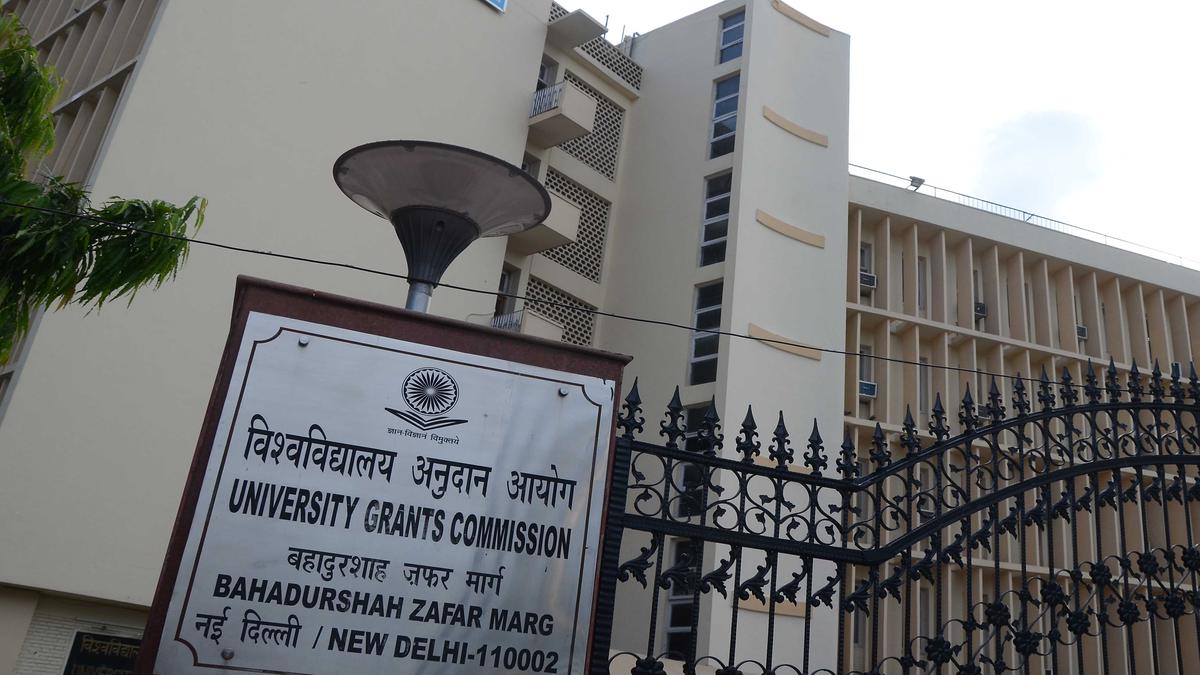
Under the New Education Policy (NEP 2020), the University Grants Commission (UGC) has decided to transform Higher Education Institutions (HEIs) into multi-disciplinary institutions, and has released the Prof. R.P. Tiwari-headed expert committee draft guidelines aimed at achieving this goal.
The committee has suggested multiple ways of turning HEIs into multi-disciplinary centres.
The guidelines state: “Academic collaboration between institutions, through HEI clusters, leading to multi-disciplinary education and research in different modes, merger of single stream institutions with other multi-disciplinary institutions under the same management or different managements, strengthening of institutions by adding departments in subjects such as languages, literature, music, philosophy, Indology, art, dance, theatre, education, mathematics, statistics, pure and applied sciences, sociology, economics, sports, translation and interpretation and other subjects are the major objectives of the transformation of HEIs into multi-disciplinary institutions. It will help students to shape their career options.”
“The quintessence of Higher Education Institution (HEI), as envisioned in the NEP 2020, is one which builds vibrant communities of scholars and peers, breaks down harmful silos between disciplines and enables students to become well-rounded individuals. However, a substantial number of HEIs in the country are either single stream institutions or multi-disciplinary institutions with rigid disciplinary boundaries. Therefore, transforming HEIs into multi-disciplinary institutions is highly needed,” states the report.
The Prof. Tiwari committee cites examples of “recognition of limitless learning in the Vedic period” and ancient institutions, such as Nalanda and Takshashila, as inspiration for the transformation. These higher learning centres of ancient India were known for teaching every branch of knowledge, such as singing, painting, chemistry, mathematics, vocational fields such as carpentry, cloth-making, professional fields such as medicine and engineering, and soft skills such as communication, discussion and debate, states to the report.
“India has domain-specific standalone colleges and universities. Internationally, the culture of establishing and sustaining a multi-disciplinary university is increasing fast, thereby maximising productivity with enhanced focus towards research and development, innovation and incubation. Large multi-disciplinary HEIs to be established in or near every district by 2030 is one of the most significant recommendations in the NEP 2020,” according to the report.
The committee suggests academic collaboration between institutions leading to multi-disciplinary education and research, composition of the academic council, composition of the finance committee, merger of higher education institutions, adding new departments, and multi-disciplinary research in HEI clusters.


CPI-M accepts DMK's five-seat offer for Tamil Nadu Assembly elections, prioritizing INDIA bloc unity over seat demands.

Ricky Rai, son of former underworld operative Muthappa Rai, on Monday appeared before the Bengaluru Traffic Police for questioning in connection with a case involving a Lamborghini performing dangerous stunts at Anil Kumble Circle on March 21.

The Dispur election heats up as 'CongBJP' defections shape a high-stakes contest between veteran candidates from BJP and Congress.

Bengaluru's M. Chinnaswamy Stadium conducts readiness drill ahead of IPL 2026, ensuring upgrades and technical preparations are complete.

First-level randomisation of EVMs completed in Nagapattinam for upcoming elections, ensuring transparency and security.

A district-level committee in Krishnagiri has been formed to assess and verify seizure claims of goods and cash.

Minister Anam Ramanarayana Reddy pledges government support for local fishermen and farmers facing challenges in Andhra Pradesh.

MP M. Sribharat urges collective efforts to revive Visakhapatnam Steel Plant, highlighting key reforms for crucial recovery and growth.

141 candidates have filed nominations for Kozhikode's Assembly elections, with scrutiny on March 24 and campaigning intensifying.

BJP's Vijayendra accuses Congress of using money to influence Bagalkot bypolls, urging voters to reject their tactics.

First randomization of electronic voting machines completed in Tirunelveli and Tenkasi districts for upcoming Assembly elections.

RPF seizes 10.12 kg of unclaimed cannabis worth ₹5.06 lakh from a train in Mangaluru.

Kolar's groundwater levels rise to 50-100 ft due to the K.C. Valley project, ensuring clean water and improved health outcomes.