The short history of a large note
The Hindu
India’s monetary system has taken a serious credibility hit due to frequent changes and U-turns in currency management
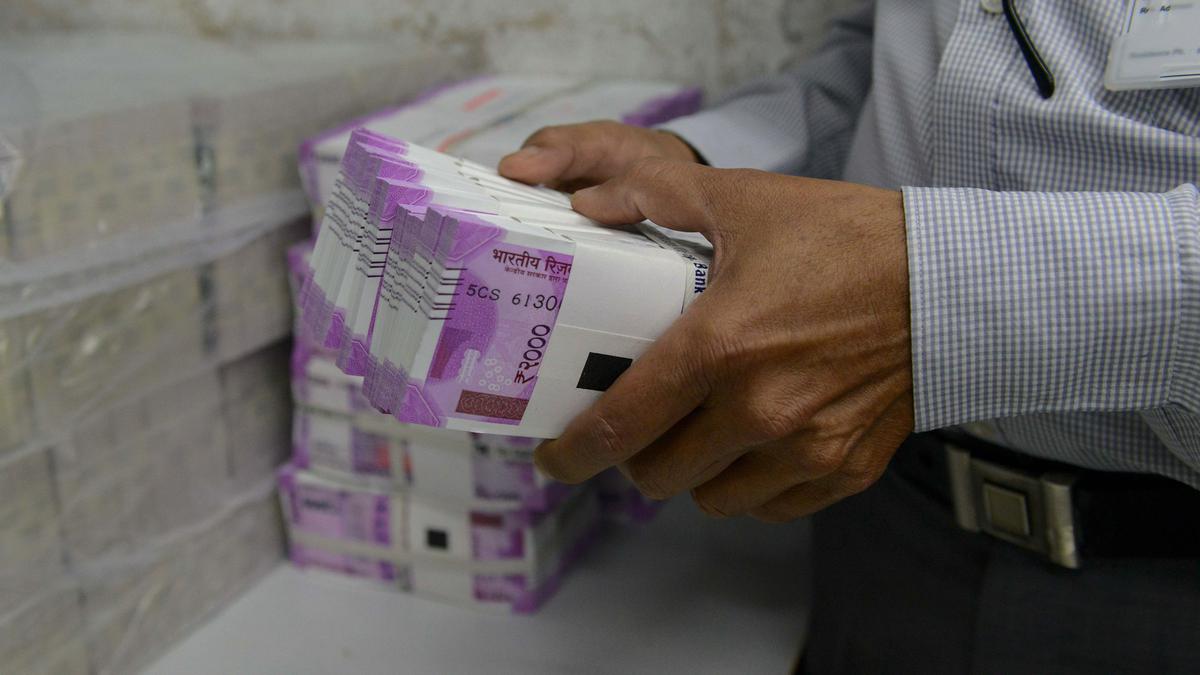
The withdrawal of the ₹2,000 note from circulation by the Reserve Bank of India (RBI), which it announced on May 19, 2023, marks the end of a sordid chapter in the tragi-comic demonetisation saga. The presence of the ₹2,000 note in circulation was a constant reminder of the horrors of a “nation in the queue”. The note was also an object of ridicule, particularly due to bizarre claims at the time of its introduction, of a nano chip implanted in it. For the beleaguered government, the chapter on the ₹2,000 note had to be closed. With fresh printing of the note stopped after 2018-19, its eventual withdrawal was expected.
In 2016, the ₹2,000 note had emerged as the centrepiece of demonetisation, a policy that was illogical in conception and mismanaged in execution. The note had to be printed in larger numbers because the government had not checked whether it had enough notes to replace what was withdrawn. On November 8, 2016, the total stock of notes of ₹2,000 — with the Reserve Bank of India (RBI) and currency chests — was 473.3 million pieces worth ₹94,660 crore. This amount constituted just 6% of the value of Specified Bank Notes (SBN) withdrawn. People were dying in the queues, and the realisation dawned that more ₹2,000 notes were required for faster remonetisation.
However, the RBI printed the new ₹2,000 notes in a new size. Normally, an automated teller machine (ATM) contained four cassettes; two cassettes held ₹500 notes and the other two cassettes held ₹1,000 and ₹100 notes. The new ₹2,000 note would not fit into any of these cassettes. Consequently, every one of the 2.2 lakh ATMs in India had to be “re-calibrated”. Re-calibration was a massive and complex exercise that required coordination across banks, ATM manufacturers, the National Payments Corporation of India, and switch operators. Engineers had to personally visit each ATM and spend between two to four hours with an ATM to complete the re-calibration.
The re-calibration crisis led to another ad hoc measure. Banks packed all the cassettes with available notes of ₹100. If all four cassettes of an ATM were filled with ₹100 notes, one ATM could store currency worth ₹2.1 lakh. The maximum withdrawal allowed per person per day was ₹2,000. In other words, one ATM could, at the maximum, meet the needs of only 105 people per day. But there were thousands queueing up in front of every ATM.
When the stock of ₹100 notes was quickly exhausted, banks demanded more from the RBI. The RBI had no option but to supply old and soiled notes that banks had returned to the RBI earlier. Soiled notes often jammed the ATMs, which only added to the chaos.
The quality of the new ₹2,000 note was also a problem. Many notes were poorly printed: some notes had a shadow of Mahatma Gandhi’s face in addition to the photograph of his face; some others had uneven borders; while others were of varying colour shades and sizes. In the villages, farmers were cheated by criminals as they were paid in fake ₹2,000 notes — they were just high resolution photocopies of the original note.
Finally, even when people managed to get a ₹2,000 note, most of them were unable to spend it; no one would offer change or a balance payment over transactions. In effect, the problem of a short supply of notes was exacerbated by the release of the ₹2,000 note.


CPI-M accepts DMK's five-seat offer for Tamil Nadu Assembly elections, prioritizing INDIA bloc unity over seat demands.

Ricky Rai, son of former underworld operative Muthappa Rai, on Monday appeared before the Bengaluru Traffic Police for questioning in connection with a case involving a Lamborghini performing dangerous stunts at Anil Kumble Circle on March 21.

The Dispur election heats up as 'CongBJP' defections shape a high-stakes contest between veteran candidates from BJP and Congress.

Bengaluru's M. Chinnaswamy Stadium conducts readiness drill ahead of IPL 2026, ensuring upgrades and technical preparations are complete.

First-level randomisation of EVMs completed in Nagapattinam for upcoming elections, ensuring transparency and security.

A district-level committee in Krishnagiri has been formed to assess and verify seizure claims of goods and cash.

Minister Anam Ramanarayana Reddy pledges government support for local fishermen and farmers facing challenges in Andhra Pradesh.

MP M. Sribharat urges collective efforts to revive Visakhapatnam Steel Plant, highlighting key reforms for crucial recovery and growth.

141 candidates have filed nominations for Kozhikode's Assembly elections, with scrutiny on March 24 and campaigning intensifying.

BJP's Vijayendra accuses Congress of using money to influence Bagalkot bypolls, urging voters to reject their tactics.

First randomization of electronic voting machines completed in Tirunelveli and Tenkasi districts for upcoming Assembly elections.

RPF seizes 10.12 kg of unclaimed cannabis worth ₹5.06 lakh from a train in Mangaluru.

Kolar's groundwater levels rise to 50-100 ft due to the K.C. Valley project, ensuring clean water and improved health outcomes.