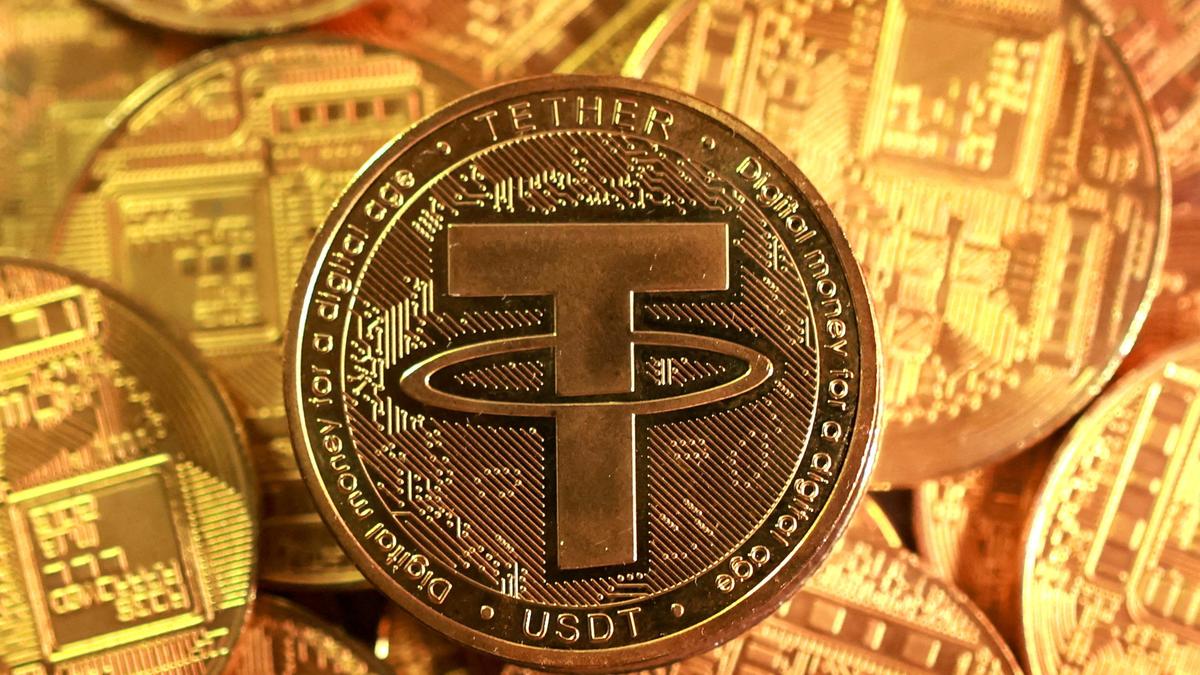
Stablecoins increasingly favoured for money laundering, financing of terrorism and proliferation: FATF report
The Hindu
FATF report highlights rising use of stablecoins in money laundering and terrorism financing by state-linked actors.
The Financial Action Task Force (FATF), in its latest report, has said that stablecoins are increasingly being favoured for illegal activities, including money laundering and terror financing, with indications that state-linked actors in Iran and North Korea are also using them for operations such as proliferation financing and weapons procurement.
Stablecoins are a type of cryptocurrency designed to keep their prices stable, usually by linking them to another asset such as a fiat currency or gold.
“Notwithstanding the FATF’s framework, stablecoins are exposed to heightened ML (Money Laundering)/TF (Terrorist Financing)/PF (Proliferation Financing) risks when transferred on a P2P (peer-to-peer) basis via unhosted wallets. These vulnerabilities are exacerbated by their characteristics such as the price stability and ample liquidity...,” noted the “Targeted Report on Stablecoins and Unhosted Wallets”.
“State-linked cybercriminal groups have rapidly adopted stablecoins as a preferred method for laundering proceeds from ransomware, phishing, and other cyber-enabled crimes. Most notably, (North Korea) DPRK’s Lazarus Group, Andariel, and Onyx Sleet specialise in virtual asset theft, espionage, and disruptive attacks, like ransomware,” it said, adding that groups like Lazarus have used malware and social engineering to infiltrate virtual asset firms to steal funds, including a nearly $1.46 billion theft in February 2025.
According to the Multilateral Sanctions Monitoring Team, since at least 2023, “the DPRK’s 221 General Bureau” has sought to expand the use of stablecoins beyond cyber-enabled financial crime to include their use as a means of exchange and payment for goods and services prohibited under the United Nations Security Council resolutions.
“In particular, DPRK entities have been assessed to use Tether (USDT) in transactions involving the sale and transfer of military equipment and raw materials...this activity indicates an apparent effort by DPRK entities to operationalise the use of stablecoins in WMD-related procurement activities,” said the report.


Thousands of devotees take part in ‘pookuzhi’ festival in Natham

FATF report highlights rising use of stablecoins in money laundering and terrorism financing by state-linked actors.

Researchers unveil India's first comprehensive checklist of fireflies, documenting 92 species to enhance understanding and conservation efforts.

Experts gather at a seminar hosted by Assam Rifles to discuss evolving security challenges in Northeast India.

George Russell's victory at the 2026 Australian GP signals Mercedes' resurgence, showcasing thrilling battles and strategic missteps from rivals.

Tenders invited for a 1,200 TPD waste-to-energy plant at Vellalore to process waste from Coimbatore and Tiruppur.

Union Cabinet grants international status to Madurai airport, enhancing global connectivity and boosting tourism and trade in Tamil Nadu.

Students should be careful about what they write in their social media accounts, as companies now look closely on job aspirants activity on the social media, said motivational speaker and cyber crime expert G. Ananth Prabhu, in Mangaluru on Tuesday.

Bhupender Yadav affirms government's commitment to Aravalli conservation and illegal mining crackdown, considering a Supreme Court-directed committee.

Tamil Nadu State Planning Commission advocates for legal protections and social security measures to enhance gig workers' welfare and sustainability.

Explore the legal challenges surrounding MGR’s 1984 election victory from a hospital bed in this insightful analysis by The Hindu.

Karnataka High Court halts work on Sharavathi hydroelectric project over environmental concerns until further notice.

Describing the international status accorded to Madurai Airport as a good news, Virudhunagar MP B. Manickam Tagore has exuded hope that this development will increase international flight connectivity from Madurai.