Seeding innovation in Karnataka’s Challakere Premium
The Hindu
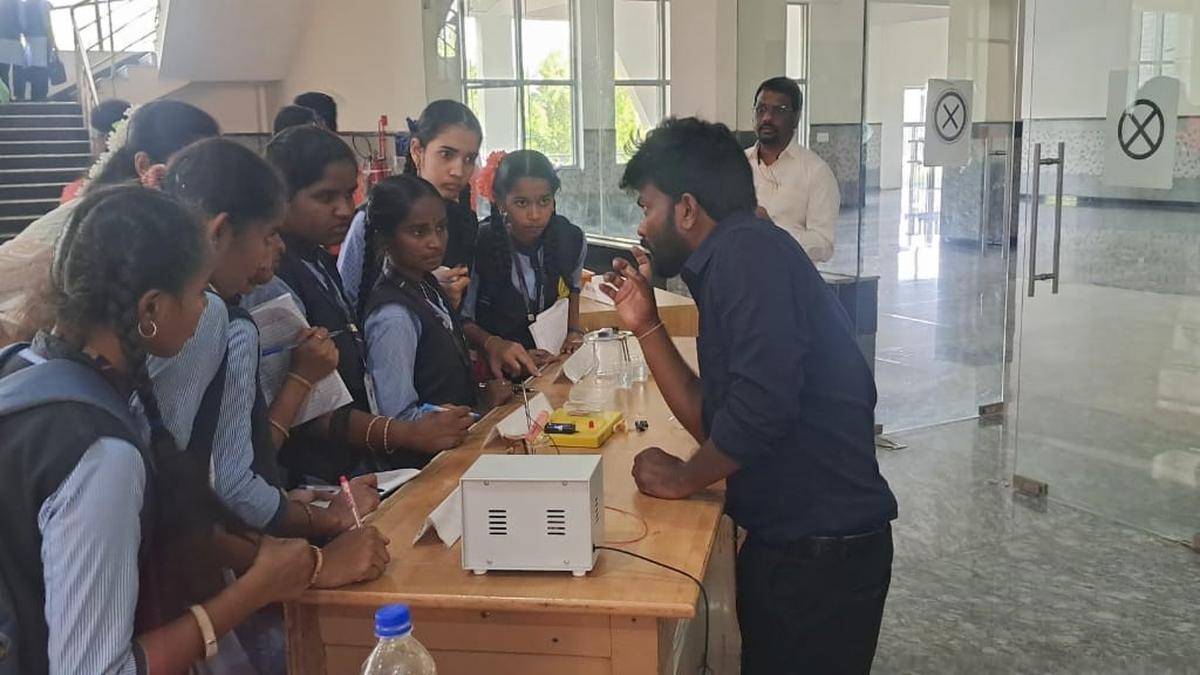
In 2010, the Indian Institute of Science established its second campus in Challakere. Science and Engineering for Economic Development (SEED), an initiative by IISc’s Foundation for Science Innovation and Development (FSID) has been working with the local population for three years now to explore and develop best practices in agriculture and wool and blanket weaving in the region. Apart from its latest initiative, which focuses on STEM education for school students in the region, SEED is now mulling a start-up incubation centre in Challakere.
Known as the ‘oil city of Karnataka,’ Challakere in Chitradurga is also synonymous with its coarse wool blankets or Challakere kamblis. The local economy has been traditionally dependent on the weaving of these blankets, besides sheep rearing and agriculture.
In 2010, the Indian Institute of Science established its second campus in Challakere. Science and Engineering for Economic Development (SEED), an initiative by IISc’s Foundation for Science Innovation and Development (FSID) has been working with the local population for three years now to explore and develop best practices in agriculture and wool and blanket weaving in the region. Apart from its latest initiative, which focuses on STEM education for school students in the region, SEED is now mulling over a start-up incubation centre in Challakere.
“SEED looks at certain chosen science areas to work on where we feel that it can make a big difference. To begin with, we have chosen certain things which we thought are mostly relevant for the underprivileged class of the society,” explains Dr. Amitava Pramanik, Head – SEED.
He points out that 40-45% of the population in Challakere is from Scheduled Caste/Scheduled Tribe communities and are underprivileged. A large part of the population is nomadic and rear sheep.
The weaving activity in the region has significantly declined over the years. In 2009 the government took over 13,000 acres of the grasslands of Challakere to build Science City. Several villagers have alleged that this cut off their access to water and land to graze sheep. Buying fodder proved too expensive resulting in distress sale of the sheep, and this, according to them has been one of the reasons for decline of the local industry.
One of the biggest buyers of the Challakere kambli was the Indian army. However, post 2019 the army reportedly refused to renew the contract.
“When we started looking into the wool tech and design, we undertook a lot of surveys because we wanted to understand the needs of the locals and the nature of their occupations. Our objective was to find out what needed to be done and not necessarily go in with our own agenda. We wanted to evaluate their needs and what science and technology could do for them,” notes Dr. Priyanka Sachan, Project Co-Ordinator -SEED.


The government plans to amend the FCRA, introducing new regulations for NGO asset management and accountability for key functionaries.

The draft policy for “Responsible Digital Use Among Students”, released on Monday by the Department of Health and Family Welfare, has recommended that parents set structured routines with clear screen-time rules and prioritise privacy, safety, and open conversation with children on digital well-being.

Police Observer Sushant Kumar Saxena conducts surprise inspection at Shencottai police station, reviewing warrants and security arrangements ahead of elections.

Andhra Pradesh government to launch key projects in April, focusing on industrial growth and infrastructure development, says Nara Lokesh.

Lok Sabha refers the Corporate Laws (Amendment) Bill to a JPC amid opposition concerns over CSR provisions dilution.

SHG members in Kanniyakumari use snakes and ladders to raise election awareness and boost voter turnout.

Government accelerates consultations for early implementation of the Women’s Reservation Act to ensure women’s representation in 2029 elections.

CM A. Revanth Reddy distributes ₹1 crore insurance cheques to families of deceased Electricity department employees, enhancing financial security for workers.

The Bengaluru Traffic Police (BTP) registered 634 cases of drunk driving during a week-long special enforcement drive conducted across the city between March 16 and March 22.

GHMC intensifies action against property tax defaulters, seizing properties and offering a One Time Settlement scheme for payments.

CCB arrests three drug peddlers in Mangaluru, seizing ₹2.5 lakh worth of MDMA and other valuables.

TVK's 28 candidates in Puducherry include former BJP MLAs, a sitting Independent, and a retired police IG.

BRS submits notice on private member bill to Speaker