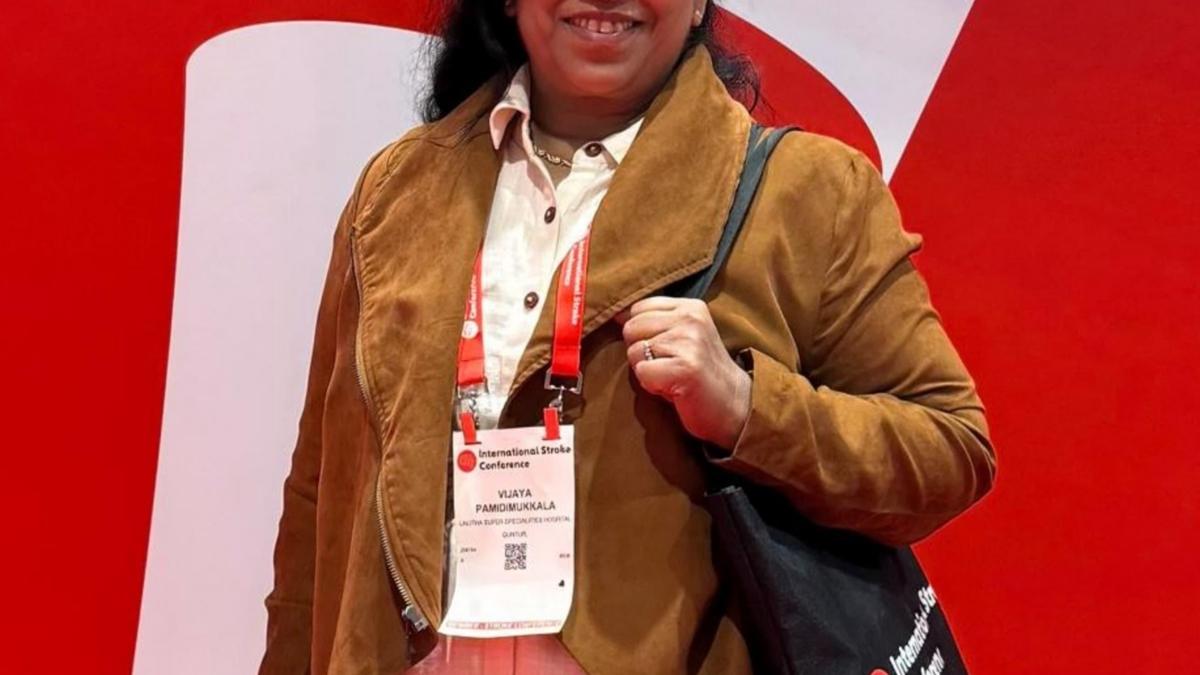
Recurring brain stroke affects up to 20% of patients, Indian data shows
The Hindu
Indian data reveals up to 20% of stroke patients experience recurrence, underscoring the need for improved long-term care.
New findings from Indian clinical data show that recurrent brain stroke occurs in up to 20% of patients, highlighting serious gaps in long-term treatment and follow-up. The data was presented by Dr. Vijaya, President of the Indian Stroke Association, during the International Stroke Conference (ISC) 2026 held in the United States.
Speaking at a joint scientific session of the American Stroke Association and the Indian Stroke Association conference, held from February 4 to 6 at the Ernest N. Morial Convention Center in New Orleans, Dr. Vijaya said stroke recurrence is often linked to discontinuation of blood-thinning medicines, poor control of hypertension, diabetes and cholesterol, and lack of sustained lifestyle modification. She stressed that stroke survivors require lifelong medication and regular medical follow-up, even if they appear clinically normal.
According to a press release by Dr. Vijaya on Monday, the conference discussed several developments in stroke care. Experts noted that children with acute brain stroke can benefit from evidence-based treatments used for adults, including intravenous thrombolysis and mechanical thrombectomy, when diagnosed early. Advances in MRI and CT imaging have enabled the safe extension of the clot-busting therapy window to up to nine hours in selected patients.
Another major recommendation was the rapid referral of suspected stroke patients to advanced stroke centres with prior notification, reinforcing the principle that timely treatment is critical in stroke care.
ISC 2026 saw participation of over 5,000 delegates from more than 70 countries, including clinicians, researchers, rehabilitation experts, nurses, policy-makers and public health professionals.


Mangaluru police swiftly arrest theft suspect Zakir Hussain, recovering ₹70,000 and a mobile phone from the accused.

Anganwadi workers in Krishnagiri protest for better pay, benefits, and fulfillment of electoral promises from the previous manifesto.

Wildlife-friendly escape ramps are proposed for the PAP contour canal to enhance animal safety and reduce mortality rates.

The 102nd Gunadala Lourdu Matha Utsavam begins with prayers, processions, and messages of unity, attracting numerous devotees.

NHAI opens an elevated corridor on the Chennai-Bengaluru Highway, enhancing safety and easing traffic congestion in Ranipet.

Parvathi Salera, a student of JNN College of Engineering in Shivamogga, won four gold medals by securing the first rank in the MBA final exams conducted by Visvesvaraya Technological University. Sanjay M.V., another student, secured the eighth rank in M.Tech (Computer Science).

‘Financial Literacy Week’ awareness campaign started; account-holders urged to submit KYC

The Professor Jayashankar Telangana Agricultural University hosted its 56th, 57th, and 58th convocations and handed over graduation degrees to 2,135 students, 480 postgraduate students, and 129 Ph.D. scholars.

IIT Madras introduces an online Bachelor of Science in Aeronautics and Space Technology, open to all eligible students without IIT-JEE requirements.

A heartwarming wedding in Belagavi highlights love, community support, and the inspiring journey of an adopted family.

Higher Education Minister R. Bindu has said that Kerala is transforming its higher education system from a teaching-centric model to one driven by research, innovation and social relevance.

Shree Sha Souharda Society's cleanliness drive at Someshwara beach successfully collected 20 bags of waste, promoting environmental awareness.

Sivaganga Narikuravar community demands speedy land patta approval, ‘smart village’ status