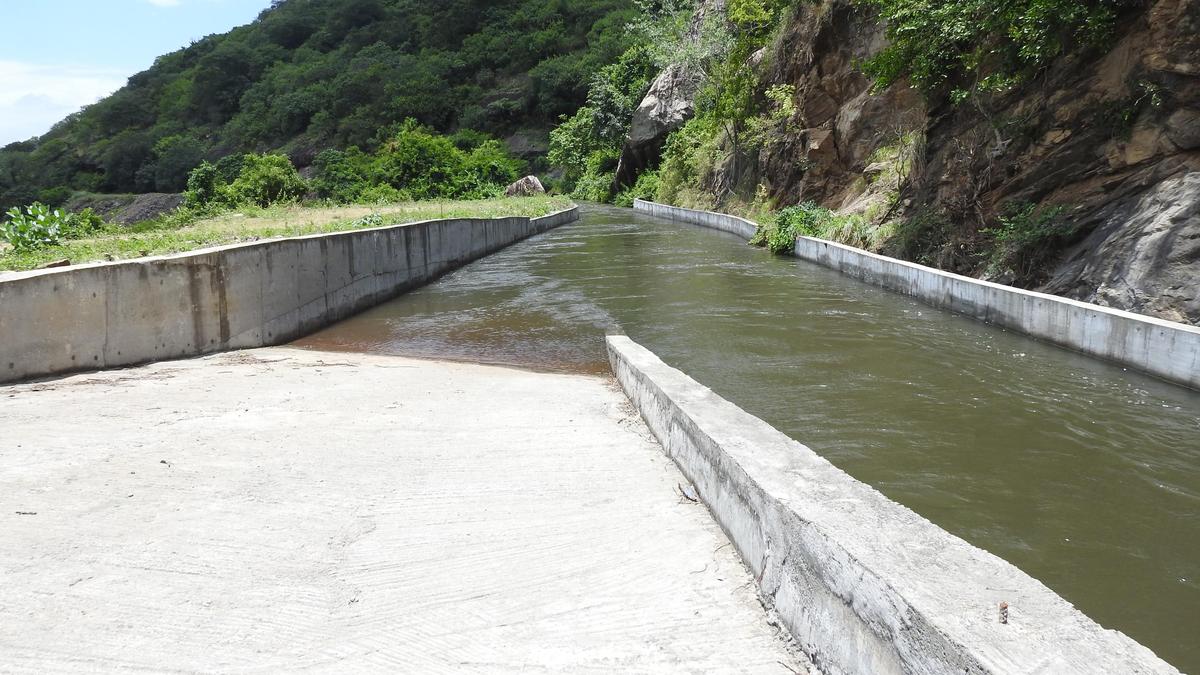
Wildlife-friendly escape ramps recommended for PAP contour canal
The Hindu
Wildlife-friendly escape ramps are proposed for the PAP contour canal to enhance animal safety and reduce mortality rates.
The 49.3-km-long contour canal of the Parambikulam Aliyar Project (PAP) that channels water from Sarkarpathy power house to Thirumurthy reservoir is an engineering marvel.
But the open stretches of the canal, which cuts through biodiversity-rich regions of the Anamalai Tiger Reserve (ATR) in the Western Ghats, have also turned death traps for varied species of wild animals ranging from big cats to Nilgiri tahr to elephant since its commissioning in 1965.
Now ATR authorities are mooting measures to avoid deaths of wild animals that accidentally fall into the canal or being carried away by the current. Tasked by ATR Field Director D. Venkatesh and Deputy Director Devendra Kumar Meena, a team of the WWF-India carried out a study along the contour canal and submitted its report, recommending measures to reduce wildlife mortality.
As per the report, the existing ramps are mostly oriented towards the water flow, which is counterproductive for animal escape. These ramps can be reoriented to face the opposite direction of the flow to facilitate the escape of wild animals that accidentally fall into the canal.
According to the WWF-India report, this orientation, which is crucial just before the entry points of the seven tunnels of the canal, will allow animals to utilise the ramp better and climb out from water. The entry points of the seven tunnels are high-priority spots for ramp construction and modification. Installation of a checking mechanism, like railings or guiding poles that direct animals toward the escape ramp, is also recommended.
The WWF-India team, comprising of D. Boominathan, M.A. Predit, A. Vinod and Nikhilesh Narayanan also recommended construction of 17 more ramps that are opposite-to-the-water-flow orientation at regular intervals along the contour canal in addition to the high-priority ones before the tunnels. Camera traps near the ramps are recommended to monitor their usage by wildlife and to collect long-term data.


Delhi Police files FIR over the circulation of ex-Army chief Naravane's unpublished book, causing Lok Sabha disruptions and MP suspensions.

Fog and mist will persist across Tamil Nadu, with winter conditions lasting until mid-February, affecting visibility and temperatures.

Minister Palanivel Thiaga Rajan launches breakfast scheme for sanitation workers in Madurai

Action sought against YSRCP leaders over alleged adulteration of Tirumala laddu

The Kalaignar Centenary facility in Vellore will offer affordable accommodation for patients’ families, enhancing their hospital visit experience.

Bengaluru's GBA uncovers ₹370 crore in property tax evasion using GPS and drone technology across 10,000 properties.

Puducherry Tourism Development Corporation opens a food outlet at Jipmer, offering affordable, hygienic meals for patients and visitors.

DG&IGP issues new guidelines to prevent mechanical FIRs and arrests over social media, ensuring compliance with Supreme Court rulings.

Water provided to wild animals in 100-odd troughs in Coimbatore forests as summer relief

All Party Trade Unions hold a motorcycle rally in Visakhapatnam, demanding the recall of Labour Codes ahead of a general strike.

Mangaluru police swiftly arrest theft suspect Zakir Hussain, recovering ₹70,000 and a mobile phone from the accused.

Anganwadi workers in Krishnagiri protest for better pay, benefits, and fulfillment of electoral promises from the previous manifesto.

Wildlife-friendly escape ramps are proposed for the PAP contour canal to enhance animal safety and reduce mortality rates.