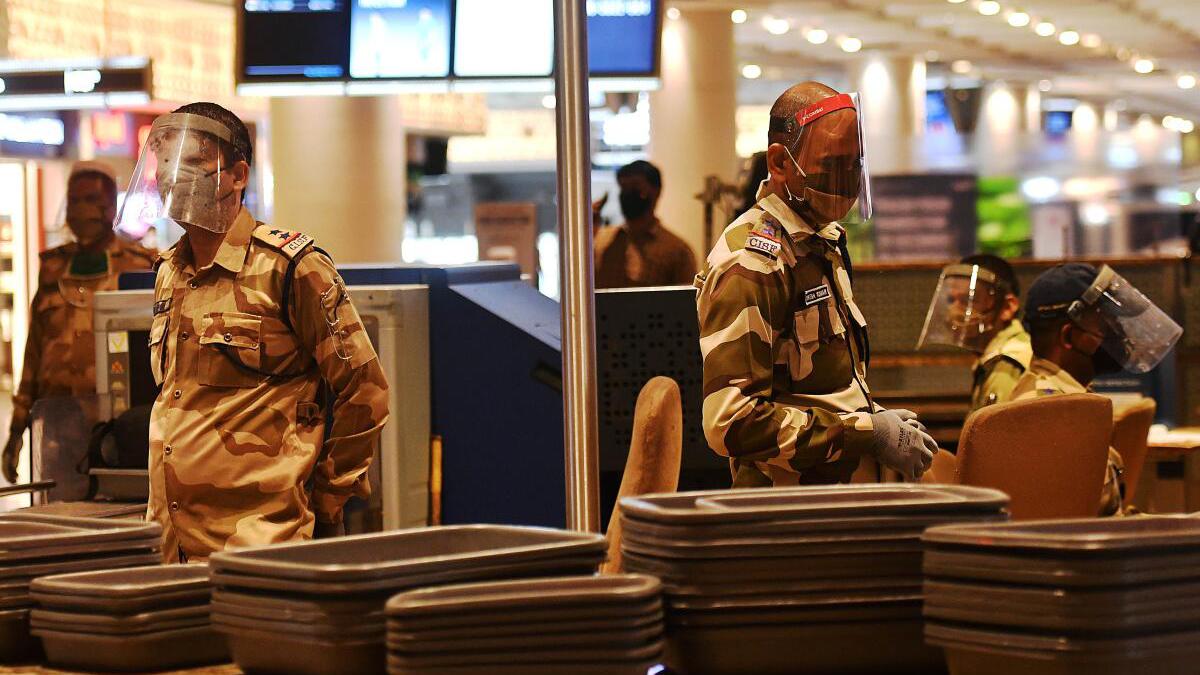
New scanners will let passengers zip through airports without removing laptops for screening
The Hindu
BCAS to issue technical norms within a month for new security technology to screen cabin bags as well as full-body scanners
The long queues of air travellers removing their laptops, mobile phones and chargers from their cabin baggage before screening them could soon become history in India. The aviation security regulator, the Bureau of Civil Aviation Security (BCAS), is expected to issue technical norms within a month which will pave the way for airports to adopt modern equipment to screen bags without removing electronic devices.
“Newer technologies are needed for better security as well as passenger convenience,” BCAS director general Zulfiquar Hasan told The Hindu.
“All airports, including Delhi airport, need to improve the machines deployed for screening of cabin bags. They are lagging behind. Technologies such as dual x-ray, computer tomography and neutron beam technology will eliminate the need for passengers to remove laptops and other electronic devices,” a senior official of the Central Industrial Security Force (CISF), which oversees airport security, told The Hindu on the condition of anonymity.
The call for modernisation comes at a time when airports across the country are seeing a record number of air travellers that have already exceeded pre-Covid levels. A total of 4.27 lakh domestic travellers were seen on December 12. At Delhi airport, which recently witnessed scenes of over-crowding resulting in passengers missing their flights, security lanes were found to be the biggest congestion points primarily because the number of x-ray machines for screening cabin bags were not commensurate with passenger traffic during peak hours.
Senior government officials have blamed airports for failing to grow their infrastructure to cater to growing number of flights and passengers, and Civil Aviation Minister Jyotiraditya Scindia stepped in to order the airport operator to provide more machines for screening cabin bags. While CISF provides its personnel, security infrastructure at airports is the airport operator’s prerogative.
While the traditional x-ray machines currently used at airports produce a 2-D image, newer technologies such as computer tomography produce a 3-D image with a higher resolution, and have better automated detection of explosives. They also have a low rate of the false alarms which often lead to CISF personnel requiring a physical inspection of a bag. These factors result in a higher baggage throughput (or flow) through the machine.
“Better technology will result in a faster throughput, and will allow airports to accommodate more flights per hour and will ultimately allow for growth in the aviation sector. This will also make up for the investment made in acquiring new equipment,” the senior CISF official said.


CPI-M accepts DMK's five-seat offer for Tamil Nadu Assembly elections, prioritizing INDIA bloc unity over seat demands.

Ricky Rai, son of former underworld operative Muthappa Rai, on Monday appeared before the Bengaluru Traffic Police for questioning in connection with a case involving a Lamborghini performing dangerous stunts at Anil Kumble Circle on March 21.

The Dispur election heats up as 'CongBJP' defections shape a high-stakes contest between veteran candidates from BJP and Congress.

Bengaluru's M. Chinnaswamy Stadium conducts readiness drill ahead of IPL 2026, ensuring upgrades and technical preparations are complete.

First-level randomisation of EVMs completed in Nagapattinam for upcoming elections, ensuring transparency and security.

A district-level committee in Krishnagiri has been formed to assess and verify seizure claims of goods and cash.

Minister Anam Ramanarayana Reddy pledges government support for local fishermen and farmers facing challenges in Andhra Pradesh.

MP M. Sribharat urges collective efforts to revive Visakhapatnam Steel Plant, highlighting key reforms for crucial recovery and growth.

141 candidates have filed nominations for Kozhikode's Assembly elections, with scrutiny on March 24 and campaigning intensifying.

BJP's Vijayendra accuses Congress of using money to influence Bagalkot bypolls, urging voters to reject their tactics.

First randomization of electronic voting machines completed in Tirunelveli and Tenkasi districts for upcoming Assembly elections.

RPF seizes 10.12 kg of unclaimed cannabis worth ₹5.06 lakh from a train in Mangaluru.

Kolar's groundwater levels rise to 50-100 ft due to the K.C. Valley project, ensuring clean water and improved health outcomes.