Iran, Israel and the pitfalls of the global nuclear regime
The Hindu
Explore the double standards in the global nuclear regime, highlighting conflicts and shifting strategies of Iran, Israel, and Europe.
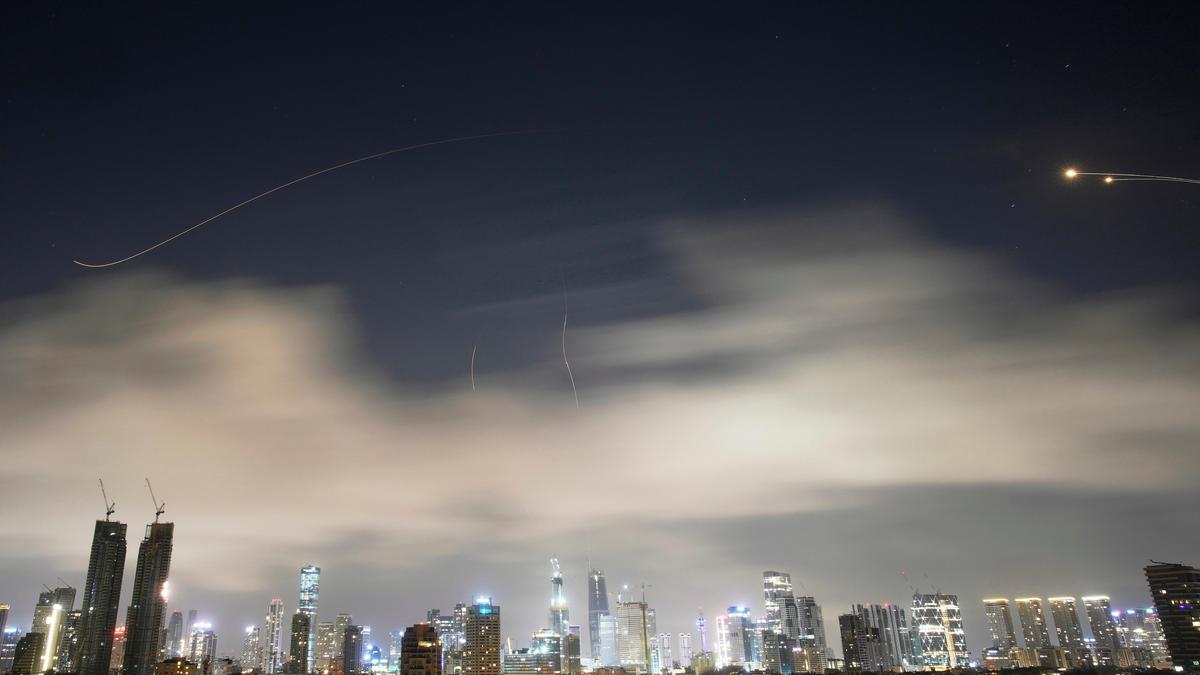
On March 2, two days after Israel and the U.S. attacked Iran, triggering a war in West Asia, French President Emmanuel Macron announced the expansion of France’s nuclear arsenal. While the two events are not directly related, the two are part of the same phenomenon: In today’s world, marked by conflicts and weakening of international law, nuclear weapons look more attractive than ever as a means of deterrence. Yet, there is an underlying double standard in how different countries are treated under the global nuclear order.
In June 2025, Israel launched massive attacks on the heart of Iran’s nuclear and military structure, killing key officers and scientists, claiming it to be a necessary step before its adversary got any closer to building an atomic weapon — Iran has always maintained that its nuclear programme is for peaceful purposes.
Several of Iran’s top political, spiritual, military leaders and scientists were targeted by Israel, both in the June 2025 conflict and the February-March 2026 war. Yet, on the other hand, Israel, which possesses nuclear weapons, faces no inspections, sanctions or international pressure. While countries like Iran, which are considered adversaries of the West, face sanctions and attacks despite signing nuclear treaties, U.S. allies such as Israel are well protected despite not being party to the Nuclear Non-Proliferation Treaty (NPT) and not accepting International Atomic Energy Agency (IAEA) safeguards on its principle nuclear activities.
While the stated objective of these strikes was to prevent Iran from creating nuclear weapons, it raises a bigger question about how the global nuclear order functions, and whether its rules apply evenly to all countries.
The modern global nuclear order is governed by the Treaty on the Non-Proliferation of Nuclear Weapons (NPT), which came into being in 1970. The main aim of this treaty was to prevent the spread of nuclear weapons while promoting peaceful use of nuclear energy. This created a system under which five countries are recognised as nuclear-weapon states, while the other signatories agree not to pursue nuclear weapon technology, in exchange for access to peaceful nuclear technology, and a commitment by nuclear countries to work towards complete nuclear disarmament. The five countries are the U.S., Russia, China, Britain and France, and including these, a total of 191 countries are signatories. Among the 191 countries is Iran, while Israel has not signed the NPT and is not party to this treaty, maintaining its long-standing policy of nuclear ambiguity.
As per the treaty, Iran is allowed to pursue civilian nuclear technology under the monitoring of IAEA. The Vienna-based IAEA conducts inspections, analysing samples and monitoring cameras at over 900 sites worldwide to detect diversion. However, the system is known for its long standing inconsistencies. Over the years, many countries have developed nuclear weapons outside the treaty framework.


Komatireddy urges KCR to actively participate in the Assembly sessions and contribute constructive suggestions for government improvement.

Explore the double standards in the global nuclear regime, highlighting conflicts and shifting strategies of Iran, Israel, and Europe.

PM Modi praises Lok Sabha Speaker Om Birla for his impartial leadership and urges MPs to uphold parliamentary dignity amidst political disagreements.

LDF announces 10 candidates for Kozhikode Assembly polls; UDF and NDA yet to reveal their nominees.

The Centre will upgrade 5,008 Anganwadi centres in Telangana for ₹30.04 crore, enhancing nutrition and early childhood education.

M-Friends shifts to firewood cooking to ensure uninterrupted meals for hospital caretakers amid LPG scarcity.

Deputy Chief Minister D.K. Shivakumar urges ticket aspirants to engage voters ahead of May's Bengaluru civic polls during a key meeting.

DMK and allies protest across central Tamil Nadu, criticizing the Centre for the ongoing LPG cylinder shortage.

Bengaluru clubs face LPG shortages, prompting menu cuts and service restrictions to conserve gas amid geopolitical tensions.

Flying squad teams flagged off in Theni: Collector

Telangana BJP president Ramchander Rao emphasizes India's unity and harmony among diverse faiths during an Iftar gathering in Hyderabad.

Dr. M.V. Shetty Trust celebrates graduation day for 369 students on March 16 at Indiana Convention Centre.

Telangana Mahila Congress appoints new chief; TPCC chief announces 20% women’s representation in upcoming government posts.