From excavation to exhibition: Tamil Nadu shows the way in showcasing the past Premium
The Hindu
Explore Tamil Nadu's rich heritage through innovative museums showcasing archaeological findings and promoting cultural engagement with the past.
Archaeological investigations at Keeladi, Porunai, and other sites, together with scientific analyses of the materials unearthed, have couched Tamil Nadu’s rich and diverse heritage within a broader perspective, lending new depth to the understanding of early Tamil history.
This is in alignment with the argument of David Shulman, indologist and author of Tamil: A Biography, that Tamil was one of the languages of a great South Indian civilisation, emerging from one of the most creative and intellectually fertile geographical domains in historical South Asia.
Discoveries at Keeladi suggest that an urban and industrial civilisation once flourished there. Carbon dating of artefacts recovered from the site places them between the 6th century BCE and the 1st century CE. These findings prompted Chief Minister M.K. Stalin to declare on the floor of the Assembly in 2021 that the history of the Indian subcontinent ought to begin in Tamil Nadu.
The government clearly believes that public engagement with the past can be deepened by memorialising significant sites within their immediate surroundings. “There is a need to redefine Tamil identity by addressing micro-history and regional aspirations,” said T. Udhayachandran, Additional Chief Secretary (Finance) and Commissioner of Archaeology.
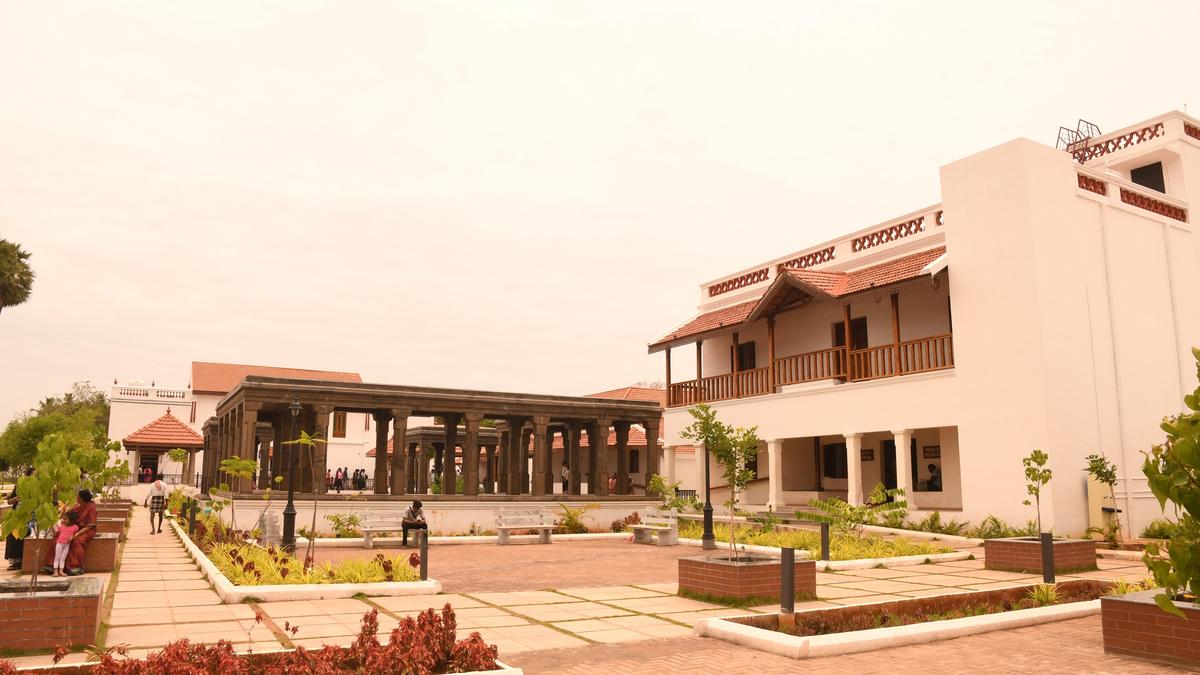
Accordingly, ecofacts, artefacts, and antiquities collected through archaeological surveys and excavations are being conserved and placed on public display for the benefit of scholars, researchers, students, and the public in site museums across various districts of the State. In this context, The Hindu examines these efforts to bring people closer to their own layered past and cultural inheritance.
Exhibits at the Keeladi Museum in Sivaganga district. File | Photo Credit: G. Moorthy


The government plans to amend the FCRA, introducing new regulations for NGO asset management and accountability for key functionaries.

The draft policy for “Responsible Digital Use Among Students”, released on Monday by the Department of Health and Family Welfare, has recommended that parents set structured routines with clear screen-time rules and prioritise privacy, safety, and open conversation with children on digital well-being.

Police Observer Sushant Kumar Saxena conducts surprise inspection at Shencottai police station, reviewing warrants and security arrangements ahead of elections.

Andhra Pradesh government to launch key projects in April, focusing on industrial growth and infrastructure development, says Nara Lokesh.

Lok Sabha refers the Corporate Laws (Amendment) Bill to a JPC amid opposition concerns over CSR provisions dilution.

SHG members in Kanniyakumari use snakes and ladders to raise election awareness and boost voter turnout.

Government accelerates consultations for early implementation of the Women’s Reservation Act to ensure women’s representation in 2029 elections.

CM A. Revanth Reddy distributes ₹1 crore insurance cheques to families of deceased Electricity department employees, enhancing financial security for workers.

The Bengaluru Traffic Police (BTP) registered 634 cases of drunk driving during a week-long special enforcement drive conducted across the city between March 16 and March 22.

GHMC intensifies action against property tax defaulters, seizing properties and offering a One Time Settlement scheme for payments.

CCB arrests three drug peddlers in Mangaluru, seizing ₹2.5 lakh worth of MDMA and other valuables.

TVK's 28 candidates in Puducherry include former BJP MLAs, a sitting Independent, and a retired police IG.

BRS submits notice on private member bill to Speaker