Committee to review changes in development in backward taluks: Chairman
The Hindu
Karnataka Regional Imbalance Redressal Committee reviews development progress and identifies areas needing further development based on new indices.
MYSURU
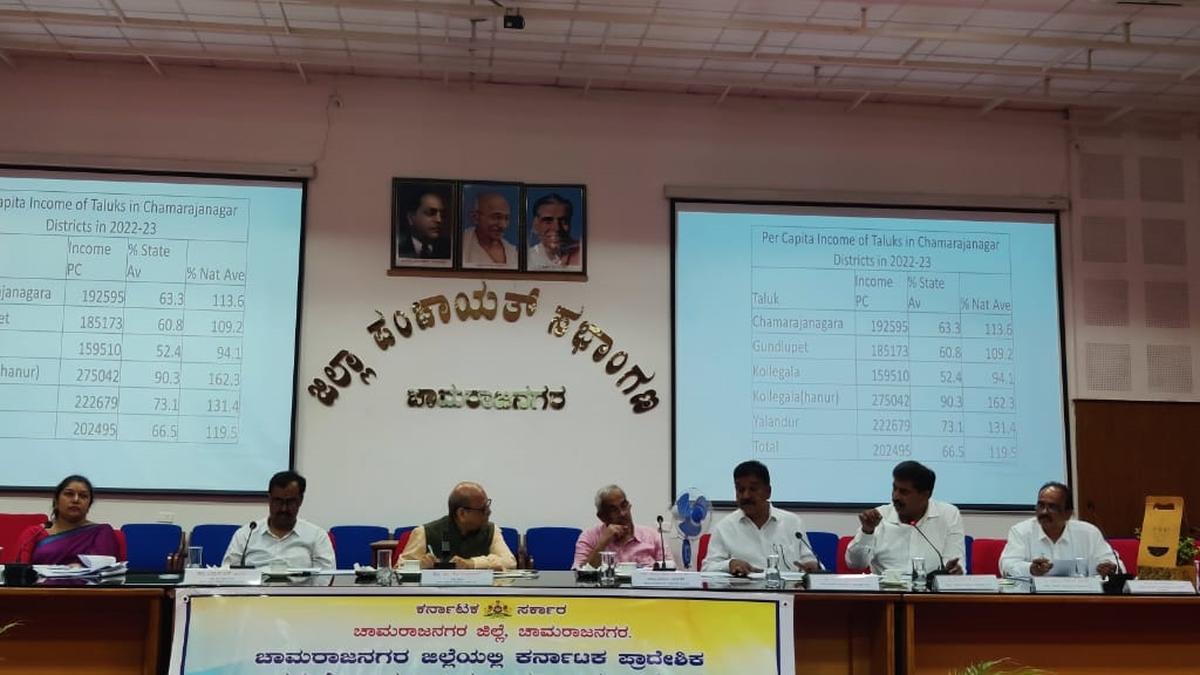
Karnataka Regional Imbalance Redressal Committee chairman and economist M. Govinda Rao said in Chamarajanagar on Monday that a review will be conducted based on new indices to assess the changes in development across districts following the implementation of the D.M. Nanjundappa Report. This will help identify what further developmental steps are needed, and a report will be submitted accordingly, he added.
Presiding over the district-level interactive meeting of the committee held at the zilla panchayat hall in the town, Prof. Rao addressed the gathering, which included the committee’s member-secretary R. Vishal (Principal Secretary of the Department of Financial Reforms and Planning), other committee members, directors, MLAs, senior officials, and representatives of various organisations.
The committee, headed by Dr. Nanjundappa, had submitted its recommendations in 2002, identifying backward taluks. Based on these recommendations, the government spent ₹43,000 crore on their development. The current committee is now reviewing the extent of progress in these taluks and identifying areas that remain underdeveloped, he said.
Prof. Rao emphasised that increasing imbalances lead to regional backwardness. The review will analyse development using indicators such as per capita income, education, health, and other sectors. The committee will study and examine all relevant aspects and submit a comprehensive report to the government, he said.
Dr. Vishal said the committee should base its recommendations on new indicators. Visits are being conducted across districts to hold discussions and gather suggestions. Local-level discussions are helping to identify specific development needs, he noted.
MLA for Kollegal A.R. Krishnamurthy said the district has extensive forest areas and a high population of Scheduled Castes and tribes. He emphasised the need to appoint qualified teachers proportionately, focus on skill development, provide local employment opportunities, and promote tourism since the district has tourist spots, religious centers, and forest attractions. He also mentioned the benefits of implementing Phase 2 of the Kabini project.


Shorts News:WatchNetanyahu says Trump sees chance of striking deal with Iran

The facility in New Colony will benefit over 17,000 consumers, say officials

Water pipeline leak causes traffic congestion and waterlogging in Miyapur, Hyderabad, prompting detours and delays for commuters.

VCK exits the DMK-Congress alliance in Puducherry, deciding to contest alone due to dissatisfaction with seat allocation.

Bomb threat email prompts security response at Delhi Assembly ahead of budget presentation amid concerns over Khalistan references.

"Dhurandhar: The Revenge" exemplifies how films propagate a violent nationalism, reshaping Indian identity and undermining democratic values.

BJP’s junior ally in Assam, AGP, gets the same number of seats to contest as last time, but a granular analysis reveals slipping ground

Parliament Budget Session LIVE: Follow The Hindu for the latest updates on the Budget Session on March 24, 2026.

At Amar Khamar in Kolkata, a lunchroom rooted in Bengal’s landscape and literature works with women farmers, Sundarbans’ communities and beekeepers to revive rare rice, heirloom ingredients and disappearing food traditions

Delhi experiences a cooler morning at 16.6°C, with daytime temperatures expected to exceed 30°C and moderate air quality.

Know all about Assam's political landscape ahead of the 2026 Assembly Elections, analysing voting trends, turnout, and party dynamics.

Members of LGBTQIA+ communities held protests across Karnataka, categorically opposing the recently proposed Transgender Persons (Protection of Rights) Amendment Bill, 2026.

Congress criticises Modi government, citing reports about Pakistan's diplomatic role amid U.S.-Iran tensions, labelling it a setback for India.