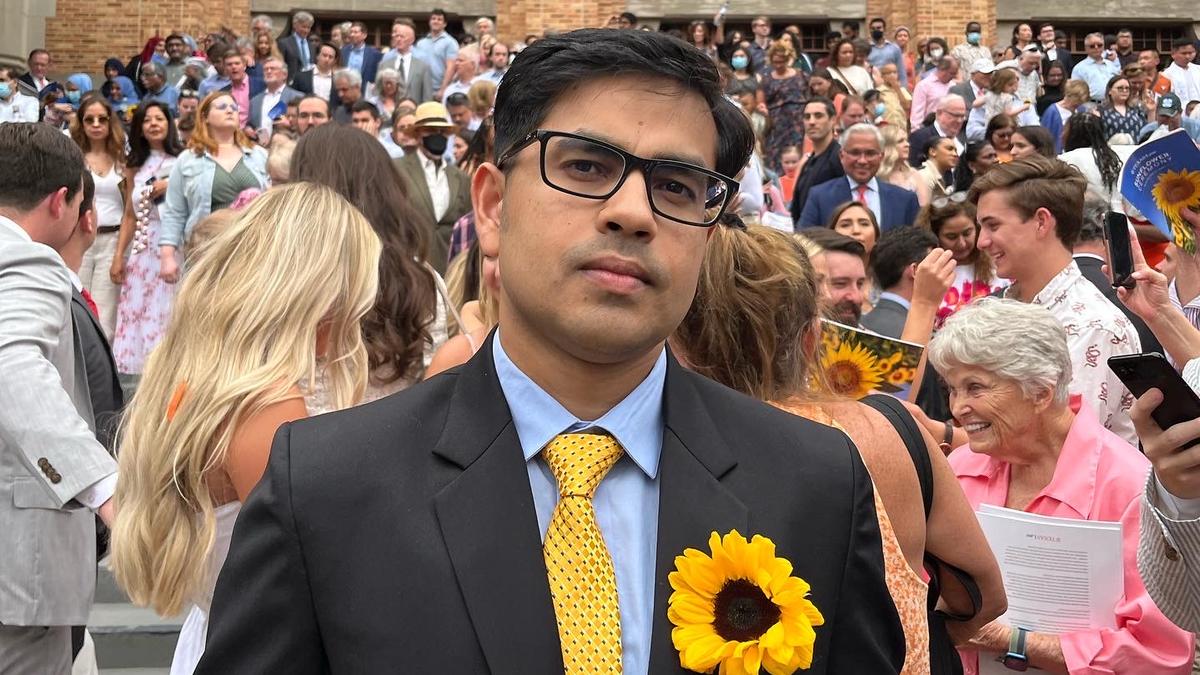
Aman Wadud: Assam’s advocate fighting the National Register of Citizens (NRC)
The Hindu
Aman Wadud defends marginalized Indians in Assam facing citizenship issues, highlighting violations of dignity and fighting for justice.
When the first list of the National Register of Citizens (NRC) was released in Assam in 2018, it excluded 4 million residents. They had to reapply to be included and submit their biometrics. That day, lawyer Aman Wadud got a call from a 77-year-old Bengali Hindu retired professor seeking help.
Wadud, 38, defends those Indians with long family histories in this country, who struggle to prove their citizenship in Assam’s quasi legal ‘Foreigners Tribunals’.
It is largely thanks to people like Wadud that we first realised something deeply problematic was happening in the border state. When he helped release Moinal Molla after 2 years, 11 months and 29 days of detention, he posted an image of the frail book binder with the caption: ‘Moinal Molla’s Long Walk to Freedom’. “By then I had read Nelson Mandela, and the post went viral,” he said.
He introduced a wider audience to a dystopian world where the most marginalised were labelled ‘Bangladeshis’ or ‘D (doubtful) voters’ for the tiniest discrepancies in their carefully preserved identity documents; and ‘detention centres’ where people were summarily taken after being declared ‘illegal migrants’, and where they stayed for years, estranged from families. In 2018, the Central government commissioned the country’s largest 15.5 acre Matia ‘transit camp’ in Assam. It opened last year.
Now, after a decade of fighting hundreds of citizenship cases pro bono, Wadud wants to “play a bigger role” and fights all types of constitutional law cases. He has joined the Indian National Congress and was recently appointed joint convenor of the party’s leadership development mission in Assam.
It all has to do with a thought that struck him when the professor called. Wadud told the gent that the country’s top court had ratified the NRC process and that, if he was on the list, he had no option but to submit his biometrics. “There was a pause, his voice choked, he broke down, saying ‘it hurts my dignity, I cannot submit my biometrics’. He said this repeatedly and it made me think, in the 4-5 years I had been working for citizenship, no one had spoken about dignity.”
Wadud asked clients who had been released from detention centres how the ordeal had made them feel. They listed anger, despair, resignation. Some viewed it as a test from god. “They didn’t speak about the indignity they faced,” Wadud said. “The professor had articulated his thoughts in a way I hadn’t heard before.”


The government plans to amend the FCRA, introducing new regulations for NGO asset management and accountability for key functionaries.

The draft policy for “Responsible Digital Use Among Students”, released on Monday by the Department of Health and Family Welfare, has recommended that parents set structured routines with clear screen-time rules and prioritise privacy, safety, and open conversation with children on digital well-being.

Police Observer Sushant Kumar Saxena conducts surprise inspection at Shencottai police station, reviewing warrants and security arrangements ahead of elections.

Andhra Pradesh government to launch key projects in April, focusing on industrial growth and infrastructure development, says Nara Lokesh.

Lok Sabha refers the Corporate Laws (Amendment) Bill to a JPC amid opposition concerns over CSR provisions dilution.

SHG members in Kanniyakumari use snakes and ladders to raise election awareness and boost voter turnout.

Government accelerates consultations for early implementation of the Women’s Reservation Act to ensure women’s representation in 2029 elections.

CM A. Revanth Reddy distributes ₹1 crore insurance cheques to families of deceased Electricity department employees, enhancing financial security for workers.

The Bengaluru Traffic Police (BTP) registered 634 cases of drunk driving during a week-long special enforcement drive conducted across the city between March 16 and March 22.

GHMC intensifies action against property tax defaulters, seizing properties and offering a One Time Settlement scheme for payments.

CCB arrests three drug peddlers in Mangaluru, seizing ₹2.5 lakh worth of MDMA and other valuables.

TVK's 28 candidates in Puducherry include former BJP MLAs, a sitting Independent, and a retired police IG.

BRS submits notice on private member bill to Speaker