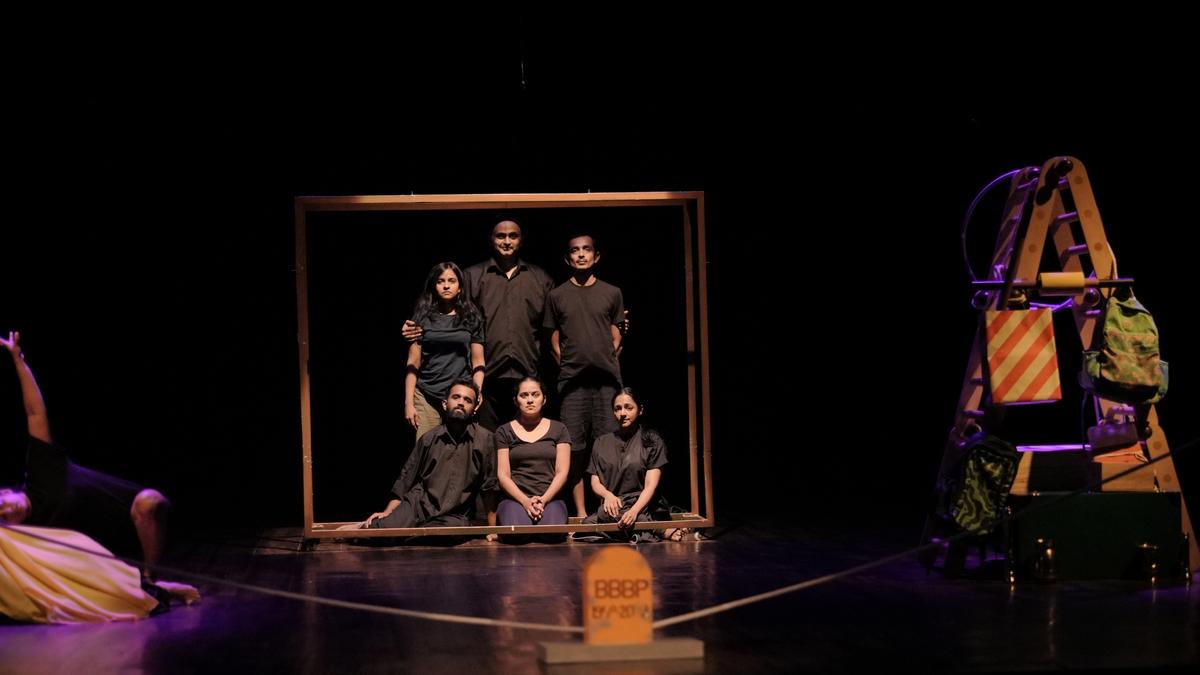
Actor Roshan Mathew discusses the creation of the Malayalam play Bye Bye Bypass, the process and what the team behind it means to him
The Hindu
Actor Roshan Mathew discusses the creation of his play Bye Bye Bypass, inspired by personal experiences, with co-writers and friends.
Actor Roshan Mathew’s sophomore directorial play Bye Bye Bypass, co-written with actor Shruti Ramachandran and screen writer and creative director Francis Thomas, is about a set of cousins of the Athimootil family, who lose their ancestral home to the construction of a bypass. The Malayalam play has been inspired by Roshan’s own, similar experience, which, he says, he realised was more common than he thought. The six shows of the play have been staged to full houses and received with a lot of love from the audience. He talks about how the play came to be. Edited excerpts from an interview
I had been carrying the seed of this idea [play] for really long. I had told a whole bunch of people about it and even presented it on stage. I always felt that there was something more to make out of this. But I wasn’t sure what. Meanwhile, since 2018-19, we (the group that made the play A Very Normal Family ) are close friends who meet often, we talk often, and there has constantly been conversation about wanting to do another play. My deal was that we have to find that one idea that inspires all of us to sort of jump into it because the process was going to be hard, hectic and long. We needed a one-line that would inspire us. I just didn’t realise, at the departure point, that we were looking for this story. The seed or the core thought was this story [the loss of an ancestral home]. When we started working on it, I wanted everybody’s input. It was also a story that, I realized, was extremely relatable. That everybody has a story similar to this one. We decided to take all the elements from everybody’s version and make something out of it.
Obviously my co-writers Shruti and Francis were at the other end of the process — structuring everything, taking what they like out of what we threw at them and putting it down on paper. A lot of it [the play] was developed on the go.
In terms of conceptualising it, I had some clarity on what the language of performance should be. Not the spoken language, rather but what kind of a play it should be. The tone, the look and the feel of it. I had some vague ideas when we started off, nothing I could clearly put down in words but I had an idea about what the energy of it should be. As each scene, each character and each moment in the story started taking shape, the whole play also slowly started becoming clearer in our heads.
There was a childhood home that I really liked, which I lost to a bypass road. It is altogether a very sad story, but of late, I have felt that it is universally relatable and also extremely relevant because suddenly it seemed like we were all surrounded by stories of homes being lost, especially from the perspective of children. It is an absurd thought for a child to process — the idea of losing a home in whatever sense for whatever reason. All of that prompted us to think that maybe now we try and make something out of it.
The key decision here was to just flip it [the theme] on its head and make an all out fun, entertaining comedy about it. We were talking about what makes a house, somebody can take the structure of a home from you but can they really take the home away? We were discussing these thoughts, and also figuring out that we wanted to make a fun play out of it. We want to make a happy play out of it; we wanted to tell the story through the perspective of kids.
Movies and theatre are both forms that I really enjoy doing, and when I do one, I miss the other. That is how it has always been. I started off with theatre, movies came a little later. I fell in love with the format and then went after it with all my time and energy. Then I realised ‘oh! I have not done theatre in a very long time. I miss that.’


Supreme Court directs Tarun Butolia's family to seek safety assessment from Delhi Police after fatal Uttam Nagar clash.

CM Stalin asserts unity in the DMK-led alliance, dismissing division attempts and emphasizing collaborative efforts for the upcoming elections.

Rahul Gandhi to skip Kerala rally due to Sonia Gandhi’s ill health; Kharge to attend Kozhikode event
Rahul Gandhi will miss the Kerala rally due to Sonia Gandhi's health; Congress president Kharge to attend instead.

Thunderstorms with lightning and gusty winds forecasted for 20 Telangana districts on March 26

TGSRTC reduces Metro AC and Deluxe bus fares by 30% in Hyderabad to encourage public transport amid the fuel crisis.

Supreme Court criticises Haryana Police for mishandling a four-year-old rape case, mandates swift action and oversight with a Special Investigation Team.

On World Theatre Day 2026, artists in Hyderabad call for affordable venues as rising costs and infrastructure gaps challenge the city’s theatre ecosystem.

Madhapur police seize 31 illegally transported commercial gas cylinders, ensuring public safety and compliance with regulatory norms.

Punjab AAP MLA Harmeet Singh Pathanmajra arrested in Gwalior after evading police in a rape case for over six months.

Bose Krishnamachari resigned from the Kochi Biennale Foundation amid sexual harassment allegations, confirmed by the foundation's chairperson.

Apple Maps, an app that comes bundled on hundreds of millions of iPhones and other devices each year, will display paid advertising on top of existing organic search results

From the universe’s many wondorous objects to a fascinating pattern of numbers, and whether AI can possess superhuman strength, Science At The Sabha will have fascinating talks for participants of all ages

A Sikh organisation has lodged a complaint against the makers of the film alleging that the movie’s promotional material has hurt the religious sentiments of the Sikh community