Why Pakistan is sweating over India-Europe trade deal
India Today
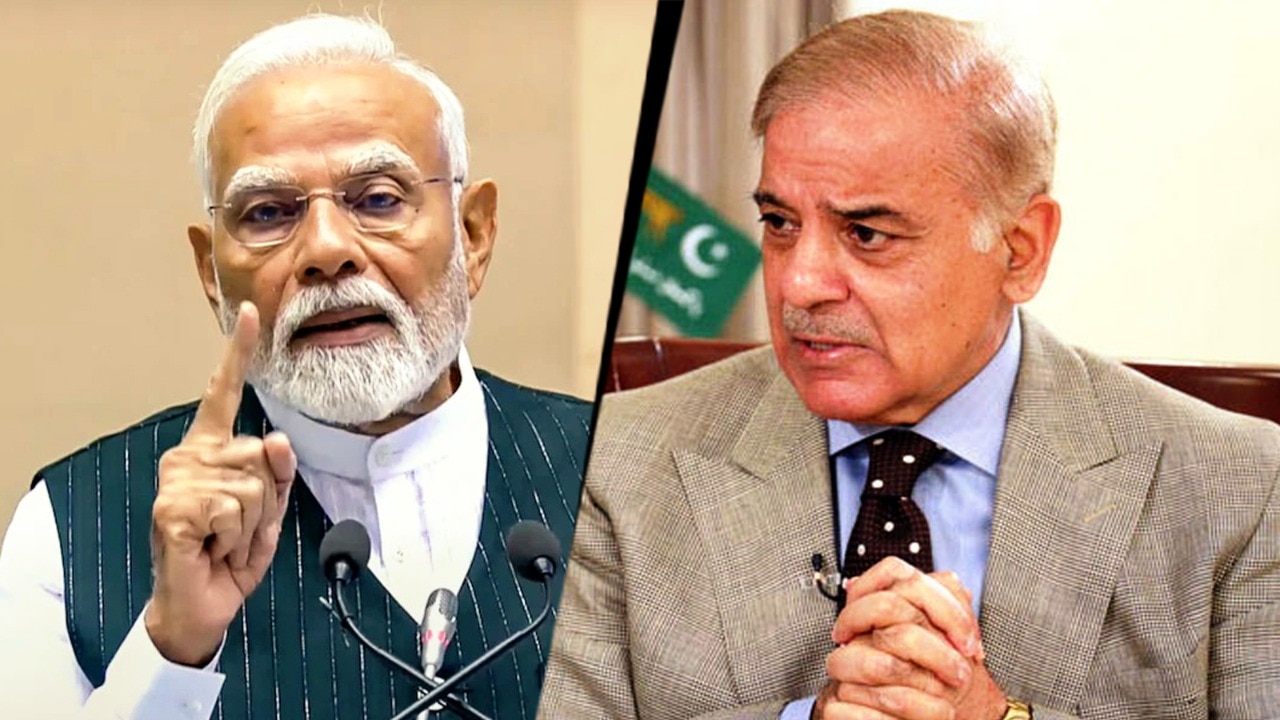
The India-EU free trade agreement (FTA), years in the making, will give India broad market access to those sectors that have long fostered Pakistan's export success in Europe, especially textiles and apparel. Pakistan now seems to be feeling the heat and is in panic mode.
The 'mother of all trade deals' between India and the European Union (EU) has not only caused ripples in the US, but also closer home, across the border in Pakistan. The free trade agreement (FTA), years in the making, will give India broad market access to those sectors that have long underpinned Pakistan's export success in Europe, especially textiles and apparel. These labour-intensive sectors were the worst hit due to Donald Trump's 50% tariff on India. With the India-EU trade deal, Pakistan now seems to be feeling the heat.
The Shehbaz Sharif government is in panic mode. The EU is Pakistan's second-largest export market, and at stake is $9 billion (Rs 8.25 lakh crore) in annual shipments, mostly textiles and apparel. Pakistan's foreign ministry on Friday said it was in touch with the European Union to tackle any impact on its exports in the wake of the trade deal with India. Moreover, Pakistan's Deputy Prime Minister Ishaq Dar also held a hastily arranged inter-ministerial meeting to review the situation. It followed a meeting between PM Shehbaz Sharif and the EU's ambassador to Pakistan.
"We are following this matter bilaterally with the EU member states and also collectively with the EU headquarters in Brussels," the Pakistan foreign ministry spokesperson said.
The timing of the India-EU FTA could not be more unsettling for Pakistan, coming as it struggles to scale up exports and its economy is in tatters. According to a World Bank report, Pakistan's export share has sharply fallen from 16% of GDP in the 1990s to about 10% in 2024.
At the centre of Pakistan's concern is that the India-EU deal would weaken its competitive edge in the European market. Pakistan enjoys Generalised System of Preferences Plus (GSP+) status, a scheme under which Pakistani traders get duty-free access to the EU market on nearly 66% or two-thirds of their exports.
Under the GSP+ status, granted in 2014, Pakistan saw its textile exports to Europe increase by 108%. In fact, the 27-member EU bloc accounts for nearly $7 billion, or 40%, of Pakistan's textile shipments each year. Crucially, the GSP+ status for Pakistan will expire next year.


Amid the ongoing Middle East war, Turkish authorities destroyed a US-made unmanned vessel in a controlled blast after it washed ashore on the country's Black Sea coast.

Ashu Ghai recreated the striking scene from Dhurandhar 2, where Ranveer Singh is introduced as Jaskirat Singh Rangi amid a cascade of fiery sparks.

Pakistan Army chief Asim Munir said Shias who "love Iran so much" should "go to Iran". His remarks triggered a row with prominent Shia clerics of Pakistan accusing Munir of insulting the community and the military establishment of serving America and Israel as a "servant".

Treasury Secretary Scott Bessent said the US may need to intensify strikes on Iran to end the conflict. This came soon after Trump threatened to hit Iran's energy plants amid soaring oil prices and Strait of Hormuz tensions.

The scooter rider rode into the pedestrian zone, collided with the car, and fell down. The man driving the car, however, did not react with anger and handled the situation with composure.

A minute-long ATC recording lays bare the confusion and urgency before a runway collision in New York. Controllers issued frantic warnings as a plane struck a vehicle, forcing a complete airport shutdown.

Tucker Carlson says he might cry listening to him. Millions call him a prophet. But who exactly is "Professor Jiang" — and what is he not telling you?

In a symbolic act of wartime messaging, Iran placed stickers carrying anti-war remarks by Spanish Prime Minister Pedro Sanchez on ballistic missiles bound for Israel as the Middle East conflict enters it fourth week.

The announcement was made a day after North Korea convened the first session of its Supreme People's Assembly. The assembly, the isolated nation's rubber-stamp legislature, formally approves state policy.


Indian Railway staff's swift action turned a medical emergency involving a toddler into relief aboard a train from Bengaluru to Gujarat.

Leon Panetta said Iran war was not an unexpected risk. He pointed out that for years, US security officials have known Iran could disrupt global oil supplies by blocking the Strait of Hormuz. According to him, this was a well-known danger, but one that appears to have been overlooked in the current conflict.

Sri Lanka raised fuel prices by about 25% for the second time in a week as the Gulf conflict disrupts global oil supplies via the Strait of Hormuz.