Have to escalate to de-escalate: US hints more strikes on Iran to end Gulf war
India Today
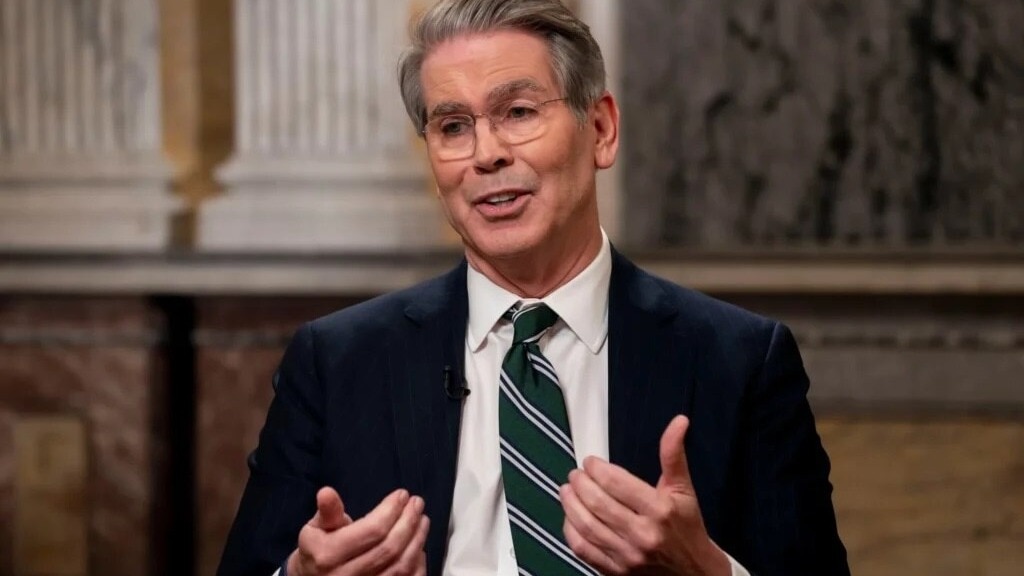
Treasury Secretary Scott Bessent said the US may need to intensify strikes on Iran to end the conflict. This came soon after Trump threatened to hit Iran's energy plants amid soaring oil prices and Strait of Hormuz tensions.
The United States may need to 'escalate' its attacks against Iran to be able to wind down the war, Treasury Secretary Scott Bessent said Sunday, after President Donald Trump gave seemingly contradictory trajectories for the US military campaign.
Trump on Saturday threatened to 'obliterate' Iranian energy plants if Tehran did not fully open the pivotal Strait of Hormuz, just a day after saying US objectives were "very close" and that he was considering "winding down" the war.
Asked on NBC's "Meet the Press" if Trump was winding down or escalating the war, Bessent said: "They're not mutually exclusive. Sometimes you have to escalate to de-escalate".
"This is the only language the Iranians understand," he argued.
Iran's threats against shipping through the Strait of Hormuz, through which about a fifth of global gas and oil supplies flow, have caused energy prices to soar around the world.
Bessent, as part of efforts to abate market turmoil, has temporarily lifted US sanctions on Iranian and Russian oil that had already been loaded onto ships.


Leon Panetta said Iran war was not an unexpected risk. He pointed out that for years, US security officials have known Iran could disrupt global oil supplies by blocking the Strait of Hormuz. According to him, this was a well-known danger, but one that appears to have been overlooked in the current conflict.

Sri Lanka raised fuel prices by about 25% for the second time in a week as the Gulf conflict disrupts global oil supplies via the Strait of Hormuz.

Iran has warned it is ready to respond. Parliament Speaker Mohammad Baqer Qalibaf warned that if Iran's infrastructure is targeted, then key facilities across the region could be "irreversibly destroyed."

Indian Railway staff's swift action turned a medical emergency involving a toddler into relief aboard a train from Bengaluru to Gujarat.

In a post on Truth Social, Donald Trump said ICE personnel would assist Transportation Security Administration (TSA) officers who have continued to work despite uncertainty over funding.

In the viral video, a bus driver named Harish is seen stopping his bus mid-route, not for a passenger, but for a group of hungry puppies waiting by the roadside.

An NRI's creative replica of the Statue of Liberty in Jalandhar sparks cultural interest and local pride.

In a city reshaped by war and displacement, survival in Beirut now rests on quiet acts of care. Each morning, strangers show up — not with answers, but with what little they can carry.

A pricing sheet inside an auto rickshaw has gone viral for being practical and running a good side hustle.

Kremlin said that Kyiv wants to keep the "questionable activities" of its citizens under wraps, after Ukraine issued a statement on the arrests of six Ukrainian citizens in India.

A version that came within minutes is now being questioned days later. As new evidence emerges from Bahrain, the gap between first claims and fresh findings is raising difficult questions.

The clip, shared by a user on X, captures a Lamborghini repeatedly doing donuts at a public junction under a flyover in Bengaluru, even as other vehicles pass by.

Tokyo has no immediate plans to seek arrangements to allow passage through the Strait of Hormuz for stranded Japanese vessels, Motegi said, adding it was "extremely important" to create conditions that allow all ships to navigate through the narrow waterway.