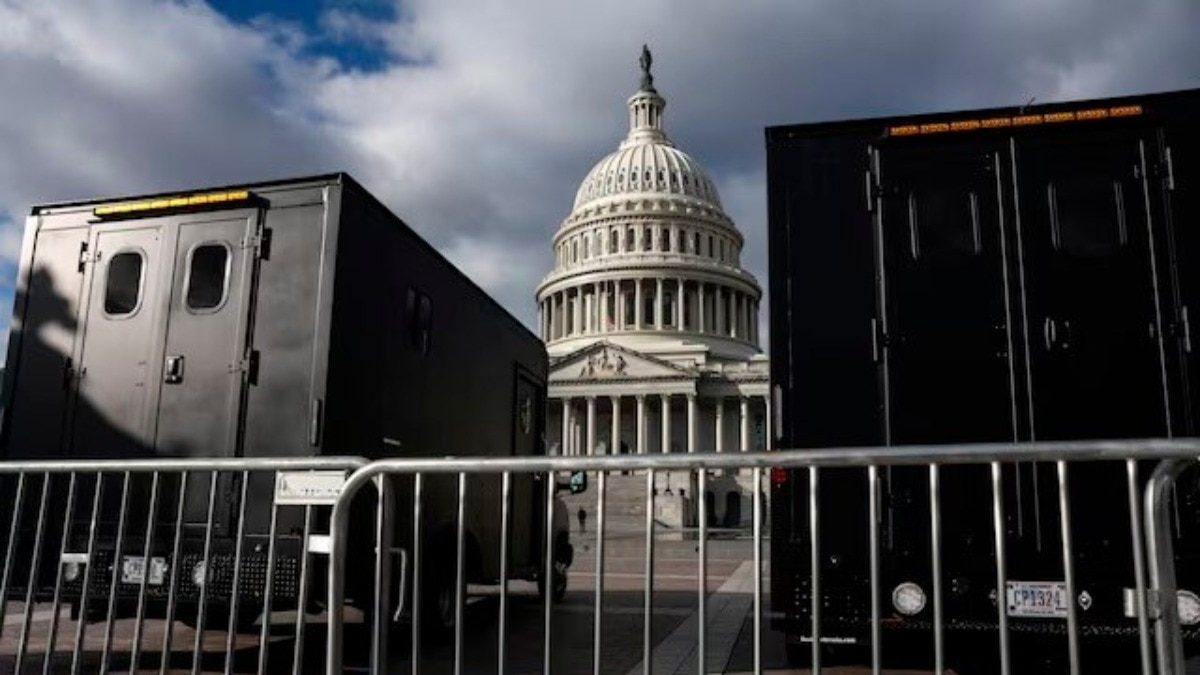
US government enters partial shutdown as Congress fails to approve 2026 budget
India Today
US lawmakers suggested the shutdown may be short-lived, with the House expected to approve a Senate-backed funding deal early next week. However, Democratic senators are withholding support for the measure that would extend DHS funding in the wake of the deaths of two US citizens.
The government went into a partial shutdown on Saturday when Congress missed the midnight deadline to pass the 2026 budget, causing a temporary lapse in federal funding, according to news agency AFP. The lawmakers indicated the shutdown could be brief, as the House is expected to approve a Senate-backed funding deal early next week.
The lapse in funding came after negotiations collapsed amid Democratic outrage over the deaths of two protesters in Minneapolis at the hands of federal immigration agents. The incident reportedly stalled discussions on new funding for the Department of Homeland Security (DHS).
Democrats are demanding that the DHS funding bill be rewritten to incorporate new restrictions on federal agents’ conduct before they will agree to continue financing the department, following the killings of Good and Pretti, which came amid a surge of immigration agents Trump ordered into Minnesota’s largest city.
With no deal reached before the deadline, many non-essential government operations will be suspended until Congress approves either a temporary or full-year funding measure. Lawmakers are continuing efforts to rally enough support to pass the Senate-backed deal when the House returns.
"Instead of going after drug smugglers, child predators, and human traffickers, the Trump Administration is wasting valuable resources targeting peaceful protestors in Chicago and Minneapolis," Senate Democratic Minority Whip Dick Durbin posted on social media, adding that "This Administration continues to make Americans less safe."
About three-quarters of federal operations are affected, potentially triggering shutdown procedures across numerous agencies, including those handling education, health, housing, and defense. Federal departments were expected to start implementing shutdown plans overnight. However, congressional leaders from both parties said the Senate’s recent action makes a brief disruption far more likely than a prolonged shutdown.


Amid the ongoing Middle East war, Turkish authorities destroyed a US-made unmanned vessel in a controlled blast after it washed ashore on the country's Black Sea coast.

Ashu Ghai recreated the striking scene from Dhurandhar 2, where Ranveer Singh is introduced as Jaskirat Singh Rangi amid a cascade of fiery sparks.

Pakistan Army chief Asim Munir said Shias who "love Iran so much" should "go to Iran". His remarks triggered a row with prominent Shia clerics of Pakistan accusing Munir of insulting the community and the military establishment of serving America and Israel as a "servant".

Treasury Secretary Scott Bessent said the US may need to intensify strikes on Iran to end the conflict. This came soon after Trump threatened to hit Iran's energy plants amid soaring oil prices and Strait of Hormuz tensions.

The scooter rider rode into the pedestrian zone, collided with the car, and fell down. The man driving the car, however, did not react with anger and handled the situation with composure.

A minute-long ATC recording lays bare the confusion and urgency before a runway collision in New York. Controllers issued frantic warnings as a plane struck a vehicle, forcing a complete airport shutdown.

Tucker Carlson says he might cry listening to him. Millions call him a prophet. But who exactly is "Professor Jiang" — and what is he not telling you?

In a symbolic act of wartime messaging, Iran placed stickers carrying anti-war remarks by Spanish Prime Minister Pedro Sanchez on ballistic missiles bound for Israel as the Middle East conflict enters it fourth week.

The announcement was made a day after North Korea convened the first session of its Supreme People's Assembly. The assembly, the isolated nation's rubber-stamp legislature, formally approves state policy.


Indian Railway staff's swift action turned a medical emergency involving a toddler into relief aboard a train from Bengaluru to Gujarat.

Leon Panetta said Iran war was not an unexpected risk. He pointed out that for years, US security officials have known Iran could disrupt global oil supplies by blocking the Strait of Hormuz. According to him, this was a well-known danger, but one that appears to have been overlooked in the current conflict.

Sri Lanka raised fuel prices by about 25% for the second time in a week as the Gulf conflict disrupts global oil supplies via the Strait of Hormuz.