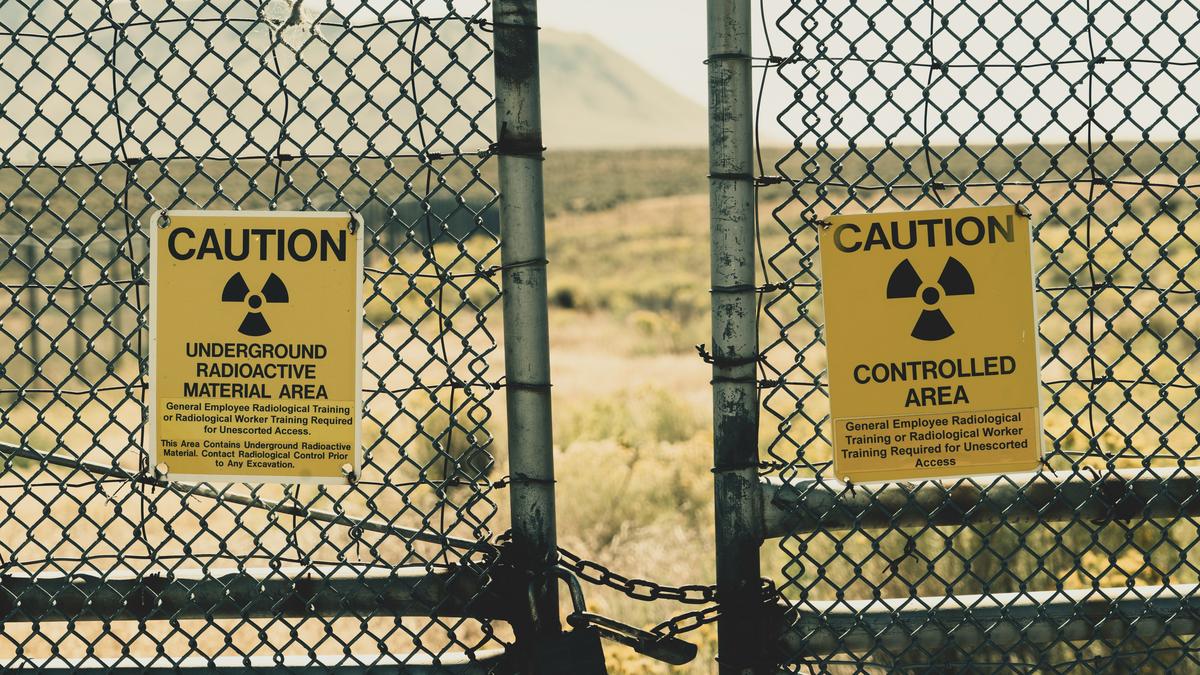
U.S. drops a core radiation safety rule as global reforms near
The Hindu
U.S. Department of Energy drops ALARA, challenging global radiation safety norms as reforms and debates intensify.
The linear no-threshold (LNT) model and the ALARA principle have served as the conceptual and operational foundations of the global radiation protection framework for many decades.
The LNT model is a risk estimation framework that says any amount of ionising radiation, no matter how small, carries some risk of causing harm, especially cancer. In other words, there is no threshold below which radiation is considered completely risk‑free. And the risk increases linearly with dose.
ALARA, short for “as low as reasonably achievable”, is the operational philosophy of radiation protection. ‘Reasonably’ is the most important condition. The philosophy balances safety with feasibility, cost, and societal need, and its aim is to improve continuously, including better shielding, administrative procedures, and training.
Thus in practice ALARA aims to reduce unnecessary exposure using engineering controls and encourages a safety culture.
Unfortunately, when these principles are misapplied, as they have often been, they create a baggage of woes. The International Commission on Radiological Protection (ICRP) and other stakeholders are realising that modern radiological protection requires a different approach.
At present, the ICRP is modernising its latest (2007) recommendations. Over 25 dedicated ICRP task groups have been undertaking a comprehensive revision of the entire system to address several issues to fill the gaps. However, the agency has yet to provide a target year: perhaps later this decade, not imminently. The International Atomic Energy Agency will also update its 2014 Basic Safety Standards using the ICRP’s inputs and publish it for universal acceptance.


Warmer oceans and depleting food have affected the ubiquitous loggerhead turtle’s reproductive and migratory patterns — and even its size.

Toyota Urban Cruiser Ebella review: Explore design, range, features, ride comfort and safety of Toyota’s new electric SUV for India. Expected price ₹14–18 lakh, with up to 500 km claimed range and practical urban usability.

Explore India's potential in bio-based chemicals and enzymes, highlighting industry leaders and challenges in sustainable manufacturing.

Astronomers discover an unusual planetary system with a rocky planet formed outside its gaseous neighbors, challenging existing formation theories.

Four new astronauts arrive at the ISS to replace a crew evacuated due to a serious health issue.

Neurobehavioural therapy can transform brain connectivity in functional neurological disorders, highlighting the link between cognition, emotion, and behavior.

The centuries-long quest for synthetic diamonds, also known as lab-grown diamonds or human-made diamonds, came to an end in 1954-55. On February 15, 1955, the creation of the first synthetic diamonds were announced, and it was quickly picked-up by newspapers around the world. A.S.Ganesh tells you more about these diamonds and the man who first made it happen…

Kadhambari S. Viswanathan highlights online education's evolution and its coexistence with traditional methods at The Hindu Tech Summit 2026.

The Hindu science quiz on Charles Darwin on February 13 2026

Explore the immersive art exhibit "A Story in Red" in Fort Kochi, featuring 13 installations celebrating memory, culture, and emotion.

Explore why different animals have varying litter sizes based on reproduction strategies and survival adaptations.

Experience Bitter Nectar at Bikaner House, an engaging exhibition exploring ecological issues through interactive art installations until February 15.

Discover the fascinating world of blimps, their history, functionality, and significance in aviation and advertising.